Dining Nooks · THE GUIDE
Use a French Cafe Bistro Set to Open Up an Awkward Pass-Through
Awkward architectural transitions, such as wide pass-through corridors or oversized pantry thresholds, often sit neglected because standard dining furniture blocks household traffic. A classic French café bistro set solves this spatial dilemma by utilizing an exceptionally modest footprint paired with visually permeable lines. The combination of a compact round pedestal table and slender woven or iron chairs preserves clear sightlines while transforming empty circulation zones into intentional morning coffee perches. By calculating turning radiuses, maintaining open walking clearances, and selecting tactile, durable materials, you can activate underutilized transitional spaces without creating bottleneck obstructions.
Jump to the checklist ↓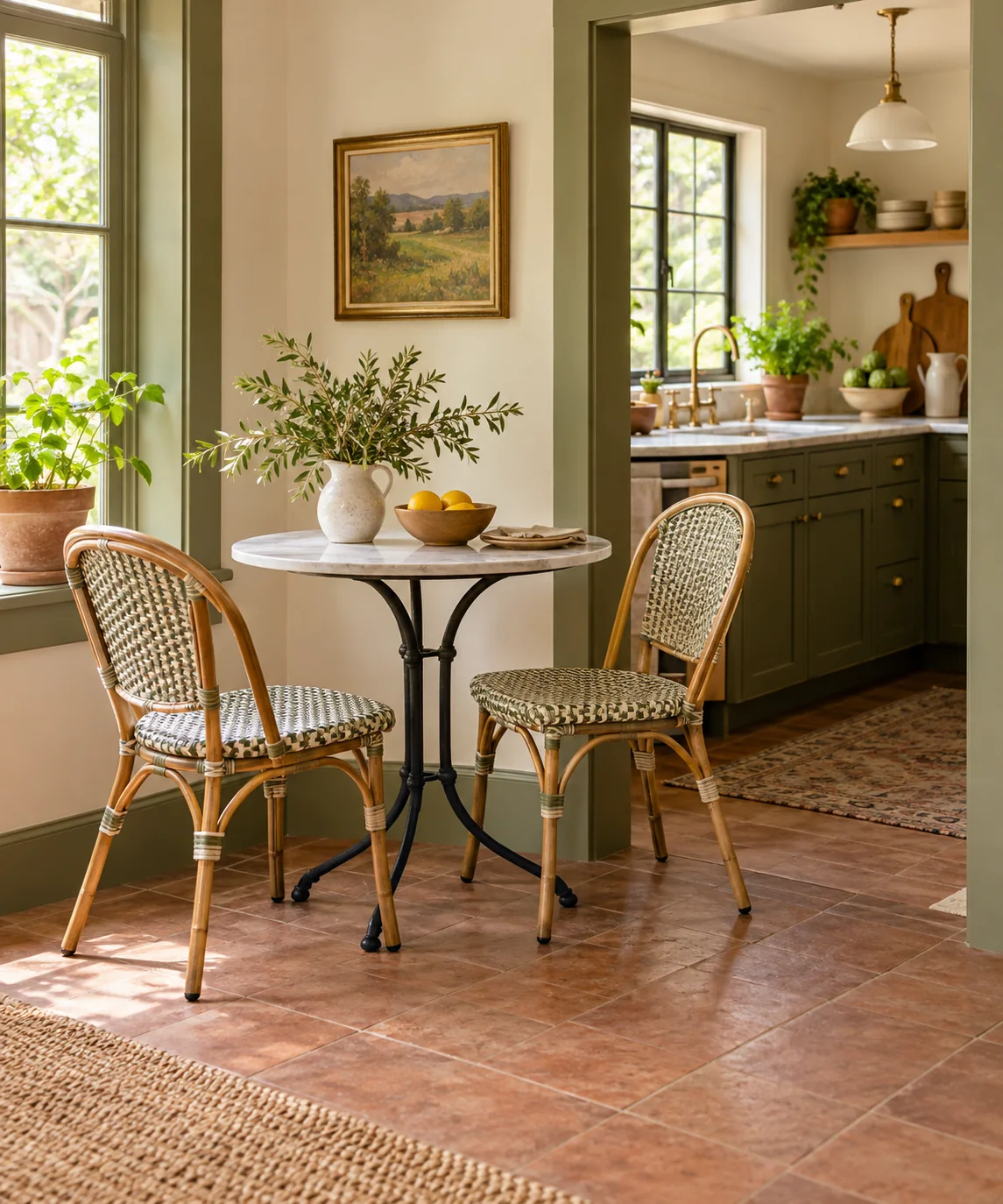
Preserving Pathway Flow and Walking Clearances
Transitional zones such as pass-throughs and expanded corridors must maintain practical movement between adjoining rooms. While standard primary hallways often target roughly thirty-six inches of clear width for a single person to walk comfortably, two adults passing simultaneously typically require additional space. Before introducing furniture, measure the narrowest choke points between your intended bistro footprint, open doors, and nearby counters or cabinets. Test the path during busy household routines to confirm whether family members can navigate around the table without brushing against chairs or walls. Choosing a set where chairs slide entirely beneath the tabletop rim when not in use helps preserve clear corridor space between meals.
The Advantage of Round Pedestal Geometry
Round tables supported by a central pedestal base offer practical advantages over conventional four-legged designs in confined circulation areas. Eliminating corner legs reduces foot-level snag points along walking paths and allows stools or chairs to be arranged flexibly around the perimeter. Tabletop diameters between twenty-four and twenty-eight inches generally accommodate basic tableware for two diners without monopolizing floor area. The uninterrupted circular rim also eliminates sharp ninety-degree corners that can cause painful bumps in narrow pass-throughs, allowing household members to navigate smoothly past the setting.
Selecting Visually Light Materials
Perceived bulk affects small transitional spaces just as significantly as raw dimensions. Traditional café-style furniture incorporates slender metal or bentwood frames combined with slim stone, composite, or enameled surfaces. Paired chairs often feature open-slat backs, spindle designs, or woven fiber seats that permit natural sightlines and light to pass through the setting. Bulkier upholstered armchairs or solid timber bases tend to visually segment a hallway or pass-through, making the corridor appear narrower. Prioritizing open silhouettes maintains a distinct dining nook while keeping the surrounding room connections open.
Floor Protection and Acoustic Dampening
Bistro sets with metal or rigid timber legs are frequently set on hard surfaces like ceramic tile, stone, or hardwood flooring, which can produce scraping sounds and localized surface wear during daily movement. Equip table and chair feet with durable felt pads, nylon caps, or rubber glides matched to your specific flooring manufacturer specifications. In larger pass-throughs with generous clearance, adding a thin, flat-weave runner or round mat helps delineate the seating spot while buffering sound. Inspect rug borders to confirm they lie flat against the flooring, preventing raised edges along high-traffic routes.
Defining Boundaries Without Cluttering Surfaces
Because pass-throughs serve as active thoroughfares, open horizontal surfaces frequently collect mail, keys, and miscellaneous household items. Maintaining the bistro table's function requires keeping surface staging minimal and disciplined. A single compact accent, such as a washable ceramic coaster or a small lidded container, establishes the setting without crowding plates or gathering stray clutter. Framing the dining zone with framed wall art or a directional wall-mounted plug-in lamp highlights the space effectively without encroaching on floor-level passage.
YOUR STARTING POINT
A little checklist.
Original editorial guidance. Images are AI-generated concepts, not photographs of completed projects. Our sources and approach.
Questions to consider
Is a 24-inch bistro table large enough for a two-person dinner?
A 24-inch table holds two dinner plates, cutlery, and water glasses comfortably. For serving dishes, bowls, or condiments, use nearby kitchen counters so the compact bistro surface stays uncrowded during meals.
How do I stop a cast iron bistro table from wobbling on uneven tile?
Inspect the base for threaded leveling feet. If fixed, apply self-adhesive high-density felt pads to the shorter foot segments. Adjusting pad thickness stabilizes the table without damaging your flooring.
Can outdoor metal cafe sets be used inside a home pass-through?
Yes, outdoor bistro sets work exceptionally well indoors. They are durable, easy to wipe clean, and compact. Simply clean the frame thoroughly and install indoor-safe floor glides beneath the legs before placing them inside.