Dining Nooks · THE GUIDE
Use a Half-Height Bookshelf as a Freestanding Banquette Backrest
In open-concept kitchen and living areas, establishing clear visual boundaries between dining zones and circulation routes often requires low-profile furniture rather than fixed walls. Placing a low, finished bookcase directly behind an independent dining bench can delineate space while offering storage on the outward-facing side. However, modular bookcases are rarely engineered to resist lateral leaning loads on their own. Creating a comfortable, safe arrangement requires treating the bench as the primary seating support, confirming bookcase stability against manufacturer specifications, and avoiding unanchored setups that risk shifting or tipping under everyday use.
Jump to the checklist ↓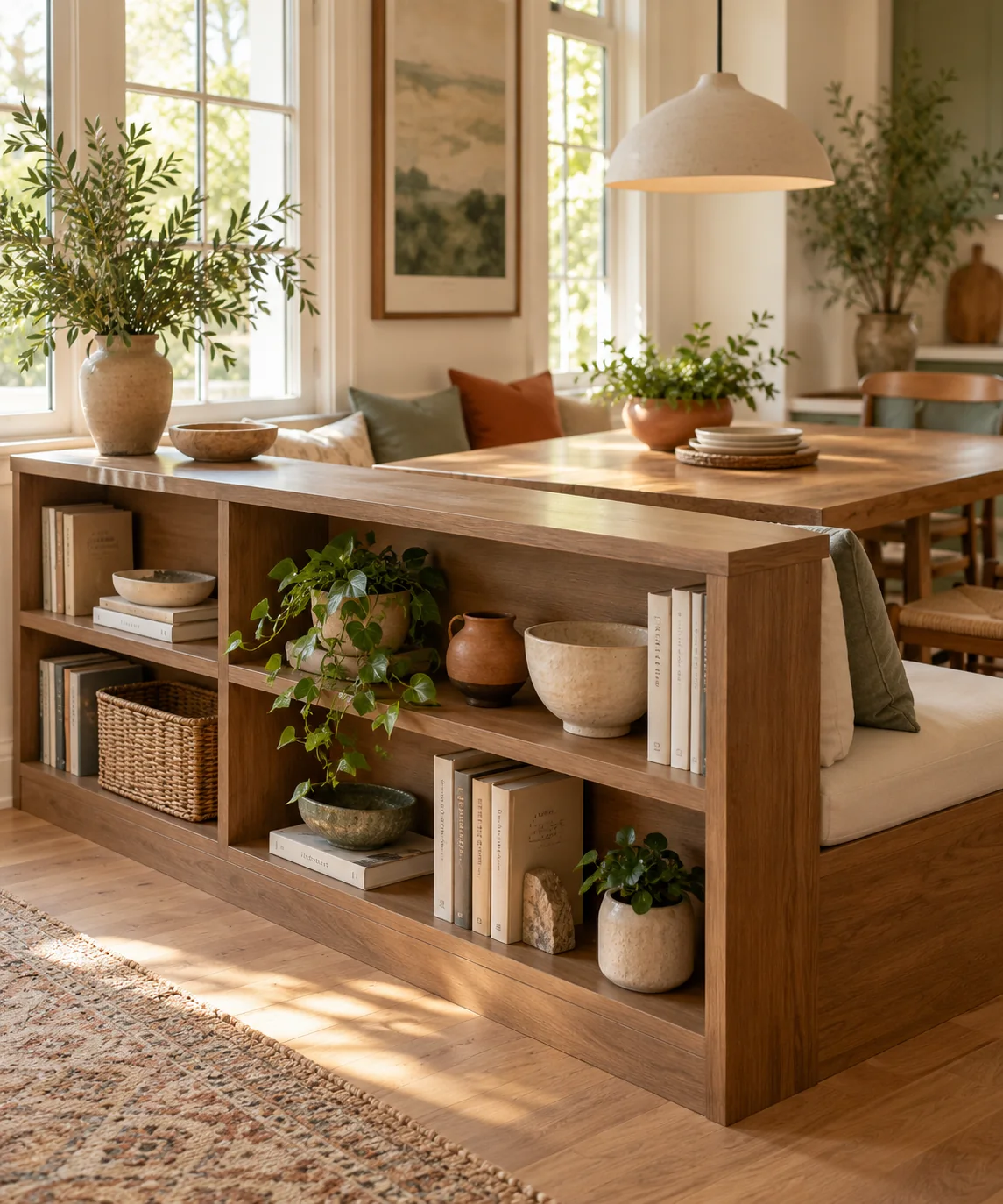
Aligning Furniture Proportions and Heights
When pairing a low storage unit with dining seating, proportion determines both visual balance and practical clearance. Standard dining bench seats typically sit approximately eighteen inches above the floor. A low bookcase standing thirty to thirty-four inches tall can provide a comfortable room divider without blocking natural light or sightlines across adjacent living spaces. Ensure the seating bench features its own stable frame and support rather than depending on the bookcase for structural balance. The bookcase should run equal to or slightly wider than the bench to frame the dining setting neatly within the room layout.
Managing Tip-Over Risks and Lateral Forces
Bookcases are designed primarily for static vertical downward loads from books and decor, not dynamic horizontal forces from leaning diners. Placing weight on lower shelves helps ground a cabinet, but non-slip pads and loaded books alone cannot guarantee an unanchored unit will not slide or tip when subjected to repeated leaning. If a bookcase is positioned behind dining seating, consult the furniture manufacturer's guidance regarding anchoring requirements. For open-plan placements where wall tethering is not possible, prioritize a freestanding bench with a low integrated backrest so diners lean against the bench frame rather than pushing directly against the bookcase.
Addressing the Bookcase Backing and Appearance
Standard flat-pack bookcases frequently feature thin composite back panels intended only for visual closure and basic racking resistance. These panels flex easily and can pop out of their grooves under localized contact. For open-plan layouts where the back is visible behind a bench, look for finished-back furniture or inspect manufacturer guidelines before considering any cosmetic covers. Keeping the bench physically separate or using an upholstered bench that sits just in front of the bookcase protects the rear panel from direct contact, keeping both furniture pieces intact and completely reversible.
Cushioning and Ergonomic Seating Geometry
Dining comfort relies on predictable seat depth and supportive cushioning rather than hard vertical panels. Standard dining benches offer sixteen to eighteen inches of seat depth. If adding loose back cushions between diners and the partition line, choose firmer, compact cushions that do not compress into uneven lumps or push sitters too far forward on the bench. Bolster cushions or slim lumbar pillows resting on the bench surface maintain comfortable posture during meals without exerting significant lateral pressure against adjacent partition furniture.
Organizing Storage for Practical Household Safety
The outward-facing shelves of a room-divider bookcase remain open to adjacent living areas and walkways. Organize items with daily circulation in mind, keeping heavier items such as thick volumes or solid storage bins on lower tiers to keep the center of gravity low. Reserve upper shelves for lightweight objects, and avoid placing fragile glassware, loose liquids, or top-heavy decorative objects near edges where floor vibration from active dining could dislodge them. Maintaining tidy, moderate shelf loading prevents clutter from spilling into main walkways.
YOUR STARTING POINT
A little checklist.
Original editorial guidance. Images are AI-generated concepts, not photographs of completed projects. Our sources and approach.
Questions to consider
Can a freestanding bookcase safely serve as a direct backrest for a bench?
Standard modular bookcases are not designed to take repeated lateral leaning loads. Diners should rest against a self-supporting bench backrest, with the bookcase placed behind purely as a visual divider and storage piece.
How can I prevent the bookcase from sliding on smooth floors?
Dense, non-slip furniture pads under the bookcase base help reduce minor floor shifting, but they do not replace proper anti-tip precautions. Check the manufacturer's placement guidelines for freestanding room-divider applications.
What should I do if the bookcase backing is unfinished?
Select a bookcase designed with a finished back panel on all sides, or place a bench with its own upholstered backrest in front of the unit to conceal the backing without modifying the furniture.