Dining Nooks · THE GUIDE
Use a Narrow Farmhouse Trestle Table to Fit Long Rectangular Niches
Elongated architectural niches offer prime opportunities for family seating, but standard thirty-six to forty-inch wide dining tables push room circulation dangerously close to nearby kitchen islands or seating areas. A narrow farmhouse trestle table—measuring twenty-eight to thirty-two inches wide—provides generous linear capacity without consuming unnecessary floor depth. By combining a slender tabletop profile with a centered trestle base, this classic design removes corner leg obstructions, enabling diners to slide effortlessly into wall-adjacent benches while keeping open paths thoroughly functional.
Jump to the checklist ↓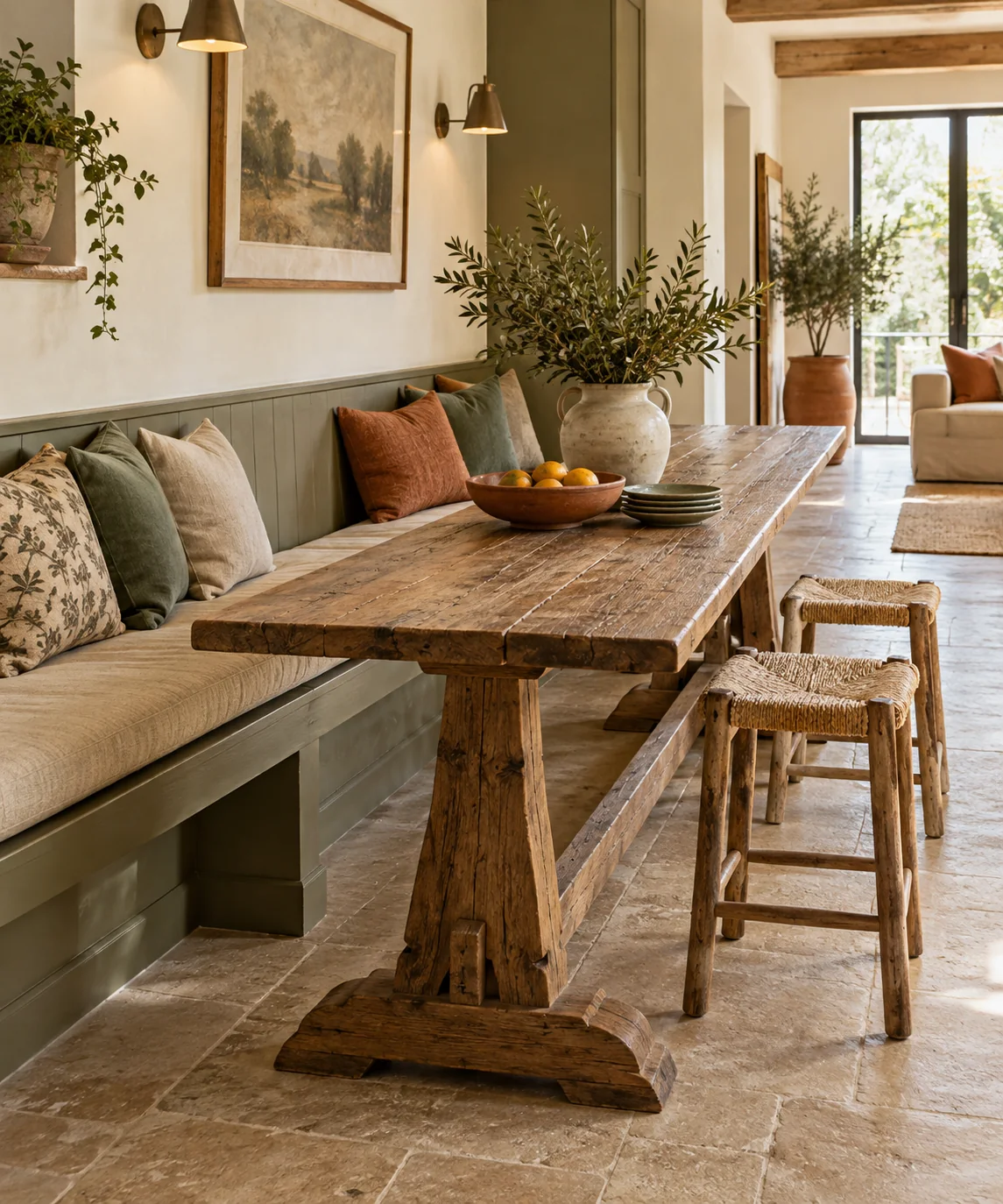
Optimizing Narrow Table Proportions
A typical place setting requires approximately twelve to fourteen inches of table depth to accommodate a dinner plate, flatware, and a drink glass. A thirty-inch wide table provides ample surface for two facing place settings while cutting six to ten inches off traditional furniture footprints. This slender proportion fits narrow floorplans comfortably, leaving diners facing each other within an intimate, conversation-friendly distance without feeling cramped.
Benefiting from the Inset Trestle Base
Standard four-legged tables create severe entry barriers when paired with fixed benches because diners must maneuver their knees and shins around the corner posts. A trestle table resolves this issue by anchoring the tabletop onto central vertical posts set well inward from the perimeter. Guests can swing their legs onto the bench without striking table supports, speeding up seating transitions and reducing bruised shins.
Preserving Surrounding Traffic Corridors
A successful dining layout requires at least thirty inches of clear walkway behind seated diners, expanding to thirty-six inches along main pathways. In an eight-foot wide rectangular dining niche, a wide table leaves barely enough clearance for someone to walk past when chairs are occupied. Installing a narrow trestle design preserves generous circulation paths, keeping transitions between cooking, dining, and living zones open and safe.
Testing Spatial Flow Before Purchasing
Before selecting a specific table, map out the proposed footprint directly on the room floor using painter’s tape. Tape out both a standard thirty-six-inch wide outline and a thirty-inch narrow trestle outline. Position folding chairs within the boundary and walk through the room during busy kitchen hours. This visual test reveals whether wider furniture would hinder cabinet doors, oven racks, or general room pathways.
Serving Logistics on a Slender Surface
The primary functional compromise of a narrow dining surface is limited center space for decorative centerpieces and large shared platters. To manage family-style meals on a thirty-inch table, serve side dishes directly from the kitchen counter or utilize a compact rolling cart at the table head. Keep everyday tabletop decor minimal, using slim runners or low ceramic cruets rather than wide decorative arrangements.
YOUR STARTING POINT
A little checklist.
Original editorial guidance. Images are AI-generated concepts, not photographs of completed projects. Our sources and approach.
Questions to consider
Is a thirty-inch table too narrow for formal dinner parties?
Not for dining comfort, as each guest has adequate personal space for full-sized dinnerware. However, shared dishes and bottle coolers should sit on a nearby sideboard rather than the center table.
Can I pair stools with a narrow trestle table?
Yes, backless stools slide completely under a narrow table when not in use, opening up the entire traffic corridor in tight rectangular spaces while remaining easily accessible for everyday meals.
What is the minimum length for a functional trestle table?
A trestle table should be at least sixty inches long. Shorter lengths compress the distance between the central supports, which can restrict legroom for diners seated between the trestle uprights.