Reading Corners · THE GUIDE
Use a Rolling Drop-Leaf Table to Create an Adaptable Reading Desk
A compact sitting room corner can easily support demanding research tasks without surrendering permanent floor space to an immovable desk. A rolling drop-leaf table offers a flexible surface that expands to accommodate wide reference atlases, binders, or notebooks, then collapses into a slender profile against the wall when study time ends. By pairing furniture mobility with adjustable surface dimensions, you create a dedicated reading zone that respects the natural circulation paths of your living area. Careful spatial planning ensures the table operates smoothly without bumping adjoining trim or scuffing delicate flooring.
Jump to the checklist ↓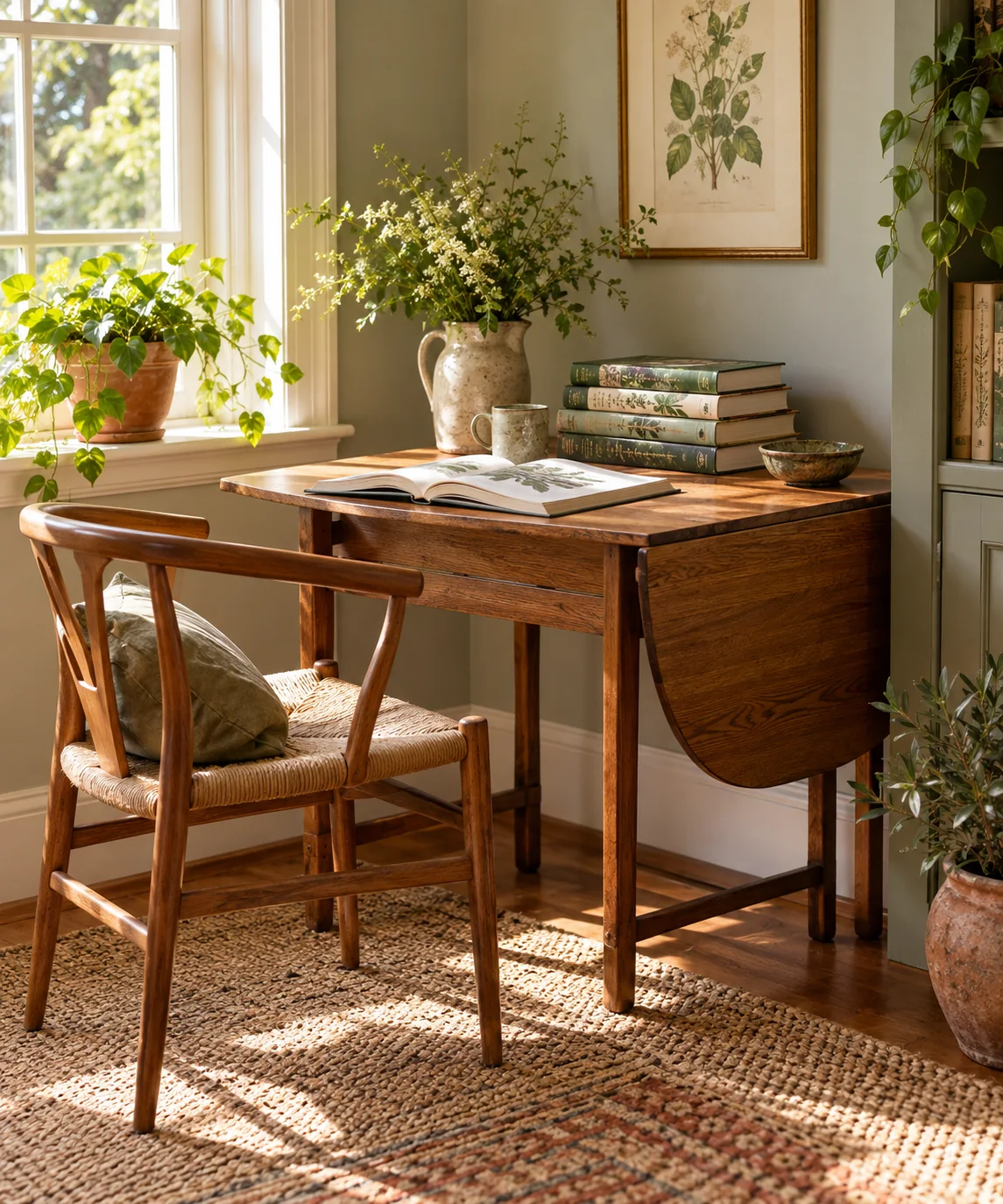
Evaluating Corner Dimensions and Swing Clearances
Begin by measuring the wall arc where the leaves lift and lock. A drop-leaf table typically requires thirty inches of depth when fully opened, but only ten to twelve inches when leaves hang down. Mark the swing radius using removable painter tape on the floor. Verify that opening both sides leaves at least twenty-eight inches of walkway clearance toward nearby doorways. Test the swing clearance against baseboard heaters or window sills to ensure the wooden flaps do not collide with architectural trim during transition.
Selecting Compatible Casters and Floor Protection
Many vintage tables feature original brass pin casters that scratch modern hardwood or catch on low-pile rugs. Replace deteriorated wheels with soft polyurethane stem casters that match the original socket diameter, or fit durable felt cups under original metal wheels if preserving period integrity. Locking mechanisms on at least two casters are essential to prevent the desk from drifting while you lean over heavy pages. Confirm the added caster height keeps the final tabletop between twenty-eight and thirty inches.
Staging Large Format Volumes and Reference Tools
Large reference books place concentrated structural weight across the table joints. Position the heaviest central spine directly over the static center section rather than resting entirely on an extended drop leaf. Use an angled book cradle to minimize strain on historic volume bindings while holding open fragile pages. Flank the study zone with a compact weighted bookend to stabilize supplementary dictionaries. Keep loose papers contained within a slim flat-profile desktop tray so closing the leaves requires minimal reorganization.
Managing Seating Proportions and Foot Room
Because drop-leaf supports often feature gate legs or fold-out wooden brackets, check leg clearance before selecting a study chair. A standard dining armchair may hit the swing brackets, restricting how close you can pull into the desk. Choose a slender armless side chair with tapered legs that slide neatly between the open trestles. Measure the distance from the chair seat to the table apron; a gap of seven to ten inches offers comfortable thigh clearance without forcing an awkward posture.
Routine Care and Folding Protocols
Establish a balanced folding routine to protect table leaf hinges from mechanical stress over time. Always clear heavy books off the leaves before releasing the wooden or brass support arms underneath. When lowering the leaves, guide them down gently by hand rather than letting them drop against the base. Dust the piano or butt hinges seasonally using a dry camel-hair brush to prevent grit from seizing the pivot points, and wipe down the wooden top with a lightly dampened cloth.
YOUR STARTING POINT
A little checklist.
Original editorial guidance. Images are AI-generated concepts, not photographs of completed projects. Our sources and approach.
Questions to consider
Can I use both leaves when the table is pushed into a corner?
Usually you will open only the outer leaf when the desk rests against a corner wall. Roll the table outward toward the room center whenever a project requires extending both leaves simultaneously.
How do I prevent the rolling table from wobbling during writing?
Engage the caster wheel locks on the two front legs. Additionally, check that the fold-out wooden support bracket sits squarely against its underside stop block to maintain a level, stable work plane.
What should I do if the vintage leaf hinges begin to sag?
Inspect the hinge screws into the tabletop underside. Tighten loose screws carefully with a manual screwdriver. If the screw holes have stripped, insert small hardwood splints with wood glue before re-seating the hardware.