Small Bathroom Storage · THE GUIDE
Use a Second Shower Rod for Hanging Pockets and Loofahs
Standard tub-and-shower combinations frequently suffer from overcrowded ledges, where soap bars, loofahs, and body brushes compete for damp corner space. Installing a secondary tension shower rod horizontally along the back wall instantly doubles usable vertical storage inside the wet zone. Unlike bulky corner caddies that accumulate soapy residue, this elevated hanging track keeps bathing accessories suspended in open air. Loofahs, pumice stones, wash mitts, and mesh organizer pockets dry considerably faster when hung freely, reducing clutter along the tub rim while keeping daily cleansing tools organized and accessible within arm’s reach.
Jump to the checklist ↓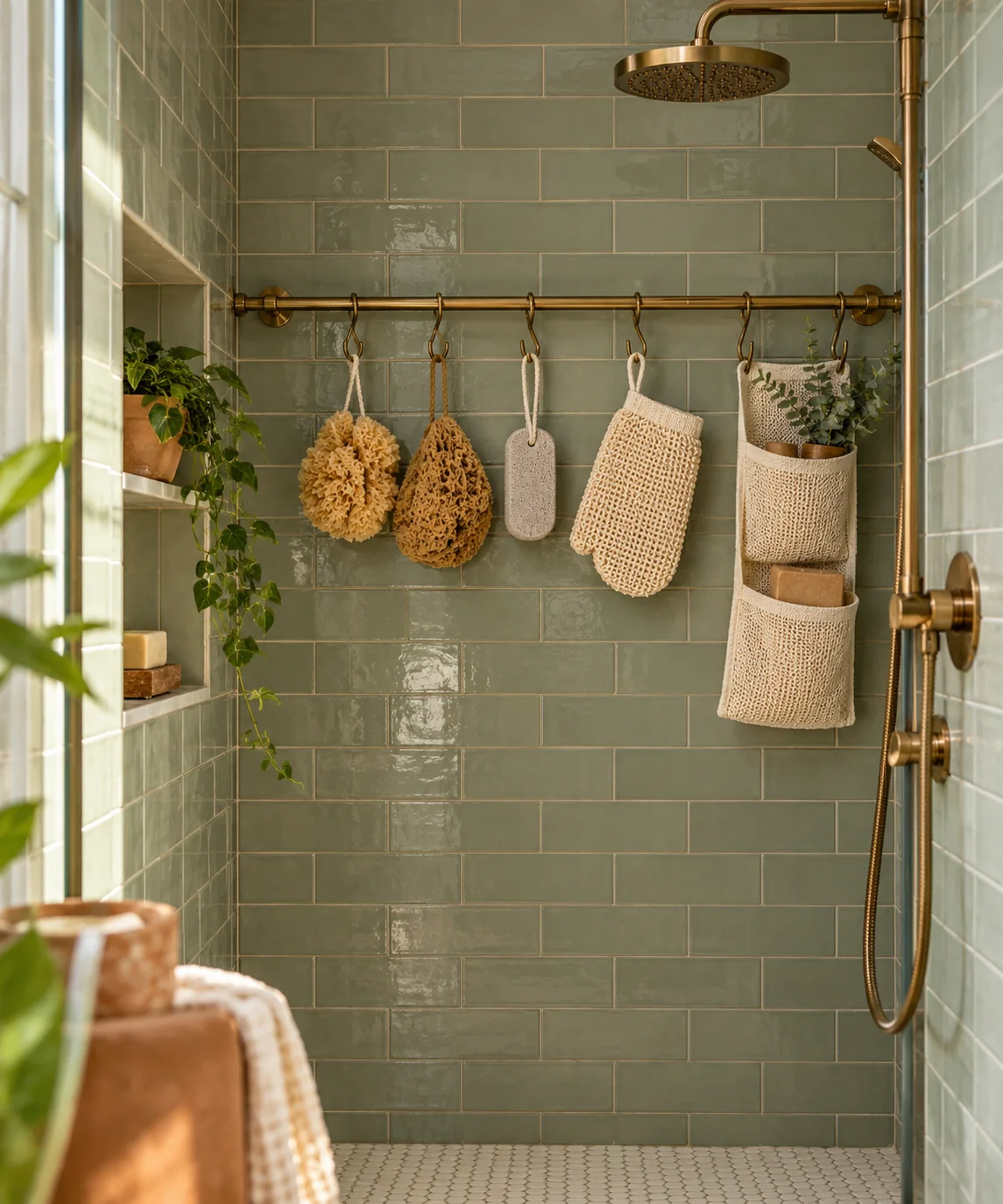
Assessing Placement Along the Rear Shower Wall
Positioning an auxiliary tension rod along the rear wall of an enclosure keeps accessories within reach while preserving the primary bathing zone. Mount the rod at a height comfortable for standing household members, generally high enough to avoid continuous spray from the showerhead while remaining accessible without awkward reaching. Test the horizontal offset from the back wall before tightening the rod fully. Allowing sufficient space behind the bar prevents suspended sponges from dragging across wet tile and grout lines, while leaving adequate elbow room so the bar does not obstruct movement during daily showering.
Selecting Moisture-Resistant Hanging Hardware
Outfitting the hanging rod with resilient, corrosion-resistant hardware preserves hygiene and prevents metal staining on bathroom surfaces. Stainless steel and coated aluminum S-hooks provide durable suspension points that tolerate continuous steam and water contact. If using hooks on smooth metal rods, choosing designs with rubberized tips or silicone sleeves helps dampen clatter and reduces hook sliding during retrieval. For storage pockets, select breathable open-mesh synthetic fabrics like polyester that drain freely. Avoid untreated steel clips, unsealed wire, or solid organizers that trap moisture against wall surfaces and slow drying.
Supporting Air Circulation and Tool Drying
Elevating bath tools above wet tub ledges improves air circulation around fibrous items like loofahs, wash mitts, and body brushes. When left in standing water or crowded corners, dense sponges dry slowly and can develop unpleasant odors or mildew. Distribute items evenly along the rod with noticeable separation between hooks so damp fibers are exposed to room air on all sides. Position the rod outside the direct path of the shower stream to ensure hung items are not repeatedly soaked when other household members use the shower, allowing tools to dry between uses.
Managing Rod Load Limits and Tension Stability
Tension rods hold their position solely through outward spring compression and surface friction against opposing walls, making them unsuited for substantial weight. Restrict storage to lightweight bathing tools, empty mesh caddies, or small squeeze bottles. Suspending heavy economy-sized shampoo bottles or applying downward force when grabbing items can dislodge the rod unexpectedly. Periodically inspect the rubber end footings for soap scum, mineral scale, or moisture accumulation. Cleaning the wall contact points with mild detergent and restoring dry surface contact helps maintain the rod's compressive grip over time.
Evaluating Wall Surfaces and Shower Enclosure Dimensions
Surface texture and wall construction directly influence tension rod stability. Flat, non-porous surfaces like glazed ceramic tile, fiberglass, and acrylic surrounds provide consistent contact area for rubberized tension pads. In contrast, deeply textured stone, irregular slate, or heavily embossed tiles reduce pad surface contact, increasing the likelihood of gradual slippage under damp conditions. Enclosure width also requires consideration: in narrow stall showers, adding an interior crossbar can compromise bathing comfort. Measure your standing clearance and verify that the rod placement does not interfere with elbow clearance before committing to the setup.
YOUR STARTING POINT
A little checklist.
Original editorial guidance. Images are AI-generated concepts, not photographs of completed projects. Our sources and approach.
Questions to consider
Will a tension rod slip on wet shower tile?
Tension rods can slip if soap residue accumulates behind the pads. Clean and dry the tile thoroughly before installation, and keep total hanging weight light to maintain reliable friction against the walls.
Can I hang full shampoo bottles from the second rod?
Heavy liquid bottles risk dislodging the tension rod. Restrict hanging items to lightweight bath accessories, empty bottles, or small mesh pouches containing sample-sized items rather than full economy-size bottles.
How do I prevent hooks from sliding when grabbing loofahs?
Use rubber-tipped S-hooks or silicone grip rings. These prevent metal-on-metal sliding along the rod, keeping hooks anchored in place when you unhook a sponge or washcloth with wet hands.