Garden Tool Organization · THE GUIDE
Use an Enamel Basin on a Low Table for Immediate Post-Garden Tool Cleaning
Hand trowels, weeders, and hand cultivators often return to storage coated in damp garden soil. Stowing soiled equipment directly onto wall racks or into storage drawers promotes surface corrosion, dulls cutting edges, and deposits grit across indoor shelving. Setting up an enamel basin on a sturdy, low table outside your tool shed creates a reliable intermediate wash station. This dedicated cleaning stop interrupts the habit of carrying garden mess indoors. By keeping basic cleaning gear contained in one accessible location, you ensure tools are scraped, rinsed, and dried immediately after use before returning to permanent storage.
Jump to the checklist ↓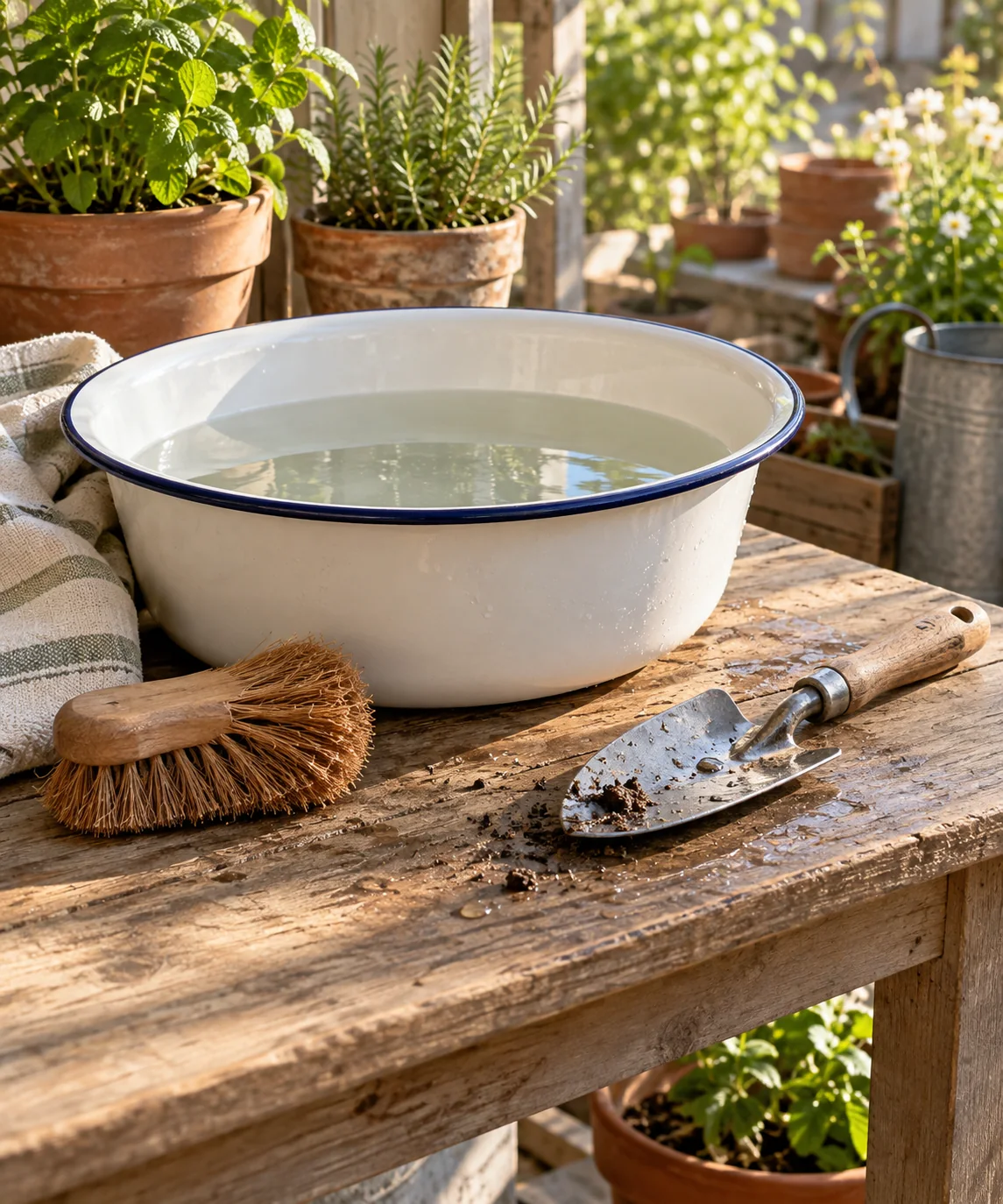
Basin Selection and Surface Setup
A wide, shallow vintage or reproduction enamel basin measuring roughly 14 to 18 inches in diameter provides ample room to submerge hand tools without splashing. Enamel-coated metal resists chipping from steel tool edges and will not absorb soil stains like porous plastics. Place the basin on a waist-height or knee-height wooden work table positioned outside the shed entrance. Keeping the station beneath an eave protects it from heavy downpours while remaining close to your main garden pathways for natural workflow integration.
Stocking Essential Cleaning Accessories
Keep cleaning accessories minimal and weather-resistant right alongside the basin. A stiff natural coir brush or tampico-fiber scrubbing brush dislodges clay and dried soil clumps without scratching tool finishes. Add a simple wooden scraper or putty knife dedicated to removing packed dirt from trowel curves. For final drying, hang a coarse cotton rag or bar towel from an S-hook on the table frame. Keeping these specific items grouped together prevents searching for cleaning supplies when your hands are muddy.
The Quick Post-Harvest Wash Routine
Establish a two-minute cleaning ritual each time you leave the beds. Begin by dry-scraping heavy dirt clods directly back onto garden soil or into a compost bucket before introducing water. Submerge the metal working ends into the basin water, scrubbing surfaces firmly with the stiff brush. Avoid soaking wooden handles, as excess water absorption leads to grain swelling and loosening ferrules. Once clean, immediately buff each tool dry with the dedicated cloth before moving them toward dry wall hooks or drawers.
Managing Water and Table Upkeep
Because this wash station operates without permanent plumbing, manage water turnover manually. Fill the basin with a simple watering can each morning you plan garden work. After your session, tip the silt-laden wash water directly around established ornamental shrubs or non-edible landscape beds to recycle the resource. Wipe the enamel basin bottom with your cleaning rag to clear resting silt, leaving the basin tilted or inverted on the table to dry and prevent mosquitoes from breeding in standing water.
Station Limitations and Seasonal Changes
This cleaning station is designed strictly for manual hand tools like dibbers, hand forks, and trowels. Avoid washing motorized equipment, battery tools, or fine-edge pruning shears in the open water basin, as pivot joints trap moisture. When autumn temperatures dip toward freezing, empty the basin completely and store it inside to prevent freezing water from chipping the enamel glaze. During winter, transition to a dry-brushing routine with a stiff bristle block indoors to preserve edge integrity.
YOUR STARTING POINT
A little checklist.
Original editorial guidance. Images are AI-generated concepts, not photographs of completed projects. Our sources and approach.
Questions to consider
Can I leave water sitting in the enamel basin all week?
No, standing water invites mosquito breeding, gathers blown debris, and eventually leaves mineral rings on enamel surfaces. Empty the basin after each working session and flip it dry to keep the station ready for immediate use.
Will washing garden tools in an enamel basin chip the finish?
Enamelware is durable, but dropping heavy steel tools into it can cause chipping. Lower tools gently into the water, use a soft natural bristle brush for scrubbing, and avoid banging trowel tips against the interior basin walls.
Should I wash pruning shears in the open water basin?
Avoid submerging bypass pruners or loppers in water basins. Water easily penetrates the central pivot screw, tension spring, and internal bearings, accelerating rust. Clean cutting shears separately with a damp cloth and dedicated maintenance oil instead.