Garden Tool Organization · THE GUIDE
Use an Enclosed Galvanized Tool Caddy for Container Garden Essentials
Container gardening on patios and balconies requires compact organization for everyday hand tools, plant ties, and markers. An enclosed galvanized steel tool caddy serves as a sturdy, portable staging tote to keep small hand tools grouped together between indoor storage and outdoor potting tasks. Galvanized zinc coatings provide baseline surface rust resistance against outdoor humidity and damp potting surfaces, though standard sheet-metal boxes are rarely watertight. Utilizing a covered metal caddy streamlines container maintenance by keeping essential accessories organized and clean, provided precision cutting tools are properly dried and stored in sheltered conditions.
Jump to the checklist ↓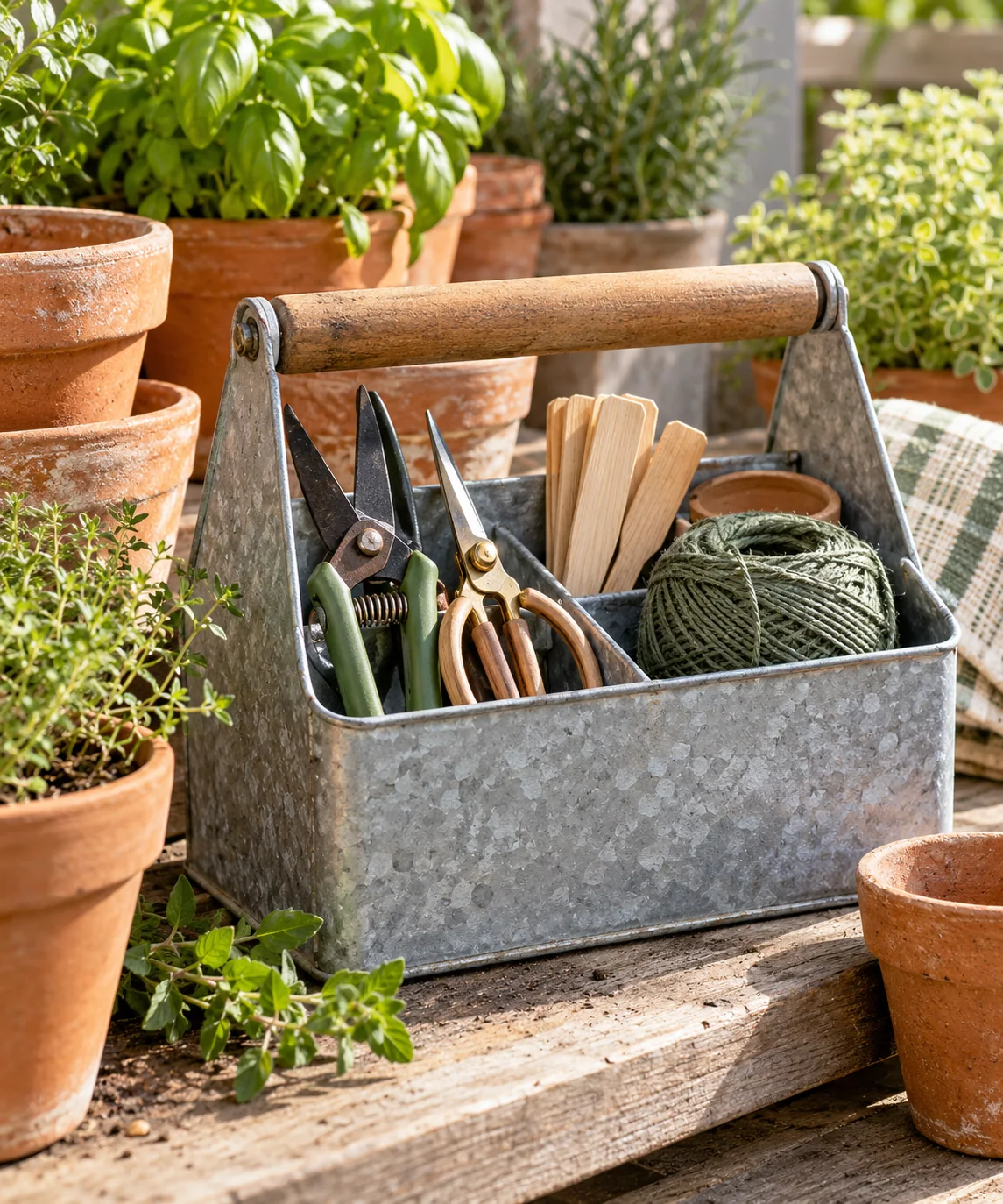
Selecting Enclosed Galvanized Designs
When shopping for a galvanized garden caddy, look for models with a snug fitted lid or hinged cover to keep out stray debris, potting soil, and ambient morning mist. Examine the construction details closely, checking that sheet-metal seams are tightly rolled and the zinc galvanization is smooth and free of flaking or rough edges. Because standard decorative and utility caddies lack rubber weather gaskets, they should be treated as water-resistant totes rather than fully waterproof enclosures. Choose a design with a securely fastened metal or turned wood handle balanced over the center of gravity to ensure safe, stable carrying across outdoor thresholds.
Organizing Interior Compartments
Loose, unorganized hand tools rattle during transport and risk nicking delicate cutting edges or tearing through seed packets and soft ties. Choose an organizer with integrated dividers or add small removable metal tins to segregate sharp tools from sundries. Dedicate one section to bypass pruners and floral snips, keeping blade sheaths in place to protect the edges. Reserve adjacent compartments for non-metal supplies such as jute twine, botanical tags, marking pencils, and clean gardening gloves. Lining the bottom with a replaceable piece of silicone matting or a dry rag cushions tool tips and catches loose grit.
Condensation and Corrosion Management
Galvanized coatings protect the steel body of the caddy, but metal containers readily conduct temperature swings that induce interior condensation. When closed metal boxes sit outside during cool nights or humid mornings, trapped moisture can settle directly onto high-carbon steel pruner blades and cause rapid oxidation. Always brush off soil, wipe plant sap from blades, and apply a light drop of mineral or camellia oil before returning shears to the box. Store a reusable silica gel desiccant pack inside the lid, and bring the caddy inside a shed, garage, or utility closet after finishing garden tasks rather than leaving it outdoors in driving weather.
Stable Staging and Safe Placement
While working among container plantings, place the caddy on a level, structurally sound surface such as a potting bench, patio side table, or sturdy deck box. Avoid setting the metal tote directly on damp pavers or soil, which can trap pooling water beneath the recessed base rim and encourage premature corrosion. Position the organizer well away from hose spray paths, dripping hanging baskets, and balcony railing perimeters where accidental bumps could knock it over. Elevating the closed caddy on a dry work surface also keeps sharp bladed implements safely contained and away from ground debris or wandering pets.
Cleaning and Finish Care
Routine maintenance preserves the zinc coating and prevents organic matter from degrading the metal over time. Empty the container periodically to sweep out accumulated potting mix, dry leaves, and grit using a soft-bristled utility brush. When washing is necessary, use only warm water and a mild, pH-neutral dish soap applied with a soft cloth; never use vinegar, harsh acidic cleaners, bleach, or steel wool, as these chemicals and abrasives rapidly strip protective zinc plating. Ensure the caddy is completely air-dried in a well-ventilated area before returning moisture-sensitive paper labels, twine, and metal tools to its compartments.
YOUR STARTING POINT
A little checklist.
Original editorial guidance. Images are AI-generated concepts, not photographs of completed projects. Our sources and approach.
Questions to consider
Can a galvanized tool caddy be left outdoors year-round?
Continuous outdoor exposure is not recommended. While the galvanized zinc coating resists surface rust, unsealed lids and seams permit water intrusion during heavy rains, and outdoor temperature swings generate internal condensation that rusts carbon-steel pruners.
How should I remove stubborn sap or soil from a galvanized surface?
Wipe the affected area with warm water and a small amount of mild dish soap using a soft microfiber cloth. Avoid acidic cleaners, ammonia, or abrasive scrubbing pads, which can chemically strip or scratch away the protective zinc layer.
What size tool caddy works best for container gardening?
A caddy measuring approximately 10 to 14 inches long and 6 to 8 inches wide provides sufficient capacity for standard pruners, snips, twine, and markers while remaining light enough to carry comfortably around small patio spaces.