Reading Corners · THE GUIDE
Use an Open-Backed Bookshelf to Screen an Apartment Reading Corner
Open-plan studio apartments often lack physical boundaries between active living spaces and quiet relaxation zones. Positioning an open-backed grid shelving unit perpendicular to a perimeter wall can delineate a dedicated reading nook while preserving natural light throughout the room. However, using open furniture as a freestanding room partition introduces critical stability and safety challenges. Freestanding bookcases projecting into circulation paths risk tipping if bumped or pulled. By prioritizing secure mechanical anchoring, adhering to manufacturer height limitations, and planning practical walking clearances, renters can create a screened reading sanctuary that remains both visually light and structurally sound.
Jump to the checklist ↓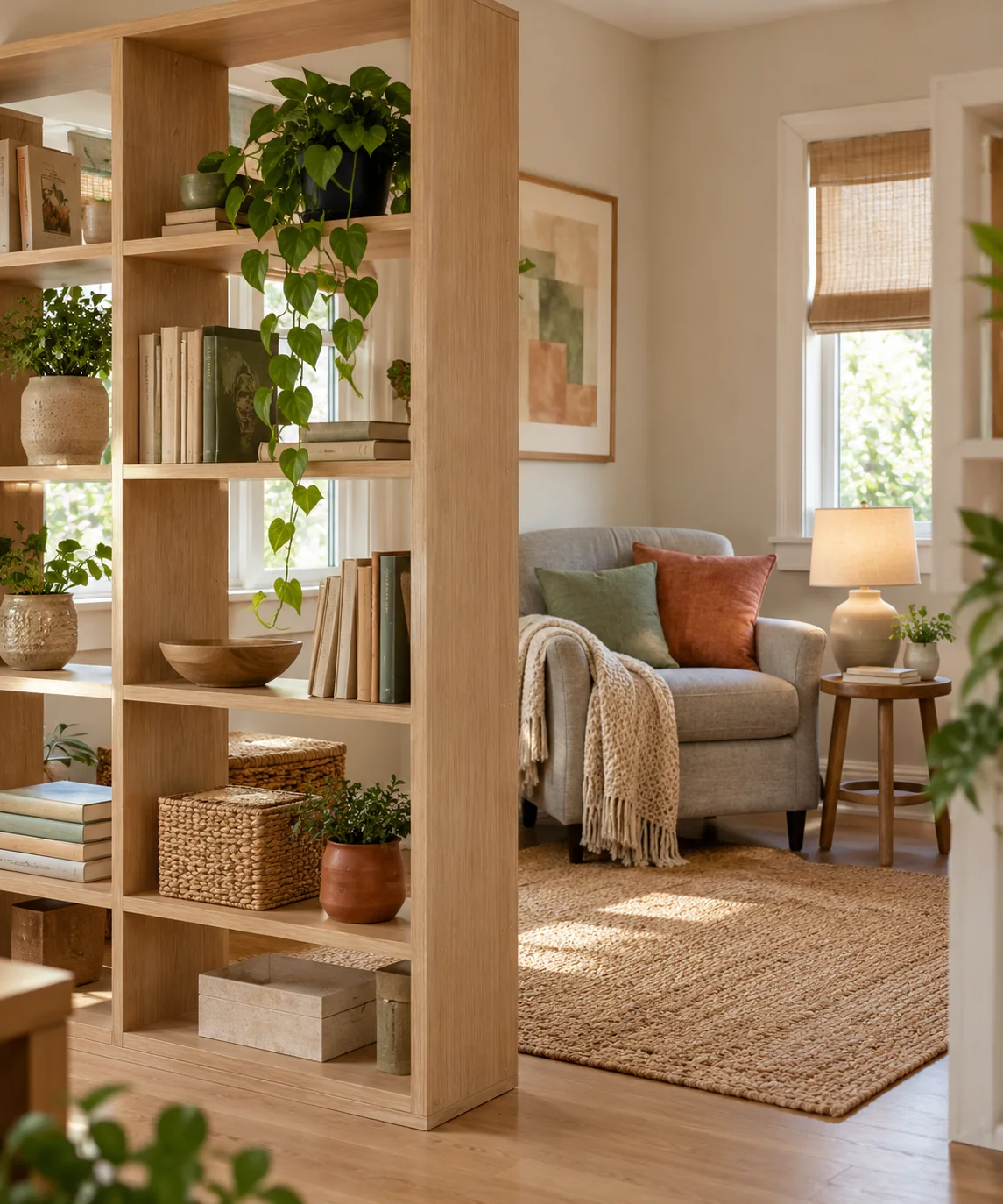
Mechanical Stability and Anti-Tip Anchoring
Any shelving unit placed perpendicular to a wall must be secured against tipping, as open room dividers lack back-wall support and are vulnerable to accidental bumps. Follow manufacturer instructions regarding anti-tip brackets, wall straps, or structural floor anchors. In rental units where wall drilling is restricted, consider lower-profile console units or bookcases specifically engineered and weighted as freestanding room dividers. Relying solely on book weight to anchor a tall, narrow unit creates a significant tip-over hazard and should be avoided.
Balancing Light Transmission with Visual Privacy
An open-grid shelving unit functions as a daylight-permeable partition when items are thoughtfully arranged. Place larger, solid items such as storage bins or stacked volumes on lower shelves to create a grounded visual screen at floor level. On shelves aligned with seated eye height, alternate small book arrangements with open space, framed artwork, or low ceramic pieces. This semi-open distribution gives the reading nook an enclosed, restful feel without blocking the penetration of daylight into the rest of the studio.
Circulation Paths and Furniture Layout
Before anchoring the divider, verify that room circulation remains comfortable and unimpeded. Ensure adequate clearance between the end of the shelf and adjacent furniture, walls, or entrance doors so residents can pass easily without clipping corners. Inside the nook, position an armchair so its back or side rests securely against a solid perimeter wall. Check that the chair placement does not interfere with the swing radius of nearby wardrobe doors, window frames, or heating registers.
Task Lighting and Safe Cord Management
Effective reading illumination requires dedicated task lighting rather than relying entirely on ambient ceiling fixtures. A stable floor lamp with a heavy base or a compact table lamp placed on a dedicated side table offers focused light without complicating shelf wiring. If placing a lamp within a shelving cubby, verify that cords are routed safely away from shelf edges where books could pinch or abrade insulation. Never run power cables beneath area rugs or through tight pinch points where friction can damage wiring.
Weight Distribution and Everyday Maintenance
Even anchored shelving units perform best when loaded with careful attention to balance. Place dense, heavy items on the lowest shelves and keep upper tiers reserved for lighter decor, paperback collections, or open negative space. Because open-backed shelving collects ambient dust from both sides, inspect and clean surfaces regularly with a microfiber duster. Avoid overcrowding cubbies, which increases the likelihood of items being inadvertently pushed off the opposite side when selecting a book.
YOUR STARTING POINT
A little checklist.
Original editorial guidance. Images are AI-generated concepts, not photographs of completed projects. Our sources and approach.
Questions to consider
What height is practical for a bookshelf room divider?
Low to mid-height units, typically between three and four feet tall, offer effective visual separation while seated without creating excessive top-heavy tip risks. Taller units require robust, non-negotiable wall anchoring to remain stable when projecting outward into living areas.
How can renters divide a space if lease terms prohibit drilling into walls?
If wall anchoring is prohibited, avoid tall perpendicular bookcases. Instead, opt for low, wide horizontal sideboards, folding fabric screens, or tension-pole systems designed specifically for temporary floor-to-ceiling mounting without fastener damage.
How do I maintain safe clearance around heating sources?
Position wooden shelving and upholstery well away from baseboard heaters, radiators, and forced-air registers in accordance with local fire safety codes and heater manufacturer guidelines. Unobstructed airflow prevents localized heat buildup and preserves furniture finishes.