Dining Nooks · THE GUIDE
Use an Open-Legged Console Table as a Narrow Two-Seater Dining Bar
In compact apartments where a standard dining table restricts walking pathways, repurposing multi-use furniture offers a practical footprint. An open-legged console table, traditionally placed along entryways or behind sofas, can function as a streamlined dining perch for two. Its shallow depth sits neatly against underutilized perimeter walls without occupying central floor area. Safe and comfortable everyday use depends on choosing a sturdy model with sufficient vertical knee clearance, an unobstructed base frame, and secure stability against accidental tipping. With realistic dimensional checks, an open console creates a functional, space-efficient eating counter.
Jump to the checklist ↓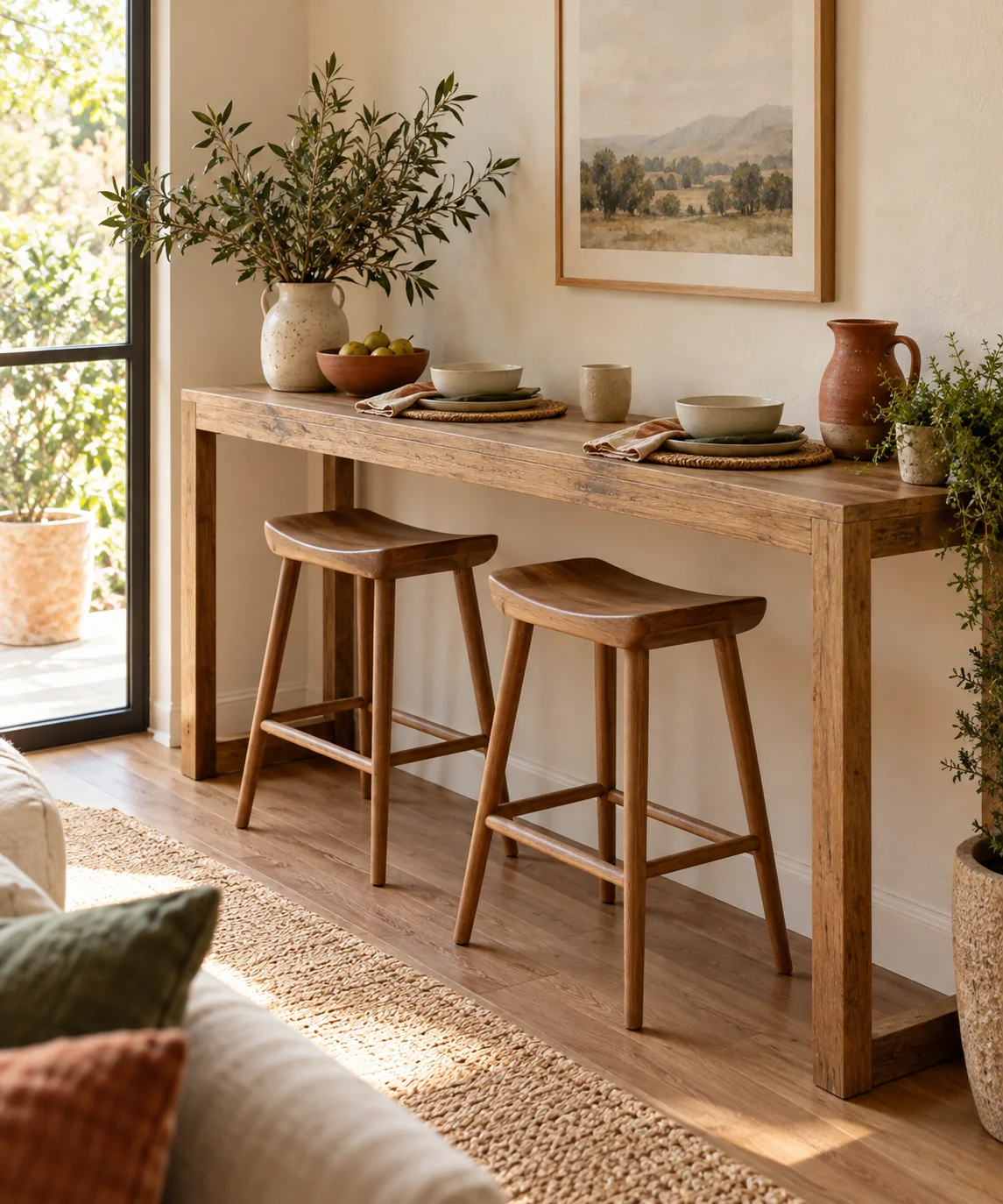
Verifying Under-Table Clearance and Base Openings
Before choosing a console table for dining, inspect the space beneath the tabletop. Many decorative consoles include low storage drawers, lower display shelves, or decorative diagonal stretchers that obstruct legroom. For comfortable dining, confirm that the table apron allows sufficient clearance above diners' thighs when seated on appropriately sized stools. Check that the horizontal distance between the legs accommodates two stools side by side, allowing roughly fifty to sixty centimeters of lateral width per person so diners do not crowd each other.
Selecting Backless or Low-Profile Stools
A key advantage of an open-legged console setup is preserving floor space when the bar is idle. Pair the table with backless stools or models with low backrests that tuck entirely beneath the tabletop frame between meals. Measure the stool height against the table surface; comfortable dining generally requires twenty-five to thirty centimeters of vertical separation between the stool seat and the tabletop. Ensure the stool footprint sits fully within the perimeter of the table legs so walkways remain clear.
Protecting Decorative Tabletops from Mealtime Wear
Console tables are often designed for display rather than the heat, liquids, and friction of daily meal service. Unsealed timber, fragile veneers, and lacquers can mark quickly from warm mugs or moisture rings. Protect the surface using heat-resistant placemats, cork coasters, or washable table runners. For long-term protection without hiding the furniture surface, consider having a custom tempered glass topper with polished edges cut to match the table dimensions exactly.
Managing Walkway Flow and Perimeter Spacing
Console tables typically range from thirty to forty-five centimeters in depth, making them suitable for narrow perimeters. Even with a slim profile, you must account for the space required by seated diners. Plan for roughly sixty centimeters of clear depth behind each stool so occupants can pull out and stand up without bumping adjacent walls or furniture. Avoid setting up the dining perch within the swing radius of doors, open cabinet fronts, or busy entry pathways.
Assessing Table Stability and Anti-Tip Needs
Because console tables are relatively tall and narrow, they have a higher center of gravity than standard dining tables and can tip if leaned on heavily. Place the table against a solid wall surface and inspect the feet, using adjustable levelers or non-slip pads to prevent wobbling on uneven flooring. If the table feels light or easily dislodged, install manufacturer-approved anti-tip wall brackets or choose a heavier, purpose-built breakfast bar table designed to handle active daily dining loads safely.
YOUR STARTING POINT
A little checklist.
Original editorial guidance. Images are AI-generated concepts, not photographs of completed projects. Our sources and approach.
Questions to consider
What is the practical minimum table depth for dining on a console?
A depth of at least thirty-five centimeters is recommended to fit a standard dinner plate, drink, and utensils comfortably without crowding the wall.
Can standard dining chairs be paired with a console table?
Standard dining chairs are designed for seventy-five-centimeter tables and are typically too low for taller console or sofa tables. Match the stool seat height so that it sits twenty-five to thirty centimeters below the table surface.
How can I prevent stools and table legs from slipping on hard floors?
Attach dense, non-marking rubber pads to the underside of the table legs and stool feet. These improve grip on wood or tile floors and reduce movement during seating.