Garden Tool Organization · THE GUIDE
Use an Open Timber Crate for Heavy-Duty Coiled Garden Extension Leads
Heavy-duty outdoor extension leads are essential for operating electric line trimmers, shredders, and blowers, but their thick jackets make neat storage challenging. Forcing thick fifty-foot cables onto tight wall hooks often damages insulation or leaves trailing loops across walkways. An open timber crate placed at ground level provides a generous, ventilated home that accommodates loose cable coils without pinching internal wires. Using low-profile crates preserves floor organization, protects plug ends from impact, and allows gardeners to grab or restow bulky leads quickly without fighting awkward knots or wall-mounted cord winders.
Jump to the checklist ↓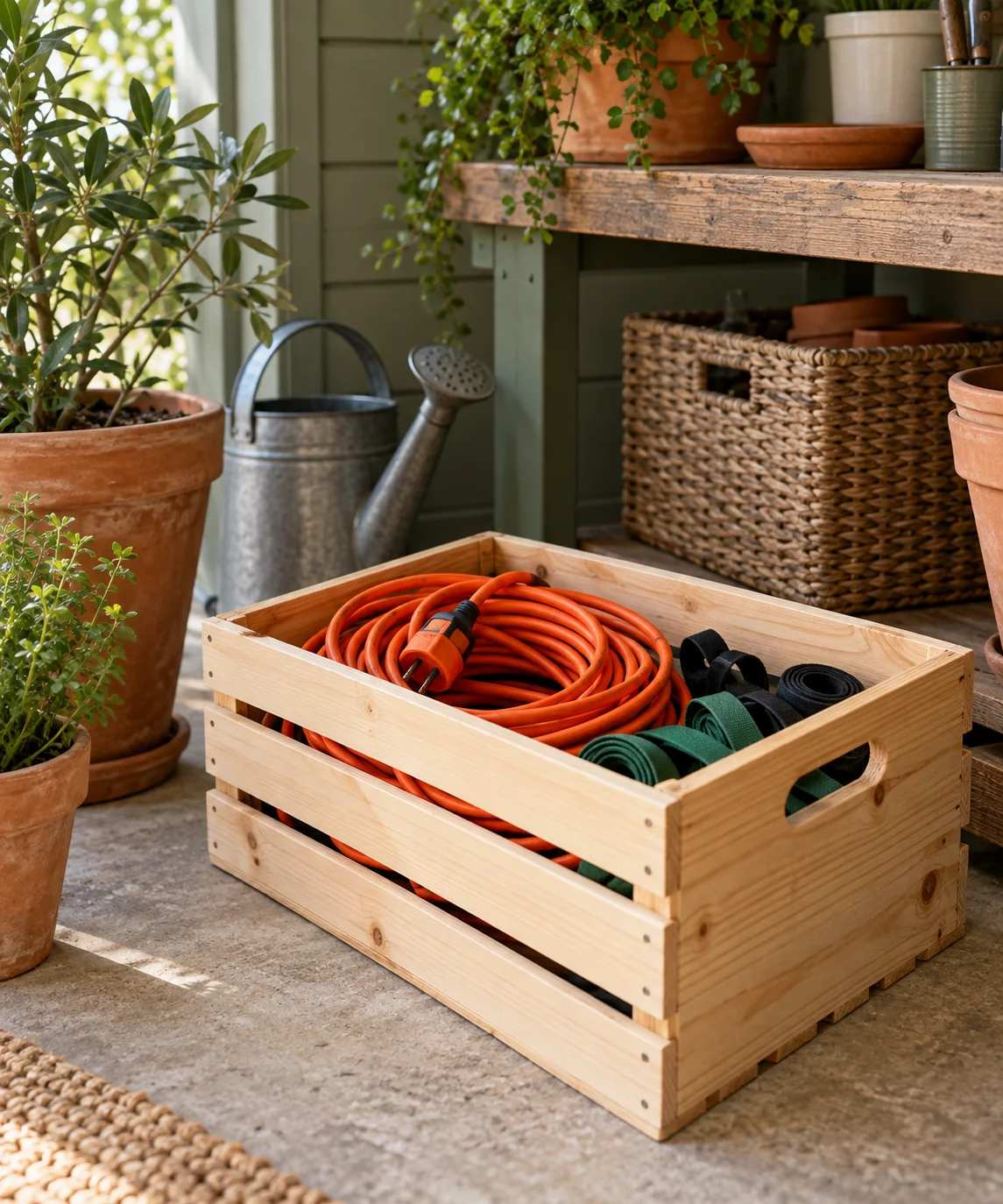
Choosing Crate Dimensions and Ventilation
Select a sturdy, open-slatted wooden crate with enough interior volume to hold coiled cables without forcing tight bends. Restricting heavy-gauge outdoor cords into tight containers puts stress on internal copper strands and can cause premature jacket cracking. Slatted construction provides passive air circulation around stowed cords, helping to prevent moisture buildup in humid storage sheds. Confirm that the crate interior is free of protruding nails, staples, or splinters that could abrade rubber cord jackets during loading and unloading.
Coiling Methods for Cable Longevity
Employ relaxed circular or over-under coiling methods when winding heavy-gauge outdoor extension leads. Avoid tightly winding cords around an elbow and hand, as this introduces severe torsional twist, strains terminal connections, and creates stubborn kinks in thick rubber insulation. Allow the cord to fall naturally into broad, relaxed loops. Once loosely gathered, bind each loop with wide hook-and-loop straps or cord wraps to keep coils manageable before resting them inside the crate.
Placement and Workshop Safety Considerations
Set the timber crate on a flat, dry floor or low, accessible shelf in a sheltered shed, garage, or utility nook. Position the container outside main footpaths and clear of doorway thresholds to avoid tripping hazards. Ground-level or low-shelf positioning eliminates the need to lift heavy cable bundles to awkward overhead hooks. Ensure the storage spot is situated well away from water taps, hose reels, overhead condensation sources, and open potting soil bins that could spill dirt into the crate.
Managing Multiple Leads and Connectors
When storing multiple outdoor leads, stack them flat with plug terminals accessible near the top of each coil rather than buried underneath. Storing cords individually or using separate low crates prevents heavy cords from crushing lower bundles. Protect male and female plug ends from collecting grit and floor dust by using terminal caps or breathable cloth covers. Keep cord accessories, such as portable residual current devices or plug locks, organized in a small internal pouch alongside the cords.
Inspection and Seasonal Care Routine
Outdoor cords pick up moisture, dirt, and lawn sap during yard maintenance. Always disconnect power and wipe cable jackets completely clean and dry before coiling and stowing them away. Do not rely on storage crates to dry out wet electrical gear; damp storage risks terminal corrosion and electrical hazards upon next use. Inspect the entire length of the cable for surface nicks, jacket abrasions, or bent prongs before seasonal stowage, and avoid overfilling the crate so cables never spill into walkways.
YOUR STARTING POINT
A little checklist.
Original editorial guidance. Images are AI-generated concepts, not photographs of completed projects. Our sources and approach.
Questions to consider
Can multiple long extension leads be stored in the same crate?
Multiple cords can share a crate if each is separately secured and stacked loosely. However, stacking several heavy cables can compress lower coils and make retrieval awkward; using separate shallow crates for extra-long leads is often safer and more convenient.
Are slatted timber crates preferable to plastic storage bins?
Slatted crates offer natural airflow that prevents stagnant humidity in unheated outbuildings. Plastic storage tubs are suitable if kept clean and dry, but tightly lidded bins can trap ambient condensation if cords are stowed in fluctuating shed temperatures.
How should extension cord plug ends be protected during storage?
Keep plugs clean and free of grit by resting them on top of the coiled loops rather than under heavy weight. Fitted rubber caps or simple cloth storage pouches shield the metal prongs from dust, moisture, and accidental impact.