Warm Neutral Living Rooms · THE GUIDE
Use an Open Wire End Table to Maintain Clear Floor Sightlines
Compact living rooms quickly become visually congested when bordered by solid, blocky side furniture. An open wire end table provides functional surface area for resting everyday items while allowing light and flooring to remain visible through its framework. This visual openness helps tight seating zones feel less crowded and noticeably lighter. When selected in warm champagne, soft brass, or brushed bronze finishes, wire tables pair naturally with neutral linen sofas, creating practical function without adding bulky mass to narrow room layouts.
Jump to the checklist ↓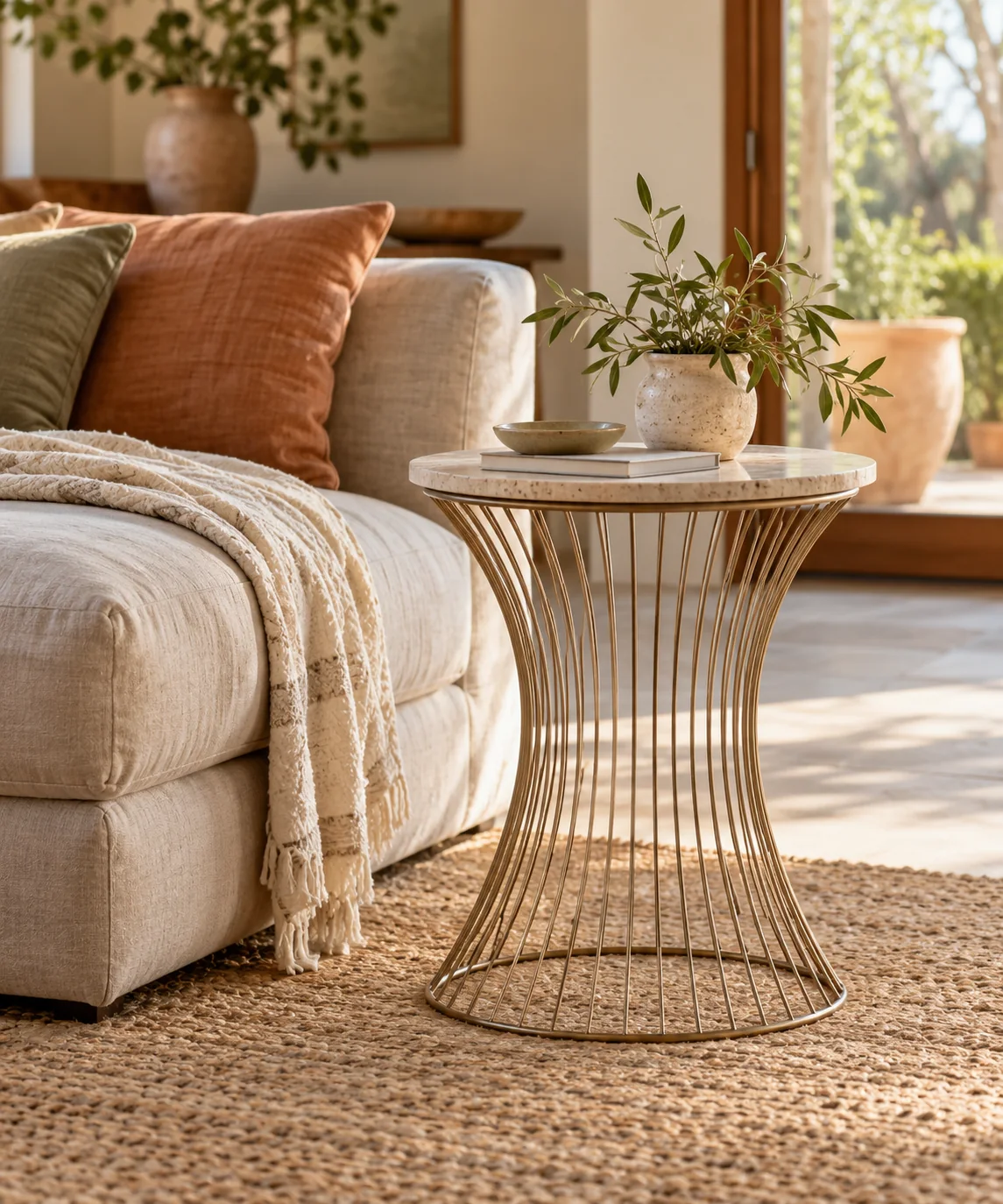
Preserving Sightlines in Compact Seating Areas
Compact living rooms often feel crowded when bordered by solid, blocky side tables that interrupt floor views. An open wire table frame allows light and visible floor finishes to continue underneath and behind the piece. This open structure maintains visual continuity across tight seating zones without sacrificing a functional surface. When paired with neutral upholstered seating, the airy framework provides a light visual presence that fits naturally into small-scale layouts without appearing heavy or cumbersome.
Proportions and Everyday Placement
When choosing an end table beside a sofa, prioritize comfortable reach and proportional balance. Measure the height of the sofa arm and look for a table height that aligns closely with that armrest for ease of use. Ensure the table diameter leaves adequate room for side walkways and does not obstruct nearby doorways or heating registers. Checking these room measurements beforehand helps avoid cramped circulation paths while keeping tabletop items within natural arm's reach.
Finish Pairing with Warm Neutrals
Metal finishes in soft brass, muted champagne, or brushed bronze integrate smoothly with warm neutral color palettes, including cream, taupe, and unbleached linen textiles. Combining a thin wire framework with a solid top material, such as matte ceramic, pale limestone, or light wood, provides a secure, level resting surface. This contrast between an open metal base and a tactile solid top adds material interest while keeping the overall aesthetic calm and cohesive.
Stability and Manufacturer Weight Limits
Because open wire tables have lightweight frames, verifying stability and weight limits is essential. Review the manufacturer's specified weight capacity before placing items like ceramic table lamps or decorative objects on the surface. Tables with a wider base profile offer greater stability than designs that taper sharply toward the floor. To minimize tipping hazards, keep the tabletop reserved for lightweight daily essentials and avoid placing tall, top-heavy objects on the edge.
Floor Protection and Maintenance Care
Narrow metal contact points can concentrate pressure onto floor surfaces, potentially marking soft wood or leaving indentations in carpets. Confirm that the table base includes smooth protective glides, or add suitable adhesive felt pads designed for your specific flooring type. For ongoing maintenance, dust between the wire spindles using a soft microfiber wand or dry electrostatic duster rather than abrasive cloths that could scratch coated or plated metal surfaces.
YOUR STARTING POINT
A little checklist.
Original editorial guidance. Images are AI-generated concepts, not photographs of completed projects. Our sources and approach.
Questions to consider
Can an open wire end table safely hold a small table lamp?
Yes, provided the combined weight is well within the manufacturer's specified load rating and the tabletop is solid and level. Choose a lamp with a wide, stable base to prevent tipping.
What tabletop materials work well with an open wire frame?
Solid tops made from honed stone, dense composite, ceramic, or solid wood provide a flat, stable surface for resting cups or books while preventing small items from slipping through the open framework.
How should electrical cords be managed around open wire tables?
Keep cords routed along the perimeter of the room toward the nearest wall outlet, avoiding running cords under furniture where they can be pinched, crushed, or worn by shifting frames.