Compact Home Offices · THE GUIDE
Use an Over-the-Door Organizing Track with a Drop Ledger Desk
When floor space is non-existent, vertical architecture provides a viable pathway for a micro-office. An over-the-door organizing track with a fold-down ledger desk repurposes an underutilized interior door into a functional, non-damaging workstation. Suspended from sturdy top brackets and tightened with lower tension mechanisms, this system avoids permanent wall holes or structural alterations. Equipped with modular canvas pouches and a folding writing ledge, it offers an efficient touch-down spot for planning, bill sorting, and laptop review. Ensuring door suitability, maintaining hardware clearances, and adhering to strict load limitations will guarantee stable, reliable utility.
Jump to the checklist ↓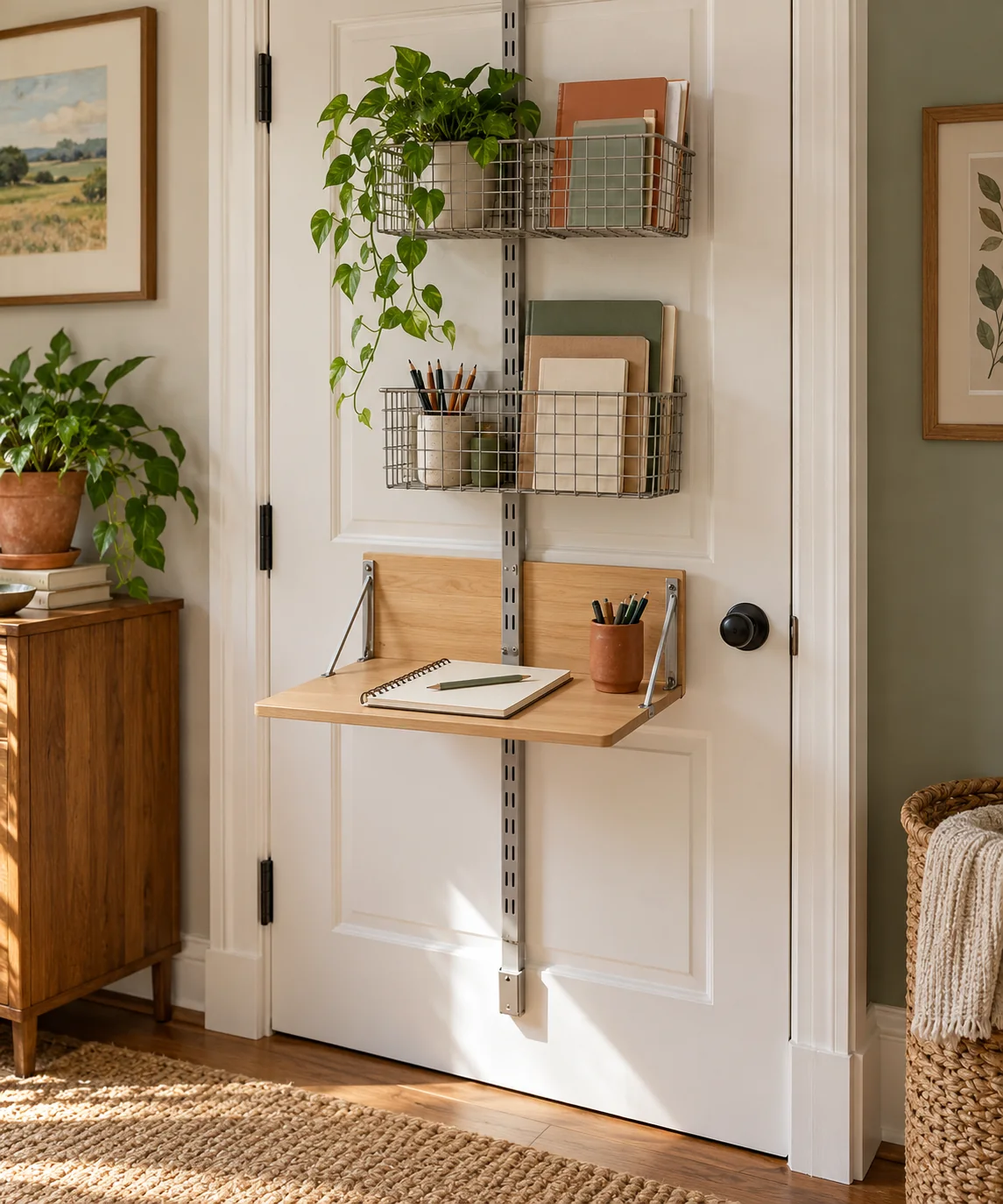
Evaluating Door Structure and Hinge Integrity
Before considering an over-the-door hanging workstation, inspect the door's construction and hanging hardware. Most modern interior doors are hollow-core, consisting of a thin veneer over a cardboard honeycomb interior. These doors lack the rigidity to withstand repeated downward working pressure and can easily bow or surface-dent under tension brackets. Solid-core wood doors offer greater resistance, but the added weight of a workstation combined with laptop gear places continuous stress on the door hinges. Check that hinge screws are firmly seated in the jamb framing and that the door does not already sag or drag across the floor.
Verifying Frame Clearances and Latch Operation
Over-the-door systems rely on top bracket hooks that wrap over the upper edge of the door slab. For the door to close and latch normally, sufficient clearance must exist between the door slab and the head jamb, as well as along the latch side. Measure the perimeter gap when the door is shut; if the gap is minimal, bracket thickness can cause binding, scuffing of the paint, or failure of the latch mechanism to engage. Placing protective felt or rubber padding between the bracket and door finish helps prevent surface damage, provided frame clearances permit it.
Assessing Ergonomic Height and Working Reach
A fold-down ledger shelf suspended from a vertical track must be positioned to support comfortable forearm alignment, whether you intend to work while seated on a stool or standing. Before securing components, evaluate where the shelf falls relative to your elbow height. Ensure that when the shelf is deployed, it does not strike the door lever, block access to adjacent light switches, or obstruct room passageways. When planning the setup, prioritize systems that lock securely into position and fold fully flat when not in active use to maintain safe pathway clearance.
Managing Door Load with Lightweight Modular Storage
The total hanging mass on an interior door directly affects hinge longevity and door alignment. Rather than loading the track with rigid metal wire baskets or heavy reference binders, select lightweight fabric or canvas organizers to hold essential stationery and charging cables. Keep stored items flat and organized to minimize outward projection into the room. Storing heavy paper reams, thick books, or dense electronics on the door increases dynamic swinging forces during door opening and closing, which can loosen hinge fasteners over time.
Operational Safety Boundaries and Movement Limitations
A door-hung drop ledger is intended strictly as a temporary, light-duty writing or laptop check-in surface. It cannot support leaning body weight, heavy external displays, or forceful typing without risking bracket slippage or door panel damage. In shared households, using a workstation mounted to an operable door introduces collision risks if another person opens the door from the opposite side. Restrict use to designated quiet periods, clear all items from the shelf before folding it away, and routinely inspect brackets and hinge screws for signs of loosening or wear.
YOUR STARTING POINT
A little checklist.
Original editorial guidance. Images are AI-generated concepts, not photographs of completed projects. Our sources and approach.
Questions to consider
Can over-the-door workstations be mounted safely on hollow-core doors?
Hollow-core doors are generally not recommended for fold-down work surfaces. The thin outer skin can crack or indent under bracket tension, and the internal core provides insufficient backing for downward working loads. Solid-core doors are far better suited for hanging systems.
How do I determine the weight capacity of a door-hung drop desk?
Always consult the specific product manufacturer's documentation for rated safe working loads. Capacity varies widely based on bracket design and track materials, and users must account for the dynamic force of hands resting on the surface in addition to equipment weight.
What prevents an over-the-door workstation from swinging when the door moves?
Most systems rely on lower clamp brackets or tension straps that hold the vertical rail tight against the bottom edge of the door. Regularly verify that these tension points remain secure, and avoid moving the door while the desk shelf is deployed.