Small Bathroom Storage · THE GUIDE
Use an Over-the-Toilet Ladder Shelf for Vertical Linens
In tight powder rooms and compact bathrooms, the vertical plane directly above the toilet tank frequently remains unutilized. Installing floating cabinetry often requires drilling into tile or locating hidden wall studs, which can prove difficult in rental properties or moisture-dense environments. A freestanding or leaning over-the-toilet ladder shelf bypasses intrusive structural modifications while reclaiming vertical volume. By arranging guest towels, washcloths, and daily textiles upward, you clear precious under-sink cabinetry. Planning around proper clearances, plumbing valves, and moisture exposure ensures the structure remains stable, hygienic, and functional for household routines.
Jump to the checklist ↓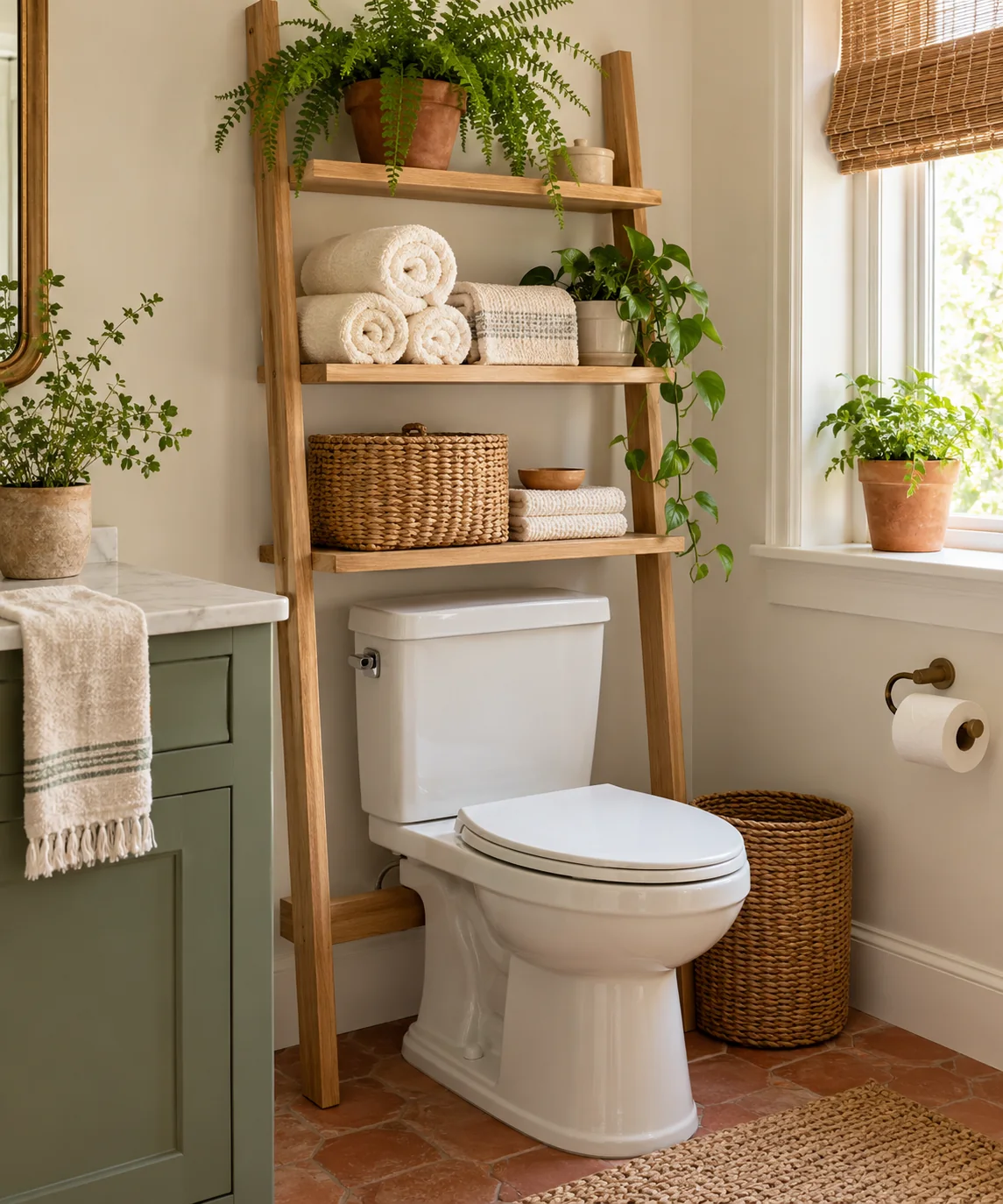
Clearance and Plumbing Access
Before selecting a ladder organizer, verify the dimensions of your toilet suite, taking into account tank height, overall depth, and lid travel. Ensure the lowest tier sits high enough to permit the toilet seat and lid to open completely without striking the framework, and leaves sufficient room to reach top-mounted push buttons or lift the tank lid for servicing. Side uprights must not obstruct access to the flexible water supply line, wall trim, or the emergency shutoff valve. Confirm the unit fits comfortably between adjacent walls or vanities so regular cleaning and valve operation remain unhindered.
Weight Distribution and Shelf Loading
Organize stored goods by weight to keep the assembly balanced and prevent top-heavy instability. Upper rungs are best suited for lightweight, bulkier items such as spare bath towels, rolled guest linens, or clean washcloths in lightweight organizers. Reserve mid-level shelves for everyday paper goods or lightweight toiletry baskets that are simple to lift down. Avoid placing heavy ceramic dispensers, oversized liquid bottles, or fragile glass containers on elevated shelves, and always adhere to the manufacturer's specified per-shelf load limits.
Managing Bathroom Moisture and Airflow
Bathrooms experience periodic surges in relative humidity that can affect stored cotton textiles. To protect clean linens stored on open rungs, fold or roll towels cleanly and avoid packing shelves so tightly that air cannot circulate between layers. Spare textiles and paper goods benefit from storage inside breathable canvas or synthetic woven baskets fitted with lids. Running an effective mechanical exhaust fan during bathing and for several minutes afterward helps remove moisture mist before it settles into fabric fibers.
Floor Stability and Anti-Tip Considerations
Tile, vinyl, and stone bathroom floors are prone to dampness and can become slippery under leaning furniture legs. Equip the base of the frame with textured rubber footing pads to reduce shifting against smooth flooring, ensuring feet rest flat rather than bridging wide grout lines unevenly. Because pulling towels from upper rungs exerts outward force, leaning frames can tip if bumped. Follow the manufacturer's instructions regarding anti-tip straps or tether kits, and confirm with your property manager what wall attachment methods are permissible in rental housing.
Surface Care and Routine Maintenance
Surfaces directly behind and above a toilet accumulate dust, lint, and airborne residue over time. Clean wood, composite, or painted metal ladder rails regularly with a microfiber cloth slightly moistened with dilute soapy water, avoiding abrasive cleaning pads that strip factory sealants. Wipe down the lower legs promptly if water splashes during cleaning. Periodically check any fasteners, leg leveling pads, and wall contact points to verify that humidity fluctuations have not loosened hardware.
YOUR STARTING POINT
A little checklist.
Original editorial guidance. Images are AI-generated concepts, not photographs of completed projects. Our sources and approach.
Questions to consider
Are over-the-toilet ladder shelves stable without securing them to the wall?
Leaning ladder shelves are susceptible to tipping if pulled, bumped, or loaded unevenly. While non-skid rubber feet reduce base slippage, manufacturers strongly recommend using anti-tip straps or wall tether hardware, especially in households with children or pets. Always consult product manuals and building guidelines regarding secure attachment.
How do you access the toilet tank for maintenance with a shelf installed?
Select a frame that offers generous clearance above the tank rim so the lid can be lifted for internal repairs without moving the entire structure. If deeper plumbing maintenance is required, unload shelves before carefully detaching any tethers and moving the framework away from the wall.
How do you keep open-air towels from absorbing shower steam?
Ensure your bathroom exhaust ventilation operates throughout and after showers to exhaust humid air. Storing secondary towels inside lidded woven bins and rotating active linens every few days prevents fabrics from lingering in damp air.