Laundry Space Organization · THE GUIDE
Use Divided Drawer Inserts for Stain Removal Brushes and Sponges
A utility drawer in a laundry room frequently turns into a chaotic catchall for specialty laundry tools. Small items such as horsehair stain removal brushes, detail sponges, seam rippers, collar stiffeners, and pumice sticks easily roll beneath larger items or become damaged against heavier supplies. Installing divided drawer inserts transforms a shallow utility drawer into a functional processing station. By establishing dedicated compartments tailored to the precise footprint of each accessory, you protect delicate brush bristles, prevent cross-contamination from cleaning residues, and maintain an orderly inventory for garment care routines.
Jump to the checklist ↓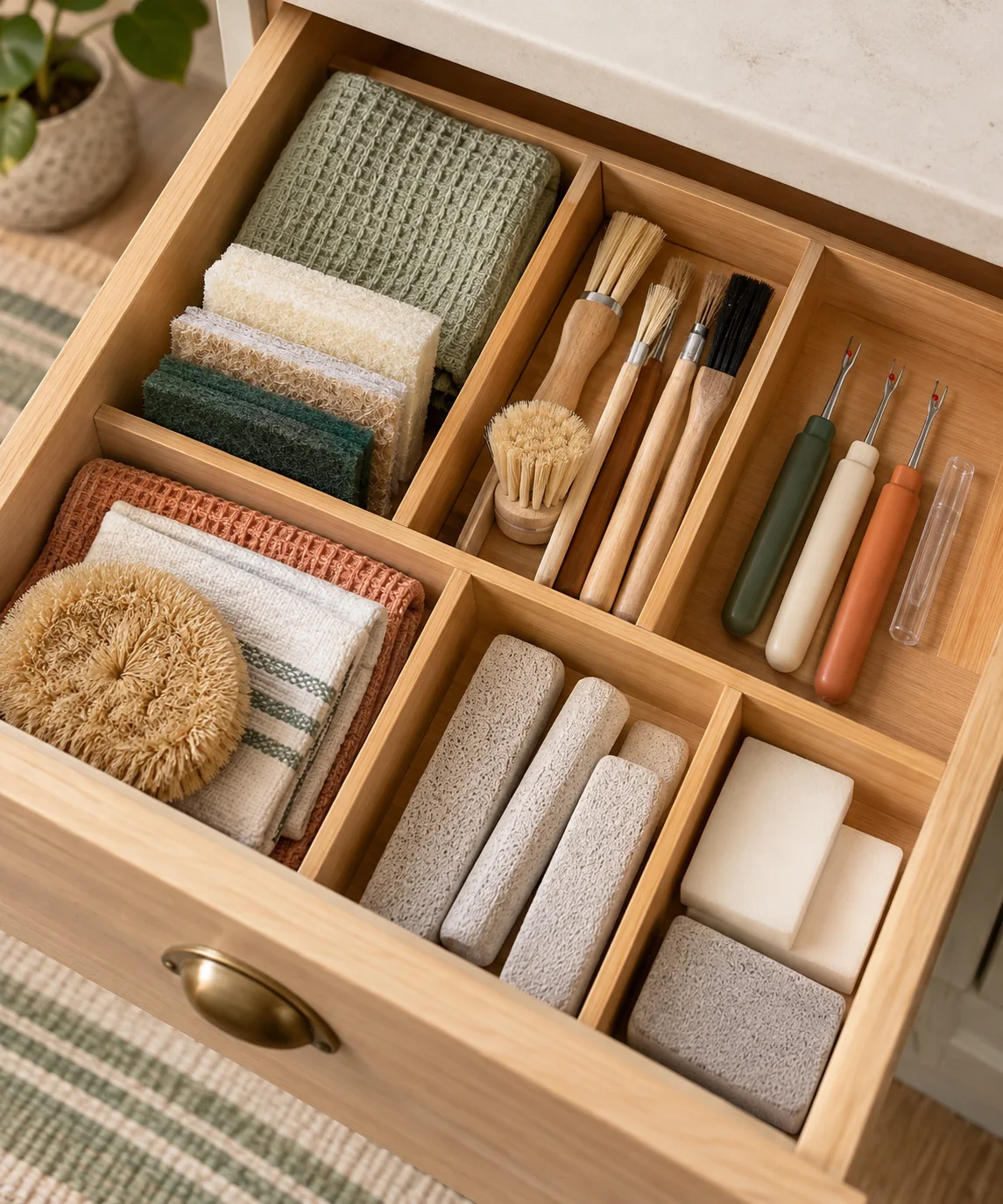
Measure Drawer Clearances and Internal Obstacles
Before purchasing or building dividers, measure the interior width, depth, and vertical clearance of your utility drawer. Laundry room cabinetry often features shallow top drawers with limited vertical clearance, which restricts the height of divider walls and organizer bins. Take note of any protruding drawer slide hardware, interior screw heads, or beveled drawer box edges that reduce usable space. Selecting low-profile modular inserts that sit flat on the drawer base ensures that tools, brush handles, and sponges clear the cabinet face frame smoothly without catching when opened.
Group Garment Care Tools by Function
Organize accessories into practical groupings based on their role in stain treatment and fabric care. Place delicate detailing tools, such as soft horsehair brushes and seam rippers, together to prevent delicate bristles from being crushed by heavier supplies. Coarser scouring items, including lint stones, pumice bars, and stiff utility brushes, should occupy a separate partition. Isolating liquid applicators, droppers, and stain-paste spatulas from mechanical scrubbing tools helps prevent unintentional product transfer and keeps delicate garments protected from residue.
Select Durable and Cleanable Insert Materials
Because stain removal tools frequently carry trace moisture or chemical residue, choose insert materials that clean easily and resist staining. Polypropylene, clear acrylic, and coated metal mesh offer non-porous surfaces that can be wiped down or washed with mild soap. If using sealed bamboo or wood organizers, verify they have a water-resistant finish, as unfinished wood can absorb damp residues and warp. Line drawer bottoms with a washable, non-slip liner to hold individual modular bins in place during rapid drawer operation.
Plan Drawer Layouts Before Securing Compartments
Before committing to fixed organizer trays, lay out your frequently used stain treatment tools on a flat surface to assess how much functional clearance each item requires. Consider ergonomics and hand clearance, ensuring there is enough space between compartments to grasp small items like collar stays or seam rippers without fumbling. Place high-frequency items, such as primary stain brushes, near the front of the drawer, while reserving rear compartments for specialized tools used only occasionally, maintaining an efficient workflow during busy laundry routines.
Establish Drying Protocols and Routine Drawer Care
Enclosing damp laundry tools inside a dark, unventilated drawer creates an environment prone to mildew, odor, and cabinet damage. Always allow brushes, sponges, and applicators to dry completely on a countertop rack or ventilated tray before returning them to their drawer compartments. Periodically empty the drawer compartments to wipe away accumulated lint, loose fibers, and dried treatment powder using a lightly dampened cloth. Let the drawer dry thoroughly before replacing tools to maintain clean storage conditions.
YOUR STARTING POINT
A little checklist.
Original editorial guidance. Images are AI-generated concepts, not photographs of completed projects. Our sources and approach.
Questions to consider
What divider material works best for utility drawers?
Acrylic and polypropylene inserts are best suited for laundry drawers. They resist residual moisture from damp brushes, clean easily with a damp cloth, and will not warp or absorb stain-pretreatment residues over years of regular utility use.
How do you prevent damp sponges from mildewing in a drawer?
Never store damp sponges directly inside an enclosed drawer. Allow sponges and brushes to air dry completely on a countertop rack before placing them into divided compartments to prevent mildew and protect the cabinetry from trapped moisture.
Can adjustable tension dividers replace compartmentalized trays?
Adjustable spring-loaded dividers work well for separating long items like lint rollers and pumice sticks. However, smaller items such as seam rippers and detailing brushes require enclosed modular bins to prevent them from sliding beneath divider gaps.