Sage and Cream Interiors · THE GUIDE
Use Fabric Storage Cubes to Organize a Child's Low Bookshelf
Shared living spaces frequently struggle to accommodate children's toys without sacrificing an uncluttered, cohesive aesthetic. A low horizontal bookshelf fitted with soft fabric storage bins bridges the gap between playful accessibility and calm living room decor. By selecting bins in muted sage and pairing them with a cream shelf finish, the unit blends seamlessly into a sophisticated interior palette. Children can independently retrieve and return their toys, while the solid fabric panels neatly conceal mismatched game boxes, building blocks, and accessories when recreation time ends.
Jump to the checklist ↓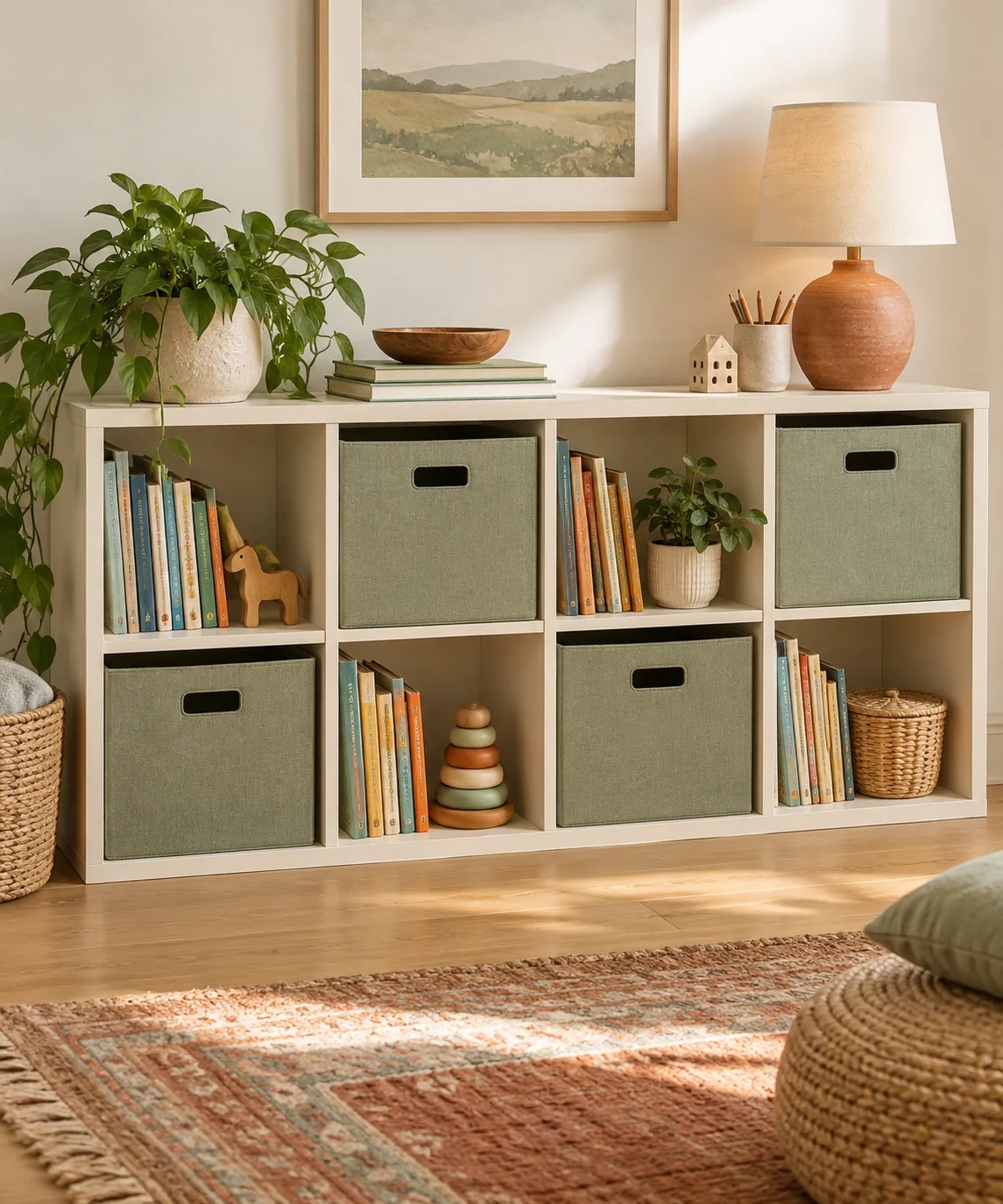
Sizing Bins to Bookcase Openings
Accurate measurements are essential when retrofitting an existing low bookcase with fabric containers. Measure the interior height, width, and depth of each cubby compartment. Aim for storage cubes that leave roughly half an inch of clearance on the top and sides, allowing small hands to pull bins out smoothly without catching on the frame. If bins are too deep, they will overhang the shelf edge, creating an untidy appearance and potentially tipping forward when packed with dense wooden blocks or plastic toys.
Establishing an Alternating Visual Rhythm
A low unit fully packed with identical fabric boxes can look overly blocky and monolithic in an adult living area. Instead, create an alternating pattern across the horizontal shelf. Dedicate select cubbies to upright picture books supported by sturdy, rounded bookends, while reserving adjacent slots for sage fabric bins. This checkerboard strategy breaks up the visual weight, introduces varied textures, and gives the room an intentional, curated appearance while keeping favorite stories and building sets equally accessible to young children.
Sorting and Distributing Contents by Weight
Organize the contents of each fabric cube logically to keep the low unit safe and easy to maintain. Reserve bottom cubbies for heavier items like wooden train tracks, construction bricks, or board puzzles. Upper cubbies should hold lightweight objects such as stuffed animals, puppets, or dress-up textiles. Avoid overfilling fabric cubes past their rim; bulging bins warp over time, strain stitched handles, and prevent the boxes from sliding back into their cubbies cleanly after cleanup time.
Long-Term Maintenance and Handling
Fabric cubes collect surface dust and occasional smudges from daily family use. Choose canvas or non-woven polyester bins that can be spot-cleaned with a soft sponge and mild soapy water, avoiding harsh chemicals that could discolor muted sage dyes. Periodically pull all bins out to wipe down the cream shelving surfaces with a dry microfiber duster. Vacuuming inside the fabric bins every few months removes crumbs and paper lint, keeping both toys and storage containers clean and fresh.
Recognizing Practical Durability Limits
Fabric storage bins offer flexibility and soft edges, but they lack the structural rigidity of solid wooden crates. Children should not sit on, stand in, or step into the bins, as internal cardboard supports will crease and permanently collapse. Very sharp or heavy metallic toys can puncture thin fabric sidewalls. If you require storage for heavy tools, wet art supplies, or oversized games, use rigid interior caddies or store those specific supplies in dedicated craft cabinets instead.
YOUR STARTING POINT
A little checklist.
Original editorial guidance. Images are AI-generated concepts, not photographs of completed projects. Our sources and approach.
Questions to consider
How do I stop fabric bins from sagging over time?
Do not overload bins beyond their volume, and always insert the manufacturer's stiff baseboard before loading. Store dense items flat across the bottom rather than piling heavy toys against the fabric sides.
Can toddlers easily pull these bins off the shelf?
Yes, fabric bins with front pull handles are lightweight and safe for toddlers to pull. Ensure the bookcase itself is low, wide, and stable so retrieving bins does not cause shifting.
What is the best way to label these cubes for kids?
Use clip-on cardholders with simple illustrated icon cards rather than written text. This allows pre-reading children to recognize where blocks, cars, and stuffed animals belong without permanently marking the fabric bins.