Bookshelf Styling · THE GUIDE
Use Heavy Flat River Stones as Minimalist Bookends for Paperbacks
Commercial bookends often consume disproportionate space on narrow shelving units or clash with quiet, natural interiors. Smooth, dense river stones provide an understated alternative that anchors small collections of paperbacks without visual clutter. Because stones feature irregular contours and variable surface textures, selecting the correct geological shapes and preparing their contact surfaces ensures safety for both books and furniture. By balancing weight, geometry, and placement, you can establish stable, minimalist displays that hold softcover titles securely in place across living rooms, studies, or bedroom display alcoves.
Jump to the checklist ↓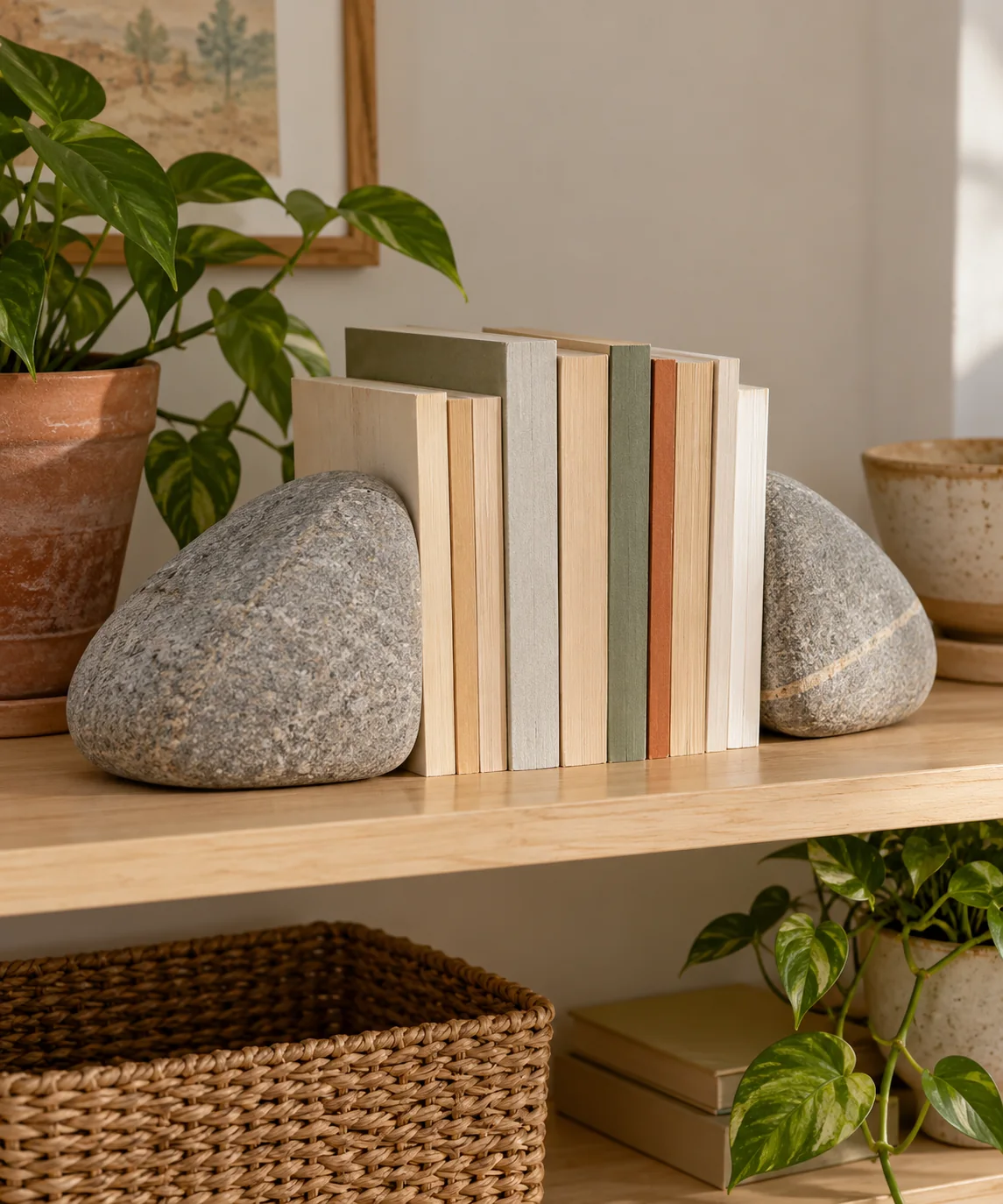
Selecting Optimal Stone Geometry and Weight
A functional stone bookend requires adequate mass paired with at least one stable, flat resting surface. Dense natural stones such as smoothed granite, basalt, or river cobbles with a naturally sheared base work well for supporting small groupings of lightweight paperbacks. Rather than relying on exact weight formulas, test the stone against lateral pressure to ensure it does not roll, wobble, or slide when books lean against it. Avoid brittle stones with crumbling edges, flaky shale, or rounded oval shapes that lack a dependable footprint.
Preparing Contact Surfaces and Scratch Protection
Natural river rocks carry surface grit and mineral particles that can easily scratch wood veneers, lacquered shelves, and painted bookcases. Thoroughly wash collected stones using warm water and mild soap, then allow them to dry completely before bringing them indoors. Apply adhesive wool felt pads or a cut-to-fit felt sheet across the entire bottom surface to buffer the shelf. For stones with irregular side contours, attach small, soft silicone bumper dots at the primary point of contact to prevent paper covers from scuffing.
Arranging Paperback Groups for Maximum Stability
Paperbacks lack the rigid, supportive structure of cloth-bound hardcovers, making them susceptible to creasing or leaning if supported by uneven objects. Align paperbacks vertically against a firm upright surface, such as a bookcase sidewall or structural divider, arranging titles by similar heights. Position the stone with its flattest, most vertical face snug against the outer book. For reliable support, choose a stone that reaches near the lower-to-middle portion of the book's spine to prevent soft covers from bending outward over the rock.
Balancing Visual Weight and Shelf Placement
Natural river stones introduce organic texture and neutral earth tones into linear shelving arrangements. To highlight the stone's raw material qualities, leave generous negative space between the stone bookend and the shelf perimeter rather than crowding the area with decorative knick-knacks. Pairing dark stones with pale shelves—or lighter sedimentary rocks with dark wood—creates subtle contrast while maintaining a clean, purposeful aesthetic suited to home offices, living rooms, and study nooks.
Monitoring Shelf Load Ratings and Routine Care
While individual stones appear modest in weight, using multiple mineral pieces across a single floating or wall-mounted shelf contributes to cumulative structural load. Always check the load capacity specified by your shelving manufacturer before adding heavy stone items alongside full rows of books. When dusting or rearranging, lift the stones straight up rather than dragging them across surfaces to keep felt backings intact. Periodically clean stone crevices with a soft dry brush to remove gathered dust.
YOUR STARTING POINT
A little checklist.
Original editorial guidance. Images are AI-generated concepts, not photographs of completed projects. Our sources and approach.
Questions to consider
Can natural river stones support heavy hardcover volumes?
River stones are generally best suited for small rows of softcover paperbacks. Tall or heavy hardcovers exert significant lateral leverage that can cause smooth stones to slide unless the stone is exceptionally heavy, which may exceed standard floating shelf load limits.
Where can I responsibly source smooth river stones?
Purchase decorative cobbles from local landscape yards, garden centers, or masonry suppliers where stones are sold legally in controlled quantities. Avoid harvesting rocks from natural waterways, public parks, or conservation areas, as removing stones disrupts local habitats and may violate environmental regulations.
How can I secure felt to a stone if peel-and-stick pads do not adhere well?
Smooth or porous stone surfaces can prevent standard adhesive backing from gripping. Lightly clean the stone surface to remove dust, let it dry, and apply a craft-grade multi-surface glue suitable for fabric and stone, following all manufacturer ventilation and curing instructions before setting the stone on furniture.