Small Balcony Layouts · THE GUIDE
Use Low-Profile Troughs as a Wind Buffer for Seedlings
Balcony airflow can quickly desiccate young seedlings and displace lightweight starter pots. Using broad, low-profile planters along floor areas can help moderate direct air movement across the deck surface, but expectations must remain realistic in high-exposure locations. Before placing heavy planters, consult your building management or a qualified structural professional to verify permissible slab capacities, as wet growing media rapidly accumulates substantial weight. Planning a staggered, reversible arrangement allows tender seedlings to benefit from nearby sheltering plants while keeping walkways unobstructed and structural limits respected.
Jump to the checklist ↓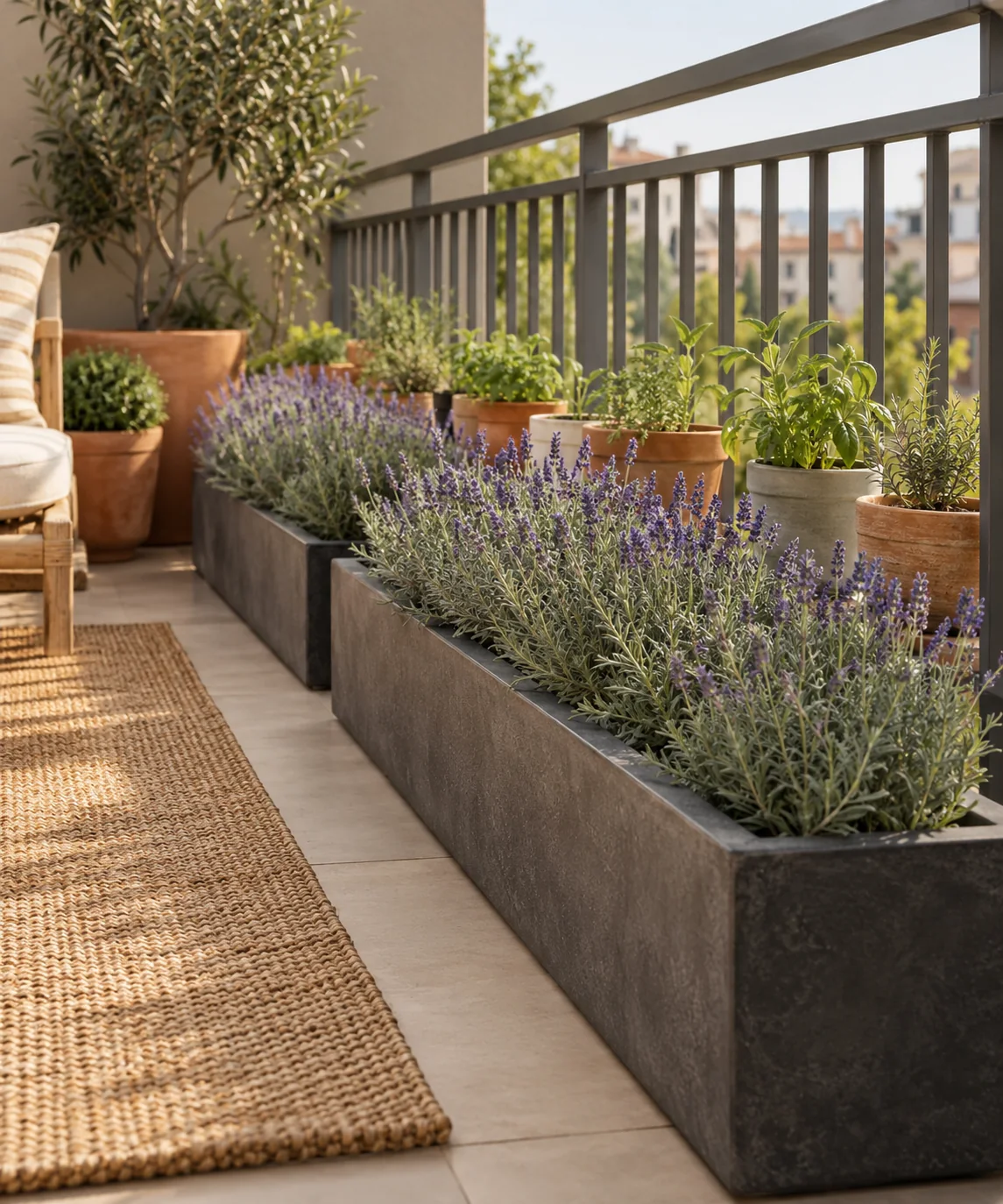
Observe Exposure Patterns and Walkway Access
Begin by noting how breezes move across your outdoor space during different weather conditions. Strong drafts often channel through railing gaps or deflect downward along building walls. Identify areas that naturally experience reduced turbulence, such as zones adjacent to solid privacy partitions. When organizing containers, preserve an unobstructed evacuation path to the balcony entrance that aligns with local building fire codes. Rather than relying on rigid dimensional formulas, ensure that doors swing freely, foot traffic remains unhindered, and planters remain easily accessible for regular maintenance.
Select Suited Buffer Plantings
When selecting vegetation to stand between outer exposures and sensitive starts, prioritize robust perennials known to tolerate variable conditions in your specific hardiness zone. Upright grasses or resilient woody species with pliant branches can soften incoming airflow better than rigid, broad-leaved options that may tear. Confirm that all containers have open drainage holes to prevent waterlogging. Avoid relying on containers to act as impenetrable wind barriers; their primary role is simply to provide modest physical sheltering for surrounding small containers.
Group Tender Starts Thoughtfully
Arrange delicate starter pots and nursery trays behind larger planters in areas protected from direct mechanical buffeting. Leave adequate spacing between containers to ensure fresh air circulates freely, which helps lower the risk of fungal issues like powdery mildew. Grouping pots together can help slow evaporative moisture loss from small soil volumes, but keep individual pots stable and resting flat on the deck surface. Avoid placing starter containers on narrow ledges or perimeter perches where sudden gusts could dislodge them.
Verify Weight Limits and Drainage Paths
Soil, water, and mature root systems add considerable mass to a balcony structure. Never assume a balcony can support large troughs simply because they are set against the outer perimeter or floor. Contact your property manager, landlord, or a structural engineer to confirm allowable uniform and concentrated load limits. When filling containers, select standard lightweight potting mixes rather than dense field soil. Verify that runoff drains directly toward building scuppers without pooling beneath planters, which can degrade decking materials or create moisture problems.
Establish Care and Storm Preparedness
Planters situated in drafty positions lose moisture faster than sheltered pots, requiring frequent checks of soil dampness. Regularly inspect buffer plants for signs of wind burn, loosened root anchors, or dry foliage. Rotate leeward starter pots occasionally to encourage balanced light exposure and straight growth. During high-wind advisories or severe weather forecasts, relocate fragile seedlings indoors or flat against the building facade in sturdy transport trays to prevent pots from toppling.
YOUR STARTING POINT
A little checklist.
Original editorial guidance. Images are AI-generated concepts, not photographs of completed projects. Our sources and approach.
Questions to consider
Can plastic window boxes serve as ground-level wind buffers?
Lightweight plastic containers often lack the stability needed to stay grounded in gusty conditions, especially when soil dries out. If plastic boxes are used, they must be situated where they cannot shift, overturn, or block drainage outlets.
Which herbs tolerate windward container positions best?
Resilient, woody herbs like established rosemary or creeping thyme generally cope better with breezy conditions than tender, broad-leaf species like basil, provided sunlight and watering needs align with their hardiness zone.
How can I prevent planters from blocking balcony drainage?
Ensure that containers do not sit directly across drainage channels or scuppers. Using non-destructive planter feet elevates the base slightly, allowing runoff to travel freely to designated drains without creating persistent floor dampness.