Entryway Organization · THE GUIDE
Use Magnetic Entry Organizers on Metal Security Doors
Metal security doors offer an untapped vertical plane when apartment entryways lack adjacent wall clearance. Narrow halls or shared utility walls often leave zero room for consoles or drilled hooks. Strong neodymium magnetic caddies and hooks attach directly to the painted steel skin, keeping daily carry items within immediate reach. Because this system relies entirely on surface magnetism, it requires no hardware changes or permanent alterations. Understanding magnet pull strength, door swing inertia, and weight distribution ensures that items stay securely fastened during daily arrivals and departures without scraping paint or slipping out of position.
Jump to the checklist ↓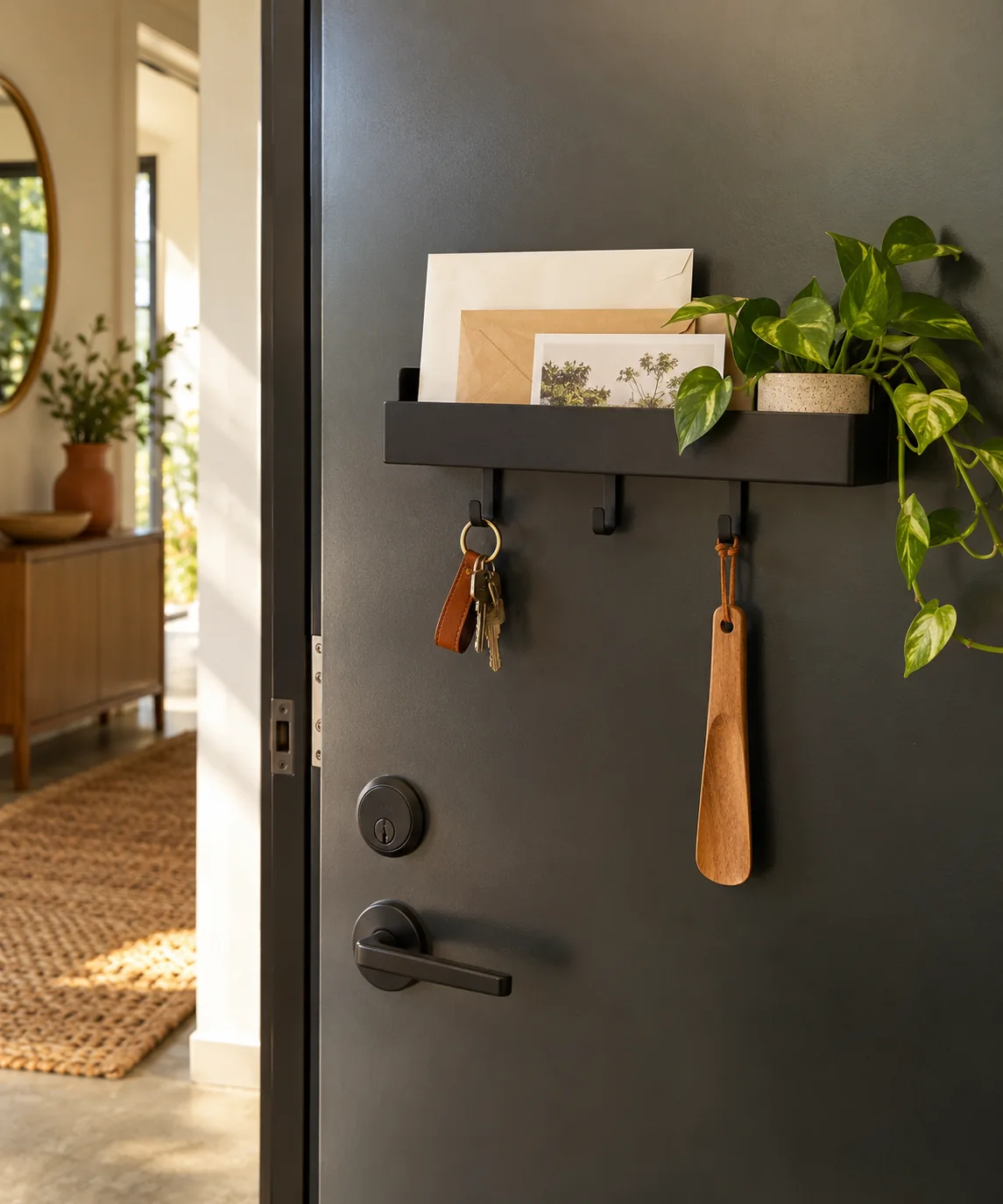
Testing Door Magnetism and Swing Clearance
Before purchasing organizers, verify your door core material. Most security doors feature a steel sheet over an insulated core, but some decorative doors use non-ferrous aluminum skins. Test the interior surface using a simple household magnet across various heights. Next, open the door completely against the adjacent wall or jamb. Measure the narrowest gap between the open door face and the wall. Magnetic bins and protruding key hooks must stay thinner than this gap, preventing crushing damage to organizers when the door swings fully open.
Managing Inertia and Placement Zones
A closing door generates kinetic force that can dislodge weak magnets or send loose items sliding. Position magnetic organizers closer to the hinge side rather than the strike plate edge. The perimeter near the lock undergoes the greatest swing velocity and vibration during latching, whereas the hinge side experiences significantly less movement. Reserve the latch side strictly for lightweight, flat items like outgoing letters. Heavy key rings and metal shoehorns should always reside nearer to the hinge pivot to prevent sliding during abrupt door closures.
Protecting Paint with Backing Barriers
Direct metal-to-metal contact between strong utility magnets and a painted steel door can scratch the factory finish when items shift. Select organizers equipped with silicone, vinyl, or rubber-dipped magnetic bases. If using raw magnetic shelves, apply a thin layer of adhesive micro-felt or painter tape directly over the magnetic contact pads. This minor buffering reduces abrasive friction without noticeably compromising magnetic pull. Ensure the door surface is wiped thoroughly free of airborne dust and grease before initial mounting to maximize friction.
Curating Weight Limits for Daily Essentials
Magnetic storage succeeds when restricted to true transit essentials. Limit contents to everyday work badges, single key rings, transit passes, and thin paper mail. Overloading a magnetic shelf with heavy coin dishes, full water bottles, or dense parcels will overcome the magnet's sheer resistance, causing the unit to slip down the door face. Distribute weight evenly across the shelf base rather than concentrating mass on the outer edge, which creates outward torque that peels the top magnets away from the steel plate.
Routine Surface Cleaning and Magnet Maintenance
Exterior-facing entry doors undergo frequent temperature shifts, which can foster faint condensation on interior metal surfaces during winter. Every few weeks, lift the magnetic organizers completely away from the door rather than sliding them across the paint. Wipe both the back of the organizers and the door surface with a dry microfiber cloth to remove settled dust and moisture. Check that the rubberized pads remain intact and pliable, ensuring consistent grip and preventing moisture from getting trapped behind the magnets.
YOUR STARTING POINT
A little checklist.
Original editorial guidance. Images are AI-generated concepts, not photographs of completed projects. Our sources and approach.
Questions to consider
Why does my magnetic shelf slide down the door?
Sliding occurs when downward shear force exceeds surface friction. Clean the door to remove greasy residue, ensure the magnet has a non-slip rubberized coating, and reduce the weight of items stored inside the caddy.
Can powerful magnets damage electronic key fobs or badges?
Modern RFID building fobs and smart keys operate on radio frequencies unaffected by static magnets. However, keep magnetic-stripe cards, like older parking passes, away from direct contact with high-strength magnetic organizer backings.
Will magnetic organizers mark or dent the security door?
Standard magnetic caddies lack the force to dent structural steel. Scratches only occur if an unpadded magnet is dragged sideways across trapped grit, which is prevented by using padded bases and lifting to reposition.