Pantry Organization · THE GUIDE
Use Removable Shelf Dividers to Keep Boxed Goods from Falling Over
Tall cardboard boxes and flexible grain pouches often slump or topple sideways when one item is pulled from an open pantry shelf. This domino effect creates visual clutter and makes inventory checks frustrating during grocery planning. Installing clamp-style acrylic shelf dividers provides rigid vertical boundaries without drilling holes or applying damaging adhesives. By slipping directly over standard solid shelf boards, these transparent barriers segment broad shelf runs into tailored, upright lanes. Evaluating board thickness and package footprints before purchasing ensures the clips seat firmly, creating clean compartmentalization for breakfast cereals, cracker sleeves, and bulk grain bags.
Jump to the checklist ↓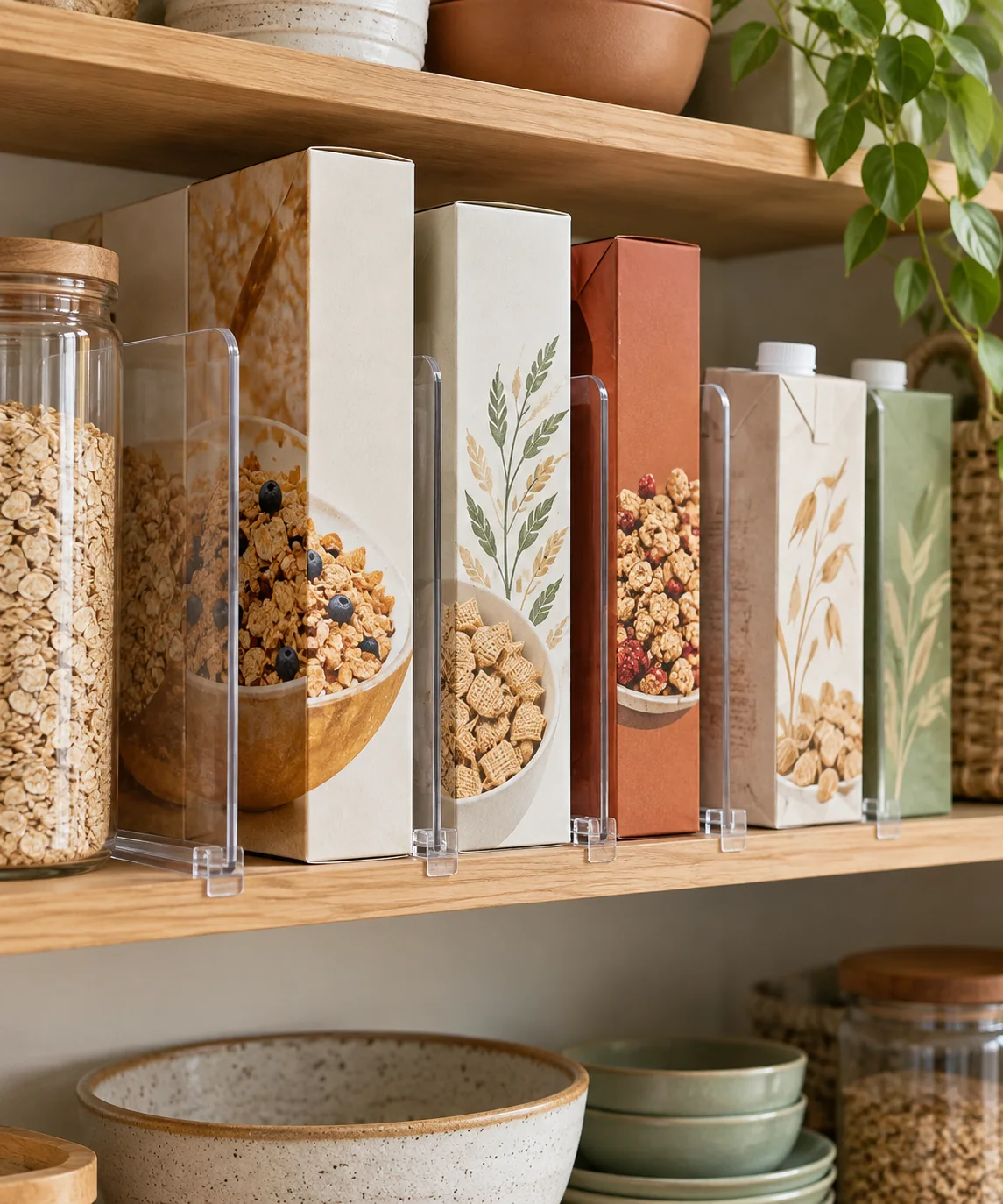
Checking Shelf Board Thickness and Divider Compatibility
Before selecting slip-on acrylic shelf dividers, check the thickness of your pantry shelf boards and compare it against the divider manufacturer's specified bracket opening. Many clip-on models are sized for common board dimensions, but shelves vary widely from thin manufactured panels to thick solid shelving. Forcing an undersized clip onto a thick board can snap the acrylic, while a clip that is too loose will tilt under the weight of leaning boxes. In addition, measure the vertical clearance between shelves to verify that taller packages have ample room to slide in and out cleanly.
Planning Compartment Widths Using Current Inventory
Before positioning dividers along the shelf, gather the dry goods you intend to store and experiment with temporary groupings on your counter or shelf board. Place wider cereal cartons, medium cracker sleeves, and flexible pouches together by category to see how much horizontal width each section requires. Leave adequate lateral space around each package grouping so items slide out without dragging adjacent boxes. Testing your layout with physical items prevents overcrowding and helps determine how many dividers your space truly requires.
Installing Dividers Carefully Along the Shelf Edge
Slide each divider slowly onto the front edge of the shelf board until the mounting bracket is fully seated against the shelf face. Apply gentle, even pressure straight back rather than forcing the divider from above, as rigid acrylic can crack under uneven torsion. Ensure the divider stands upright and perpendicular to the shelf. Position the divider so it sits comfortably within the depth of your shelf without pressing tightly against the rear wall or door frames, which helps avoid surface scuffs.
Arranging Packages by Weight and Usage
Distribute boxed items within each divided section to create stable, easily accessible rows. Heavier, bulkier cartons like large bags of flour or family-size grain boxes function best positioned toward the back of the section, anchoring the lane. Lighter, frequently accessed items like snack packs or everyday cereals can sit toward the front for quick retrieval. For flexible pouches that lack rigid structure, placing them between firm cardboard boxes provides upright support without needing specialized accessory bins.
Care, Cleaning, and Realistic Load Limits
Acrylic dividers are designed to keep lightweight pantry boxes and pouches neatly upright, but they are not structural retaining walls. Pushing heavy jars or overloaded containers sideways against them can cause the clips to shift or the acrylic vertical upright to fracture. For routine maintenance, wipe the divider panels with a soft microfiber cloth dampened with warm water and mild dish soap. Avoid harsh chemical cleaners or abrasive scouring pads, which can scratch or haze transparent plastic surfaces.
YOUR STARTING POINT
A little checklist.
Original editorial guidance. Images are AI-generated concepts, not photographs of completed projects. Our sources and approach.
Questions to consider
Can slip-on acrylic dividers be used on wire pantry shelving?
Standard slip-on acrylic dividers require a flat, solid shelf surface to seat properly. On wire shelving, the tension clips lack continuous contact and will wobble or slip between wires. For wire systems, choose dividers specifically designed with wire-gripping channels or locking brackets.
Will acrylic shelf clips damage finished wood or laminate shelving?
Smooth clips generally seat without issue, but dust or abrasive debris caught between the bracket and the shelf finish can cause surface scuffs. Wipe the shelf edge clean before installation, and check that the clip slips on smoothly without requiring excessive force.
What is the best way to support floppy snack pouches between dividers?
Stand flexible bags between rigid cardboard cartons to keep them upright, or adjust divider spacing so the lane gently supports the sides of the pouch. Dedicated narrow organizers can also be placed between dividers if pouches continue to sag.