Dining Nooks · THE GUIDE
Use Stackable Stools That Tuck Completely Out of Sight
Small dining nooks often struggle to balance daily spatial efficiency with the need to accommodate occasional guests. Permanent dining chairs with wide bases and armrests consume substantial floor space, creating bottlenecks in compact breakfast corners and eat-in kitchens. Stackable, backless dining stools provide practical auxiliary seating by functioning as a flexible reserve that tucks away when not in use. When nested together, a set of stools takes up only the footprint of a single piece, sliding neatly beneath table overhangs, inside under-bench alcoves, or within adjoining storage corners until called upon.
Jump to the checklist ↓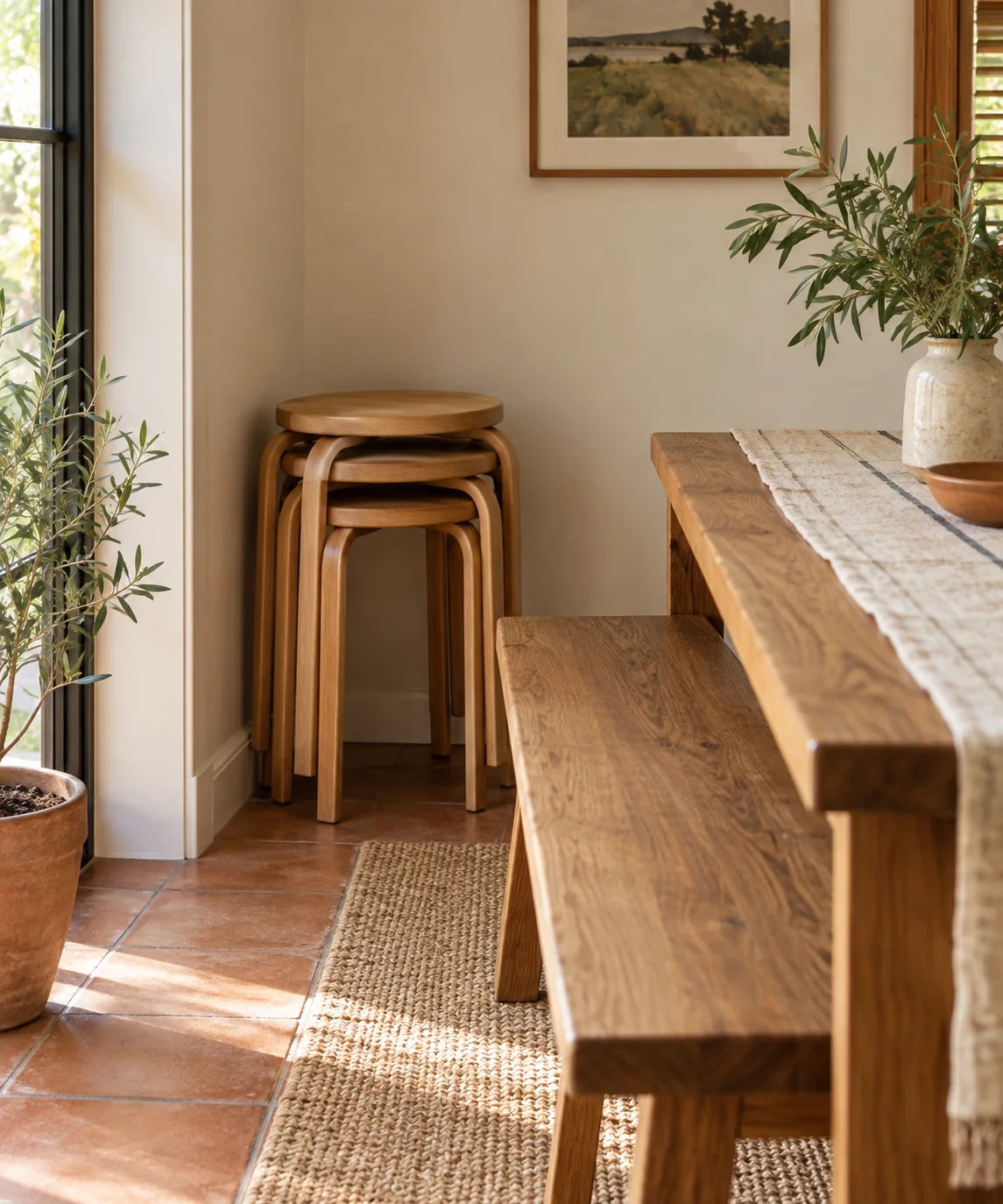
Coordinating Seat Height and Table Proportions
To ensure functional dining ergonomics, stackable stools must align with the height of your dining surface. Standard dining tables typically stand twenty-eight to thirty inches high, which pairs naturally with stools featuring seat heights around eighteen inches. Ensure sufficient vertical clearance remains between the stool seat and the underside of the table apron or frame so diners can sit comfortably without their thighs pressing against the woodwork. Checking these dimensions in advance prevents awkward postures and ensures stools slide completely under the table when cleared.
Evaluating Leg Geometry and Stack Footprint
Stacking mechanics vary depending on frame construction and leg splay. Stools with widely angled legs offer stability but create a wider footprint across the floor when separated around a table, which can constrict narrow walkways. Conversely, stools with near-vertical legs and under-seat nesting cutouts stack compactly without expanding outward significantly. When shopping, compare the overall diameter of the nested stack against your intended storage space to ensure the gathered pieces fit smoothly within your nook's available dimensions.
Planning Dedicated Out-of-Sight Storage Areas
Establish a designated resting location for extra stools before introducing them to the nook. Practical storage spots include the open space beneath a dining bench, an unused niche beside cabinetry, or an adjacent closet. Measure the overall height of your stacked set according to the manufacturer's maximum recommended stack limit. Confirm that your chosen alcove provides enough vertical and lateral clearance to slide the nested stools in and out smoothly without scraping baseboards or marring cabinet finishes.
Ergonomic Considerations for Backless Seating
Backless stools are designed primarily for compact efficiency and casual, short-duration seating. Because they lack lumbar and thoracic support, they are best suited for quick morning meals, coffee breaks, or as secondary perches during gatherings. When planning seating for extended dinners, assign primary backed chairs or cushioned banquette benches to individuals who benefit from extra back support. Adding thin, removable non-slip seat cushions can enhance comfort without interfering with the stools' nesting ability.
Protecting Finishes During Frequent Stacking
Repeatedly stacking and unstacking wooden or painted stools can cause friction wear where legs and structural brackets contact the seat beneath. Inspect stools for factory-installed rubber bumpers or protective pads under the seat perimeter. If the stools lack protective buffers, apply small self-adhesive silicone or felt pads to contact zones. These soft buffers prevent finish abrasion, reduce rattling during movement, and preserve painted or lacquered surfaces over years of routine nesting.
YOUR STARTING POINT
A little checklist.
Original editorial guidance. Images are AI-generated concepts, not photographs of completed projects. Our sources and approach.
Questions to consider
How high can dining stools typically be stacked without tipping?
Most manufacturers recommend stacking stools no more than three to four units high in residential settings. Exceeding recommended stack limits increases the risk of tipping, makes lifting difficult, and strains the lowest stool's joints.
How can backless stools be made more comfortable for dinner guests?
Pair backless stools with fitted, non-slip seat cushions filled with high-density foam or felt. For longer gatherings, rotate guests between stools and supported seating such as a dining bench or backed chairs.
What prevents nested stools from scratching one another?
Apply small silicone bumper dots or felt pads to the underside of the frame where it rests on the lower stool. These contact buffers prevent wood-on-wood or metal-on-paint abrasion when nesting.