Bookshelf Styling · THE GUIDE
Use Textured Clay Pottery as Functional Bookends on Upper Shelves
Upper bookshelves frequently present styling challenges, as lightweight paperbacks can lean or slide without substantial support, while industrial metal bookends often feel cold or utilitarian. Unglazed terracotta vessels, sand-toned stoneware, and coarse earthenware ceramics offer a tactile solution by providing weighted stability alongside subtle visual texture. Incorporating unadorned clay pottery as functional anchors steadies small reading clusters while introducing earthy warmth to elevated cubbies. Because pottery vessels possess broad, sturdy bases, they prevent shelf lean without requiring permanent fixings, grounding your collection with a clean, understated material palette that complements natural paper stock.
Jump to the checklist ↓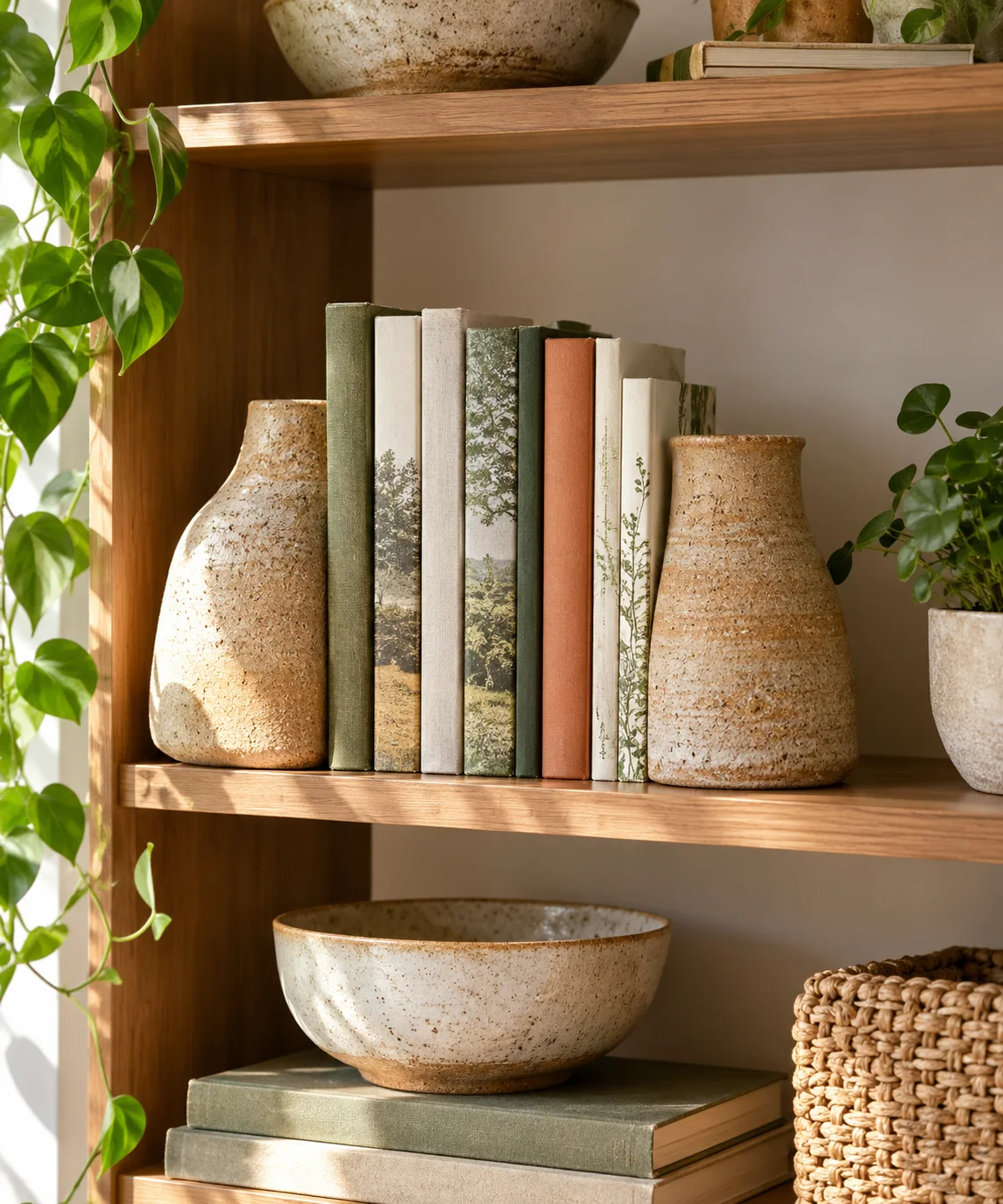
Evaluate Vessel Proportions and Overhead Placement
When using pottery to steady books on upper shelves, stability depends heavily on vessel geometry and safe reach. Prioritize low, wide pieces with broad, flat bases rather than tall, narrow vases that have an elevated center of gravity. Remember that any unanchored heavy object placed above shoulder height presents a potential falling hazard if bumped or dislodged while reaching for reading material. Select vessels with sufficient inherent mass to resist shifting under modest lateral contact, but avoid overly massive urns that exceed shelf load limits or prove difficult to lift down safely.
Protect Shelf Finishes with Non-Abrasive Pads
Coarse stoneware, terracotta, and unglazed ceramics feature gritty, abrasive bases that can scratch veneer, lacquer, or solid wood shelves during placement. Before positioning ceramic vessels, adhere dense wool felt pads or thin cork sheeting across the bottom surface. Ensure the protective backing is applied evenly so the piece sits level without wobbling. This barrier allows you to reposition the pottery gently while shielding shelf finishes from friction marks, scuffs, and grit transfer.
Pair Neutral Clay Textures with Exposed Paper
The matte, tactile finish of unglazed clay provides a visual counterpoint to paper spines, book cloth, and paperbacks. Selecting neutral earth tones—such as warm buff, soft grey stoneware, or muted terracotta—creates a quiet, cohesive arrangement on elevated shelves where intricate visual clutter can feel overwhelming. The natural texture adds subtle interest to high cubbies while keeping the overall display grounded and visually consistent with your library collection.
Size Book Runs According to Lateral Resistance
Ceramic vessels rely solely on friction and gravity, meaning they cannot safely retain long, heavy runs of large hardcovers or tightly compressed volumes. Keep book clusters modest and proportionate to the vessel's base contact area. If books begin to lean significantly, their collective lateral force can cause the pottery to slide across smooth shelf surfaces. Evaluate the grouping regularly to ensure the books rest comfortably upright without exerting continuous pressure against the ceramic piece.
Maintain Shelf Cleanliness and Safe Retrieval Habits
Household dust accumulates readily on upper shelving tiers, creating a slippery film that reduces the friction holding pottery bookends in position. Dust shelves regularly with a dry or lightly dampened microfiber cloth, allowing surfaces to dry completely before resetting ceramics. When retrieving a book from an upper shelf, use both hands—one to support or steady the ceramic vessel and the other to slide the book free—to prevent unintentional shifts or falling hazards at higher elevations.
YOUR STARTING POINT
A little checklist.
Original editorial guidance. Images are AI-generated concepts, not photographs of completed projects. Our sources and approach.
Questions to consider
Can hollow ceramic vessels function effectively as bookends?
Hollow vessels often lack the mass needed to support leaning books. Pieces with thick walls or solid construction provide better resistance against light paperback rows, but hollow decorative pottery should not be relied upon to support heavy volumes.
How do I prevent ceramic pottery from damaging wooden shelf surfaces?
Apply self-adhesive felt dots or a trimmed layer of natural cork across the entire bottom surface of the vessel. Ensure the padding is flush and level so the vessel sits securely without rocking or scratching delicate finishes.
Are ceramic bookends suitable for very high or hard-to-reach shelves?
Unsecured heavy ceramics on high shelves present an overhead drop hazard if accidentally bumped. Reserve heavy pottery for tiers within comfortable, direct reach, or use dedicated mechanical bookends that fasten directly to the shelf system.