Warm Neutral Living Rooms · THE GUIDE
Use Under-Sofa Rolling Wood Trays for Flat Storage
Raised sofa frames often leave a narrow void underneath that collects dust while valuable living room items compete for shelf space. Shallow wooden rolling trays transform this overlooked under-couch zone into organized, concealed utility storage. By utilizing low-profile storage boxes with smooth casters, you can keep extra throws, board games, or flat supplies accessible yet invisible. This approach maintains a clean, warm neutral aesthetic without introducing plastic bins or bulky cupboards that disrupt the calm atmosphere and architectural proportions of your primary lounge space.
Jump to the checklist ↓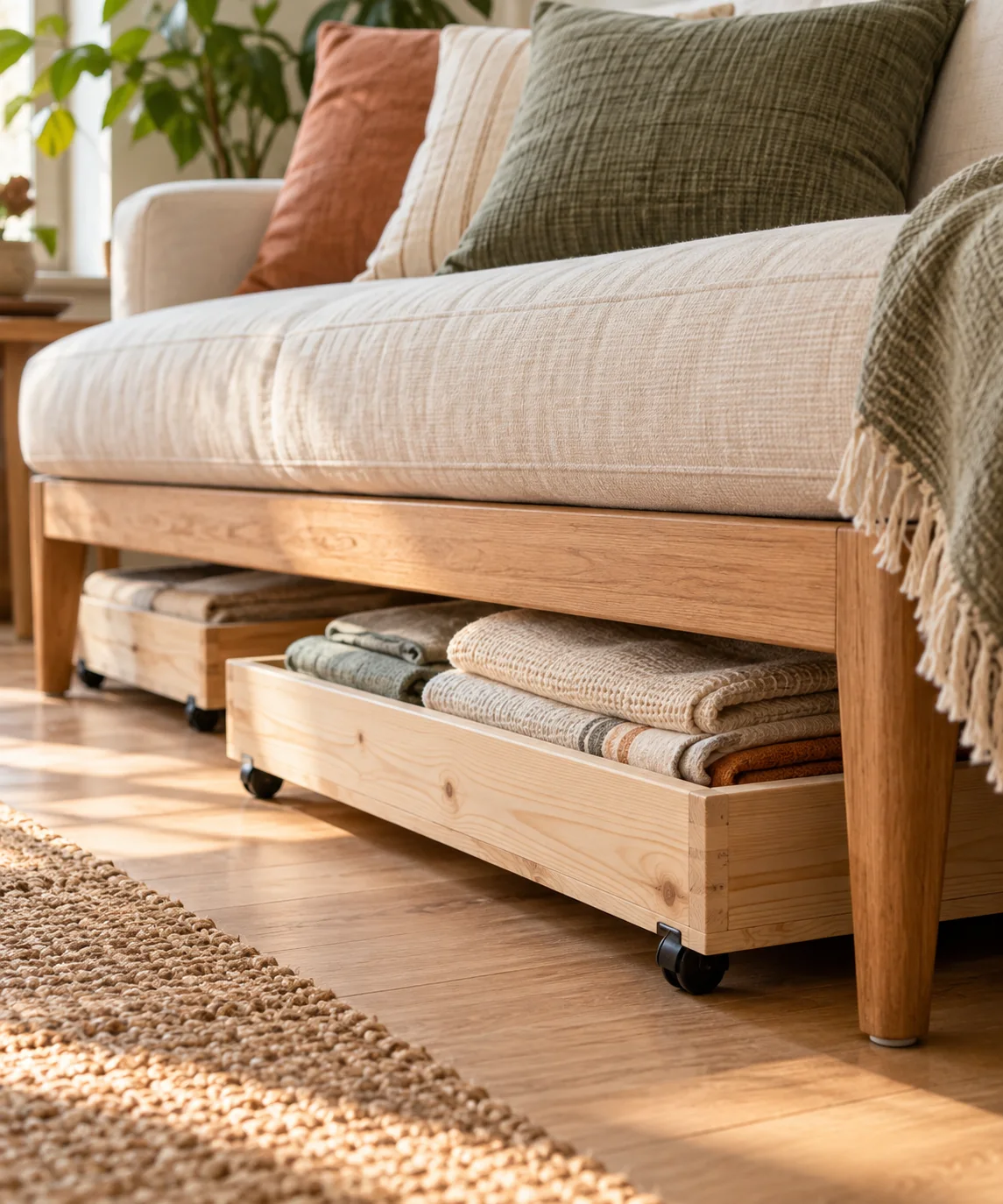
Assessing Vertical and Horizontal Clearance
Before selecting or assembling rolling trays, measure the clearance from your floor to the lowest structural rail of the sofa frame. Sofas often feature lower center support legs or mid-frame drop rails that sit an inch lower than the exterior perimeter legs. Subtract at least one full inch from your lowest measured height to account for caster clearance and tray lips, ensuring the tray slides outward freely without scraping fabric skirts or wooden trim.
Selecting Caster Types for Your Floor
The wheel mechanism determines how smoothly your storage operates and protects your flooring from wear. For low-pile carpets, wide-tread nylon or hard composite casters rotate with minimal resistance. For timber or laminate floors, opt for soft polyurethane inline wheels that do not mark surfaces or roll laterally into sofa legs. Low-profile fixed-direction casters often perform better than swivel wheels, as they keep the tray tracking in a predictable straight path.
Choosing Neutral Wood Materials
Select trays crafted from untreated pine, light birch plywood, or natural ash to match the understated palette of a warm neutral living room. Unpainted timber boxes develop a gentle patina over time and complement linen, wool, and beige upholstery. Ensure the interior surfaces are sanded smooth to prevent fabric snagging, or line the base with unbleached cotton canvas to cushion folded spare blankets and delicate seasonal textiles safely.
Organizing Low-Profile Inventory
Under-sofa trays function best when dedicated to flat, uniform items rather than loose miscellaneous clutter. Store spare cushion covers, flat woven table linens, folded fleece blankets, or boxed board games within the tray perimeter. Keep item heights strictly below the upper rim of the box to prevent objects from catching against the sofa underside springs, dust cover cambric cloth, or internal frame hardware during retrieval.
Managing Dust and Floor Maintenance
Under-sofa spaces naturally accumulate household dust and lint that can gather around moving wheels. Schedule a monthly roll-out to sweep or vacuum the empty floor space and wipe down the tray exteriors with a dry microfiber cloth. Avoid loading trays beyond a manageable weight, as overly heavy boxes strain the caster axles and make regular floor cleaning beneath the seating grouping difficult and cumbersome.
YOUR STARTING POINT
A little checklist.
Original editorial guidance. Images are AI-generated concepts, not photographs of completed projects. Our sources and approach.
Questions to consider
How deep should under-sofa rolling trays be?
A depth of eighteen to twenty-four inches allows comfortable reach without requiring you to push the tray entirely under the couch center, making daily retrieval and floor cleaning simple.
Can I use rolling trays on high-pile shag rugs?
High-pile rugs create significant rolling resistance that jams small casters. Rolling trays work best on hardwood, low-pile weaves, or flat-woven rugs where wheels encounter minimal surface drag.
How do I prevent trays from showing when seated across the room?
Set the front tray edge three to four inches behind the sofa rail. Choosing wood tones matching your sofa legs also helps the tray visually recede into shadow.