Small Bedroom Layouts · THE GUIDE
Using a Rolling Utility Cart as an Adaptable Bedside Table
In tight bedrooms, a standard nightstand often obstructs closet doors, drawers, or the narrow pathway beside the mattress. Swapping a bulky, solid cabinet for a slim three-tier metal utility cart introduces flexible surface area without permanently claiming floor space. Because the cart glides easily on wheels, you can roll it aside when dressing, making the bed, or cleaning tight corners. This mobile configuration turns an awkward architectural pinch point into a workable zone, providing accessible vertical storage while preserving essential floor clearance in compact sleeping quarters.
Jump to the checklist ↓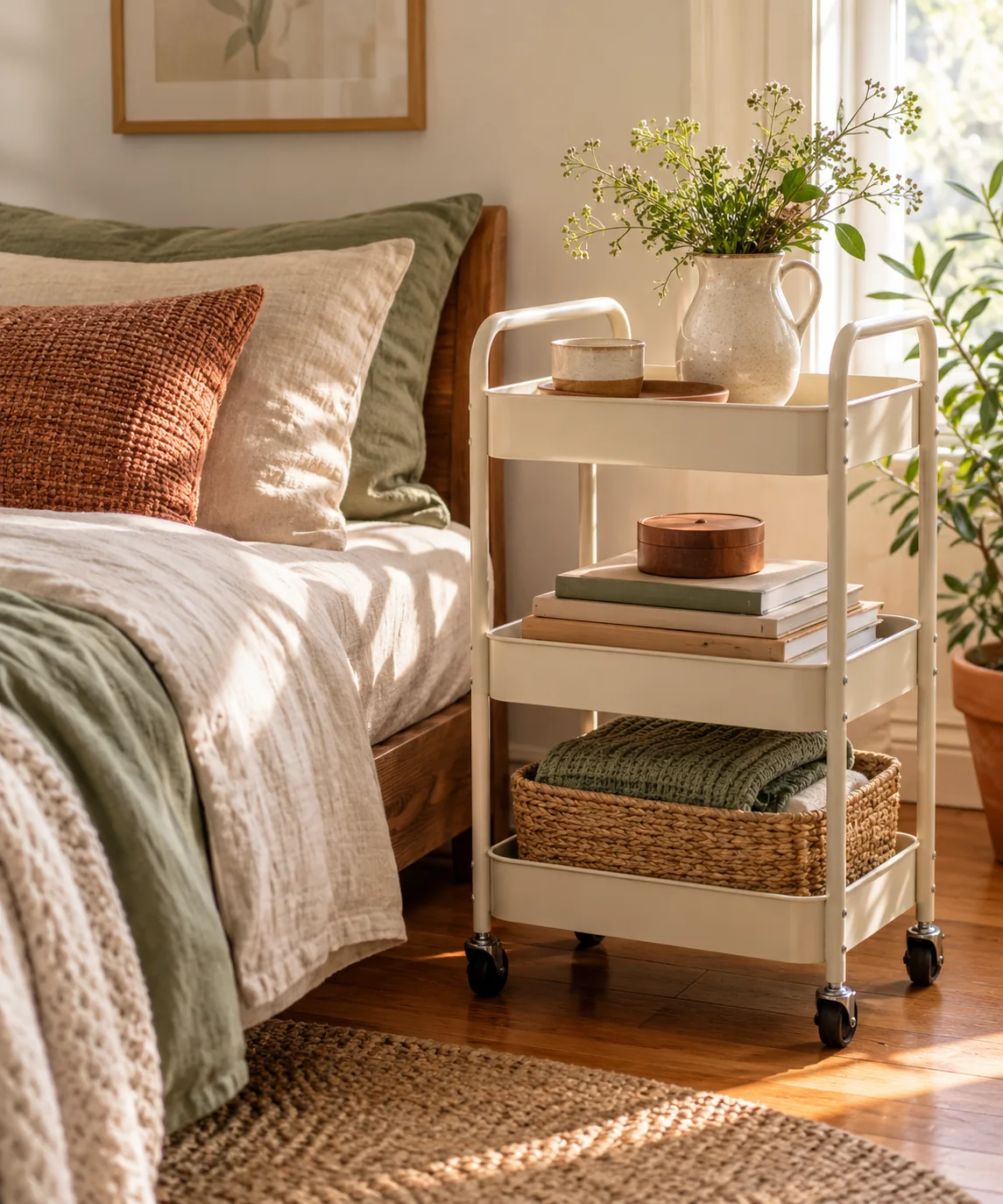
Evaluating Bedside Clearance and Pathway Flow
In compact sleeping areas, stationary nightstands can crowd pathways and block nearby hinged closet doors or under-bed storage drawers. A slim utility cart offers tiered storage within a narrow footprint, but its primary functional advantage is easy mobility. Rather than remaining permanently stationed, the cart can be rolled aside when accessing storage or changing linens. Before selecting a cart, measure the clear span beside the bed to ensure normal movement remains unhindered, noting any door swings or architectural pinch points that the cart might encounter when shifted.
Organizing Shelf Levels by Access Priority
A three-tier configuration allows practical vertical organization without crowding the primary upper tray. Reserve the top shelf for items needed immediately from a resting position, such as a water tumbler, eyeglasses, or a small alarm clock. The middle tier accommodates reading material, notebooks, or compact storage trays, keeping the top surface clutter-free. Use the lowest tray for bulkier, heavier items like folded throws or rigid storage bins, which helps stabilize the entire unit while keeping essential items organized.
Caster Selection and Floor Considerations
Most utility carts come equipped with standard plastic or nylon casters designed for level surfaces. When rolling the cart on hard floors such as wood or tile, verify that the wheel material is non-marking and rolls smoothly without sliding across the surface. Engaging the caster wheel locks on at least two wheels prevents unwanted drift when reaching for objects during the night. For carpeted bedrooms, low-pile carpeting supports easy wheel travel, whereas high-pile or shaggy rugs can impede small casters and cause contents to shift.
Managing Device Cables and Bedside Lighting Safely
Because a utility cart is designed to move, managing power cords requires care to prevent snagging, pinching, or cord strain. Avoid attaching power strips or extension cords directly to the rolling cart frame, as movement can pull cords taut or create electrical tripping hazards across the floor. Instead, plug chargers directly into stationary wall outlets and manage slack along the baseboard. For bedside lighting, opt for a stable cordless rechargeable lamp or a wall-mounted sconce positioned independently of the cart.
Weight Distribution and Center-of-Gravity Control
The tall, narrow proportions of a utility cart make weight distribution critical to everyday stability. Place the heaviest books, ceramic bins, and dense objects on the bottom tray to keep the center of gravity as low as possible. Keep top-tray items lightweight and evenly centered, avoiding tall, top-heavy decor that might wobble when the cart is repositioned. When moving the unit, grasp the frame firmly with both hands at mid-height to maintain balanced control across the floor.
YOUR STARTING POINT
A little checklist.
Original editorial guidance. Images are AI-generated concepts, not photographs of completed projects. Our sources and approach.
Questions to consider
Can a utility cart tip over when bumped during the night?
A cart remains stable if you keep heavy items on the bottom tray and engage the wheel locks. Avoid leaning personal body weight against the top rim when getting out of bed.
How do I prevent items from rattling against the metal shelves?
Line each tray with cut-to-fit felt sheets, cork drawer liners, or silicone mats. These liners dampen noise when placing objects down and prevent small items from sliding during movement.
Will a rolling cart work alongside a very tall mattress?
Check the cart height against your mattress profile. Most three-tier carts stand around thirty inches tall, aligning comfortably with standard bed heights, but measuring before purchase ensures easy reach.