Small Kitchen Organization · THE GUIDE
Utensil Crock Grouping Sorted by Wood and Stainless Steel
Shoving every spatula, ladle, and wooden spoon into a single countertop crock routinely produces tangled handles, jammed tool heads, and frustrating tip-overs during meal preparation. In small kitchens, vertical countertop storage remains essential, yet one oversized canister often consumes valuable workspace while failing to keep implements accessible. Dividing everyday tools into two slender, material-specific vessels resolves this friction. By grouping porous wooden spoons separately from rigid stainless steel turners and wire whisks, you streamline food preparation, prevent cross-finish scraping, and create an intentional, clutter-free station directly beside your primary prep area.
Jump to the checklist ↓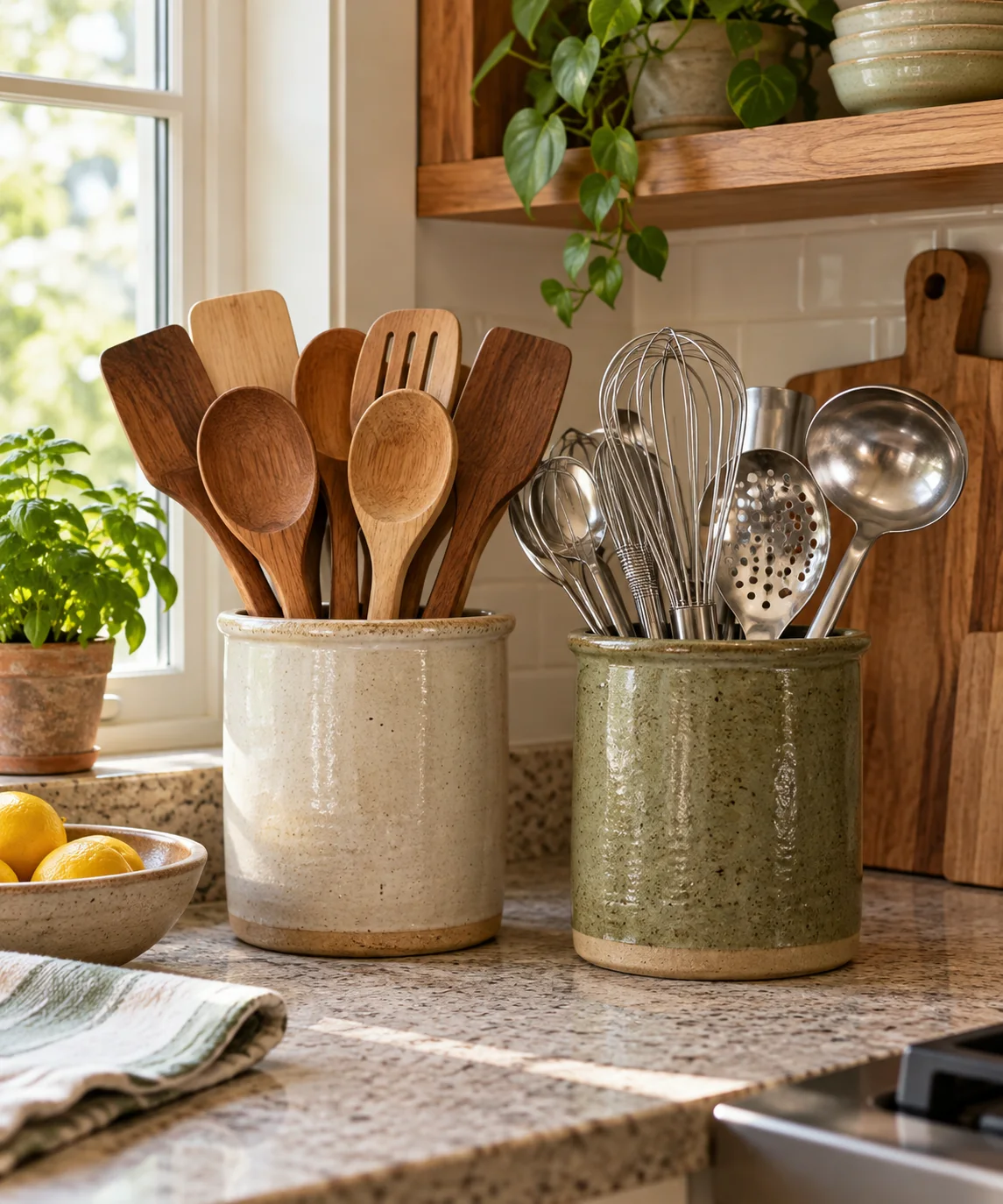
Assessing Tool Tangles and Diameter Needs
A single broad container permits tool handles to splay outward at severe angles, which causes balloon whisks and hooked spoons to interlock tightly. Replacing one wide tub with two cylinders measuring approximately four to five inches in diameter restricts excessive tilt. With straighter vertical alignment, implements slide out cleanly without dragging adjacent pieces onto the counter. Take inventory of your active tools before reorganizing. Eliminate duplicate spatulas or specialty baking gadgets to ensure each vessel holds only the items you reach for multiple times every week during regular cooking tasks.
Material-Based Division Logic
Sorting strictly by material type simplifies kitchen workflow and protects your implements. Reserve one crock exclusively for turned beechwood spoons, bamboo spatulas, and wooden salad servers. These softer tools share similar handle thicknesses and require dry, well-ventilated storage. Dedicate the second holder to stainless steel tongs, wire skimmers, solid metal ladles, and flat-top turners. Because metal items are heavier and often have thinner, rigid shanks, keeping them isolated prevents them from marring delicate wooden edges or tangling inside wide whisk loops.
Counter Placement and Heat Clearances
Positioning two crocks requires thoughtful placement relative to your cooktop. Place both containers on your non-dominant prep side or tucked just outside the active splash zone, well away from burners and open flames. Rather than relying on an arbitrary spacing rule, check your range manufacturer guidelines regarding clearances for combustible materials, especially when storing wooden handles nearby. Setting the crocks in tandem along the backsplash minimizes their footprint. Alternatively, tuck them into an unused rear corner to convert dead counter area into a functional, two-stage culinary workstation.
Trial Layouts with Household Jars
Before investing in matched stoneware vessels, verify whether a dual-crock system suits your routine using existing wide-mouth glass jars or metal canisters. Group your wooden pieces in one temporary container and your metal implements in another for several consecutive days of cooking. Notice whether you naturally return items to their assigned side without conscious effort. This trial confirms whether two slender vessels fit comfortably beneath upper cabinetry while providing adequate vertical clearance to pull tall spatulas upward without striking overhead shelving or under-cabinet task lighting.
Routine Cleaning and Base Stability
Countertop crocks accumulate fine grease dust and stray cooking splatters over time. Select vessels with weighted bases or unglazed ceramic footings that will not slide across polished quartz or laminate surfaces when you quickly remove a tool. Clean the interiors periodically by wiping out collected crumbs, and allow them to dry completely before returning wooden tools inside. Storing damp wooden spoons in an enclosed crock base can trap moisture and encourage mildew, so confirm items are fully air-dried after hand washing.
YOUR STARTING POINT
A little checklist.
Original editorial guidance. Images are AI-generated concepts, not photographs of completed projects. Our sources and approach.
Questions to consider
Can I store silicone spatulas in this dual-crock arrangement?
Yes. Place silicone-headed tools with the wooden collection if they feature wood handles, or store them alongside the stainless steel tools. Keep them grouped logically by handle material to prevent snagging during removal.
How tall should the crocks be to prevent tipping?
Aim for a crock height between six and seven inches. This depth supports standard twelve-inch cooking spoons securely around their center of gravity, preventing top-heavy tools from pivoting over the rim when pulled.
What should I do if my counter depth is very limited?
Align the two crocks sequentially against the wall backsplash rather than clustering them side by side. A front-and-back configuration tucked into a corner also preserves usable chopping board space along the primary counter edge.