Entryway Organization · THE GUIDE
Utilize a Deep Window Sill as a Functional Entry Landing
Compact entry alcoves frequently lack the floor clearance necessary for traditional console tables, umbrella stands, or wall-hung shelving units. When every square inch of entryway floor is required for safe door clearance and unobstructed traffic flow, an existing deep architectural window sill offers an underutilized horizontal surface. Instead of permitting the sill to become a random collection zone for loose mail and loose change, thoughtful zoning transforms it into a clean, practical drop spot. Implementing protective trays, deliberate containers, and strict perimeter margins turns a simple ledge into an efficient household transition station.
Jump to the checklist ↓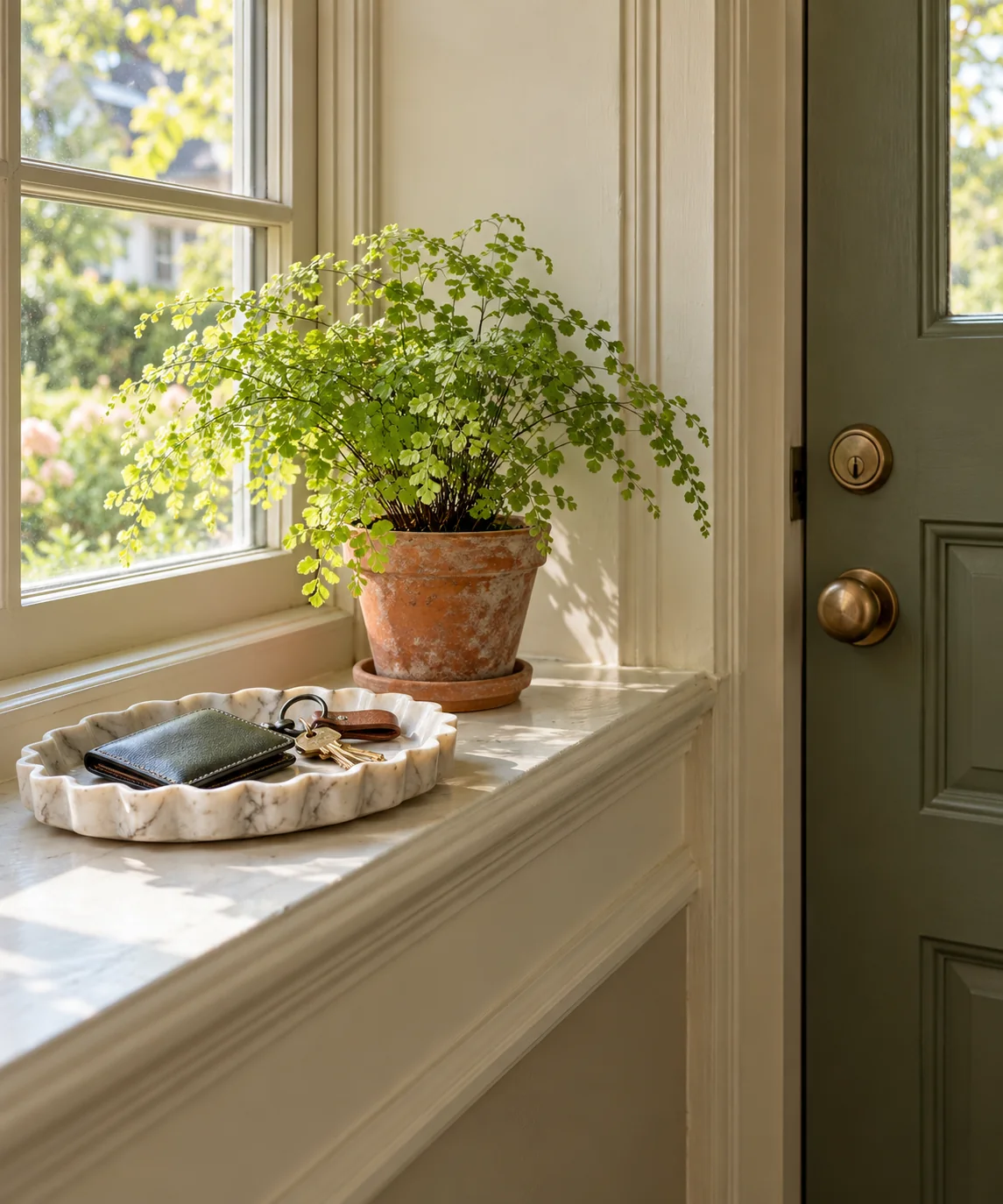
Evaluating Sill Depth and Operating Clearances
Using a window sill as a functional drop point depends on the sill's flat usable area and surrounding clearances. Measure the flat surface from the window frame to the sill edge to ensure everyday containers will rest securely without overhanging. Check the complete swing paths of entry doors, window sashes, blinds, and curtains to ensure they operate without knocking items off the sill. Never place items where they obstruct window locking hardware, ventilation cranks, or designated emergency egress routes.
Protecting Finishes from Moisture and Temperature Changes
Window ledges are subject to environmental exposure, including condensation from window glass, radiant heat from sunlight, and incoming weather. Choose landing trays made from non-porous materials such as glazed ceramic, powder-coated metal, or sealed resin rather than raw, unsealed wood that may warp or absorb moisture. Attaching soft silicone or felt feet to the underside of trays elevates them slightly, protecting painted or varnished woodwork from scratches and trapped humidity.
Containing Small Essentials with Low-Profile Trays
Uncontained items on a window sill can quickly create visual clutter and risk rolling off narrow ledges. A shallow tray or divided dish provides a designated boundary for items like keys, sunglasses, or transit passes. Selecting a vessel with a gentle rim keeps spherical or curved items contained while maintaining a low profile that preserves natural light transmission through the glass. Restrict the arrangement to one or two small vessels to keep the sill orderly.
Checking Usability and Traffic Flow
Before committing to a specific sill setup, place a temporary dish or saucer on the ledge to assess the location during daily arrivals and departures. Observe whether placing and retrieving essentials feels natural along the primary entry path, or whether items feel awkward to reach around door openings. If the sill is recessed or partially obstructed by an open entrance door, adjust the tray toward the most unobstructed and accessible section of the ledge.
Maintaining Boundaries Against Overflow
Because window sills offer limited surface area compared to dedicated entryway furniture, strict habits are essential to avoid overfilling. Regularly clear away accumulated paper, receipts, advertising mail, and loose pocket debris that naturally gather on flat surfaces. Wipe the sill during routine cleaning to remove exterior dust and window condensation. Keeping the landing surface reserved solely for active daily essentials maintains both entryway order and architectural charm.
YOUR STARTING POINT
A little checklist.
Original editorial guidance. Images are AI-generated concepts, not photographs of completed projects. Our sources and approach.
Questions to consider
How can window sill paint or wood finish be protected from daily wear?
Use a landing tray equipped with non-abrasive silicone bumpers or felt pads on its base. This prevents hard metal keys and coins from abrading the finish and allows air circulation beneath the container.
Is it practical to combine small house plants with drop trays on a sill?
Yes, provided the sill has ample depth and containers do not crowd each other. Use sealed drip trays beneath planters to catch water runoff, and position plants away from the immediate path of swinging keys.
How can heat or direct sun exposure on sill items be managed?
Intense sun exposure can degrade items like leather wallets or temperature-sensitive goods. Position trays in areas of the sill that receive indirect light, or draw existing blinds and shades during peak sunlight hours.