Garden Tool Organization · THE GUIDE
Utilize a Wall-Mounted Folding Drying Rack for Wet Garden Gloves
Garden gloves routinely absorb soil moisture, plant sap, and sweat, yet gardeners frequently toss them into dark bins or onto flat potting benches. Trapped moisture inside folded fabric or damp leather quickly causes mold, mildew, and unpleasant odors, while causing leather to stiffen and crack. Installing a folding accordion drying rack on a covered wall offers an efficient, space-saving solution. The open framework encourages steady air circulation around each pair. Suspended upside down with simple clips, gloves dry thoroughly between uses without cluttering horizontal work surfaces or taking up permanent floor area.
Jump to the checklist ↓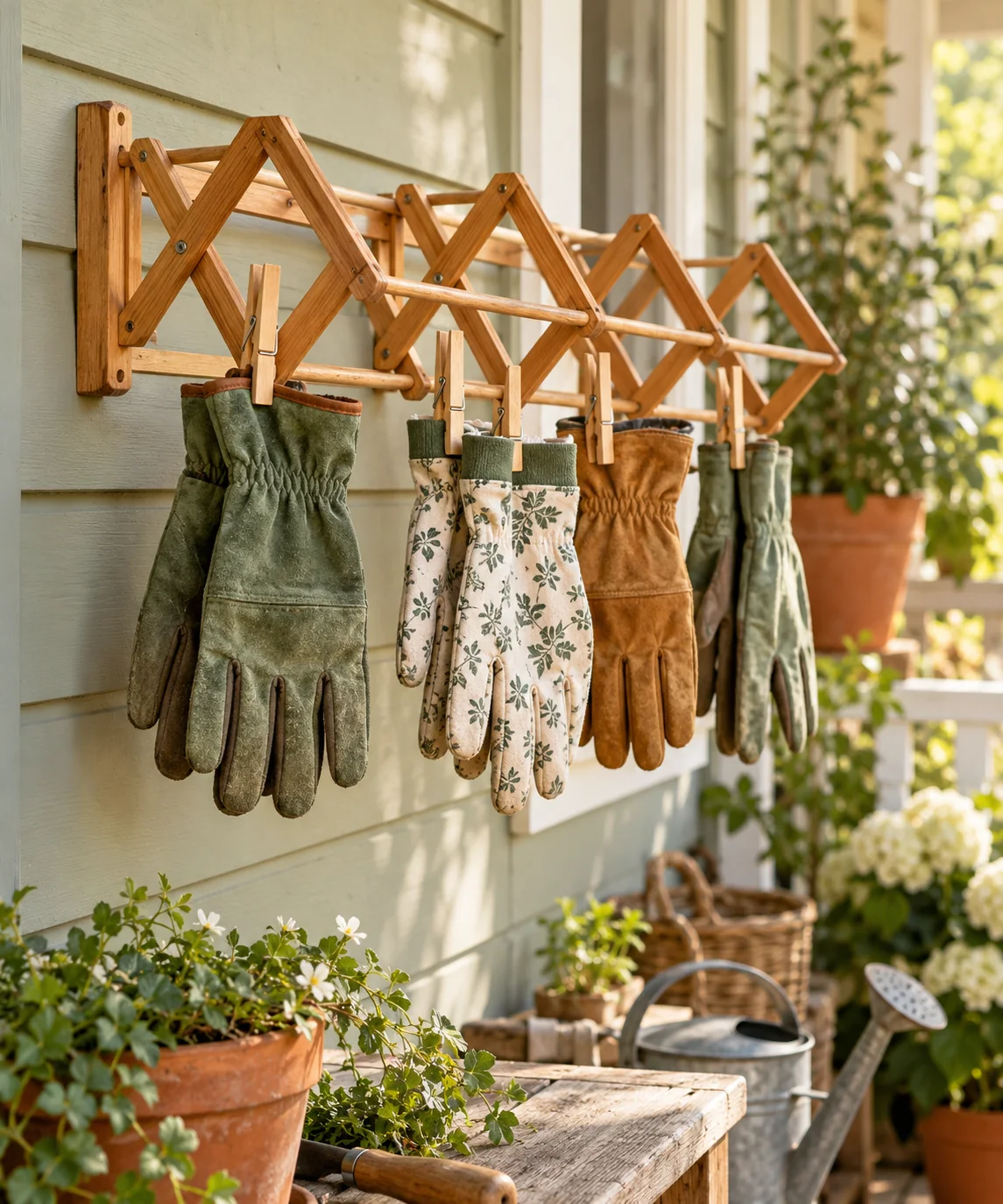
Optimal Rack Location and Airflow
Position the drying rack in an area sheltered from direct rainfall but exposed to natural ambient air movement, such as an open potting porch, sheltered breezeway, or well-ventilated shed wall. Avoid dark, unventilated closets or sealed cabinets where moisture becomes trapped in stagnant air. When selecting a mounting height and location, choose an accessible wall area near your garden entry point that does not obstruct normal walkway clearance, following the rack manufacturer's hardware instructions and wall-substrate recommendations.
Selecting Hardware and Clip Attachments
Accordion-style folding racks made from sealed hardwood or coated metal provide adaptable hanging points for garden handwear. Smooth, rounded dowels or crossbars accommodate rustproof stainless steel clothespins or coated utility clips without tearing glove linings. Suspending gloves upside down by their bottom cuffs keeps the wrist openings accessible to ambient airflow, helping moisture evaporate more evenly than when gloves are left compressed on flat bench surfaces.
Drying Protocols for Different Glove Materials
Different glove materials require distinct drying considerations. Split-cowhide, goatskin, and other leather gloves should be gently reshaped while damp and dried away from direct sunlight, radiant space heaters, or heat registers to prevent stiffening, shrinkage, and premature cracking. Knit synthetic and nitrile-dipped gloves can be rinsed of heavy surface mud under an outdoor spigot before hanging, which clears the fabric weave and prevents soil from drying into hard crusts.
Collapsible Design for Working Corridors
In narrow utility spaces, shed paths, or compact covered porches, permanently protruding drying fixtures can present catching hazards. An accordion-style rack extends outward during active drying sessions and folds back toward the wall plane once items are dry. This collapsible footprint helps maintain open pathways in high-traffic garden work areas while keeping damp pairs separated during the initial hours of post-gardening drying.
Capacity Limits and Seasonal Maintenance
slender drying dowels are intended for lightweight garden gloves, seed aprons, and small utility rags rather than heavy, waterlogged winter coats or muddy footwear. Periodically check wall anchors to ensure the mounting remains firm against the supporting surface. For wooden racks kept in humid outdoor conditions, follow the manufacturer's care instructions regarding protective oil or sealant finishes. During extended freezing periods or continuous damp weather, moving gloves to a heated indoor utility room helps ensure complete drying.
YOUR STARTING POINT
A little checklist.
Original editorial guidance. Images are AI-generated concepts, not photographs of completed projects. Our sources and approach.
Questions to consider
Why hang garden gloves upside down by the wrist cuff?
Hanging gloves by the cuffs allows the wrist opening to stay expanded, allowing ambient air to circulate toward the fingers. Hanging them by the fingertips can pinch the cuff closed, slowing moisture release.
Can I use this rack for leather gardening gloves?
Yes, ambient air drying is well-suited for damp leather gloves. Keep them away from concentrated heat sources and direct sunlight, and gently flex the fingers as they dry to help maintain material flexibility.
How do I prevent wooden drying racks from developing mold or mildew?
Place the rack in a space with consistent ventilation, avoid crowding saturated fabrics together, and wipe down surfaces regularly. Metal racks with powder-coated finishes are also available if your storage area experiences frequent high humidity.