Rental-Friendly Decor · THE GUIDE
Utilize Bed Under-Clearance with Low-Profile Wheeled Storage Trays
Standard rental bedrooms frequently lack sufficient closet capacity for year-round storage, leaving bulky winter quilts, spare pillows, and heavy knitwear competing for prime shelf space. The open volume beneath a standard bed frame provides substantial square footage, but without structured containment, loose items gather dust and become difficult to reach. Low-profile wheeled storage trays offer a protective, enclosed solution that rolls out smoothly on hard surfaces or low-pile rugs. Implementing these rolling organizers maintains immediate access to off-season textiles while keeping bedroom sightlines clean, calm, and free of overflowing containers.
Jump to the checklist ↓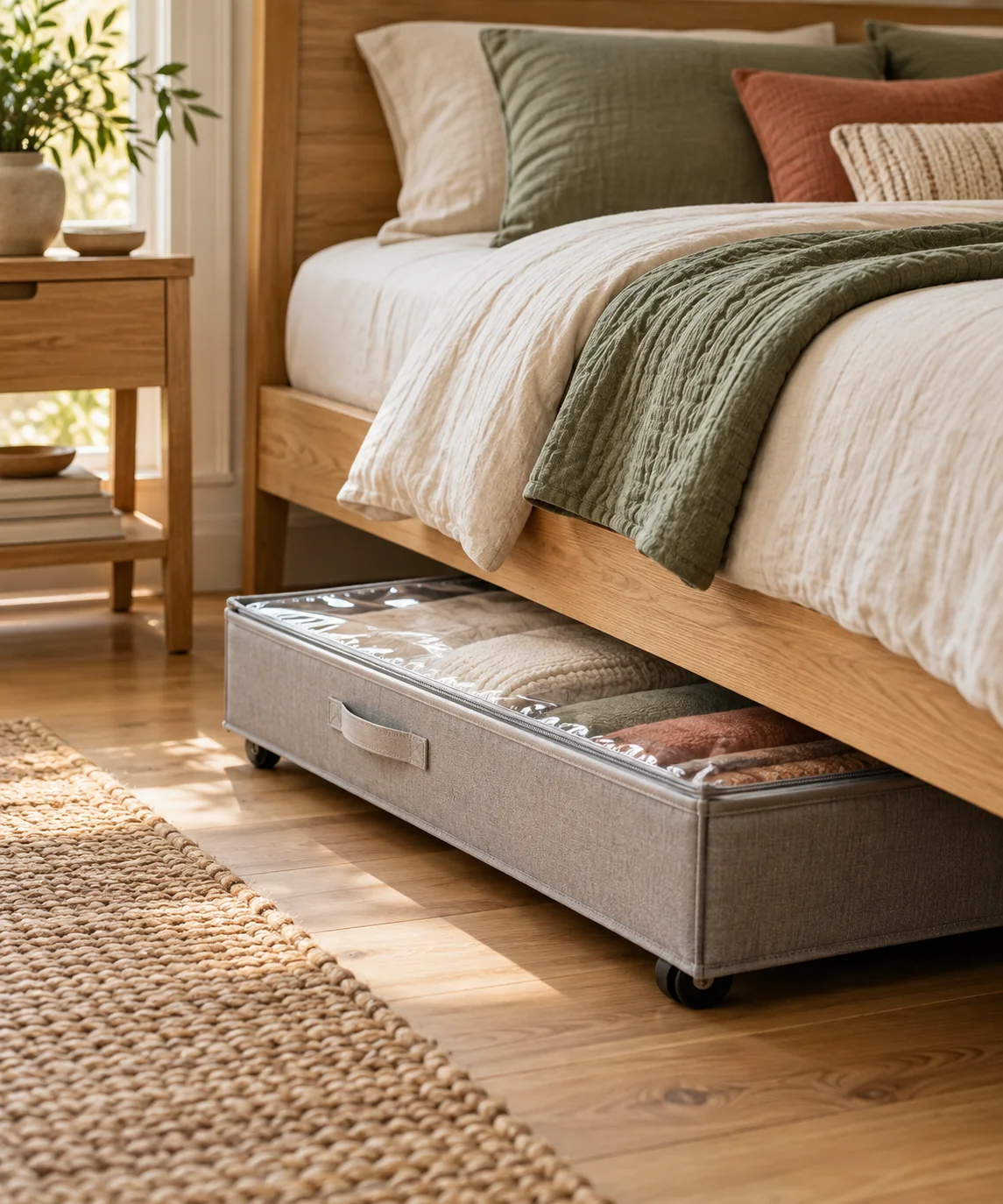
Measuring Clearances and Frame Obstacles
Begin by measuring the vertical distance between the floor and the lowest edge of the bed frame side rails. Rental frames often feature center support legs or recessed crossbars that reduce the usable height midway across the frame. Measure both the side entry point and the center clearance, subtracting one inch from the smallest figure to determine maximum container height. Note the clearance beside nightstands or sliding closet doors to ensure the intended pull-out path remains completely unobstructed when rolling the trays outward.
Selecting Dust-Proof Casters and Enclosures
Opt for low-profile trays with integrated, recessed caster wheels rather than tall exterior brackets, which consume valuable vertical clearance. Enclosed containers made from breathable fabric with structured wire frames or rigid polypropylene bases prevent sagging under the weight of folded blankets. A tightly fitted lid, clear zippered vinyl top, or three-sided zipper closure is essential under a bed. This barrier keeps ambient floor lint, pet dander, and settling dust away from clean bed linens during long-term storage cycles.
Folding and Arranging Off-Season Linens
Pack heavy duvet inserts, flannel sheet sets, and out-of-season wool blankets using flat, horizontal folds or upright file-folded rows that align with the box height. Avoid overpacking containers to the point where the top bulges, as bulging covers catch on low center bed beams during transit. Group textiles by category, placing rarely used items like guest comforters toward the rear of the tray and medium-weight seasonal blankets near the pull handle for swift retrieval as room temperatures fluctuate.
Managing Floor Friction and Rug Transitions
Wheeled storage units roll effortlessly across bare floorboards, but transitions onto area rugs require attention. If an accent rug extends partially under the bed frame, wheel casters may jam against the rug edge during insertion. Position the storage trays entirely on the bare floorboards or completely atop the rug surface. If placing trays across a rug lip is unavoidable, choose wide hard-rubber casters rather than narrow plastic wheels to navigate pile height changes without scuffing flooring.
Routine Cleaning and Retrieval Maintenance
Under-bed zones gather dust bunnies rapidly due to restricted cross-ventilation and fabric fibers shedding from mattresses. Establish a schedule to roll out all under-bed storage trays every two or three months to vacuum the floor surface thoroughly. Wipe down the exterior surfaces and caster wheels with a dry microfiber cloth before pushing the trays back into position. This regular maintenance prevents wheel axles from tangling with loose hair and ensures stored seasonal textiles remain clean.
YOUR STARTING POINT
A little checklist.
Original editorial guidance. Images are AI-generated concepts, not photographs of completed projects. Our sources and approach.
Questions to consider
What is the minimum clearance needed for wheeled under-bed trays?
Most low-profile wheeled trays require at least six to seven inches of clearance from the floor to the lowest underside beam. Always allow a one-inch buffer above the container lid to prevent scraping against the frame.
Can rolling storage trays damage rental hardwood floors?
Rigid plastic wheels can scratch softer wood finishes if debris becomes trapped in the axle. Look for soft polyurethane or rubber-coated casters, and vacuum the floor path regularly to prevent gritty dirt particles from abrading the boards.
How do I prevent wool garments from deteriorating while stored under the bed?
Wash or dry clean all garments before storing them, and place them inside fully sealed, zippered containers. Including cedar blocks or lavender sachets within the tray helps deter fabric moths naturally throughout long storage seasons.