Pantry Organization · THE GUIDE
Utilize Clear Front Drop-Down Bins for Elevated Shelf Access
Upper pantry shelves often create a storage dilemma: they offer essential volume, yet standard top-opening bins force you to lift heavy containers down every time you need an ingredient. Clear acrylic drop-down bins eliminate this strain by incorporating a front-hinged panel that opens while the unit remains stacked in place. By dedicating elevated shelving to lightweight, long-shelf-life goods like dry pasta boxes, bagged grains, and baking reserves, you maintain instant visibility from floor level. This arrangement keeps ingredients protected, visually inventoried, and effortlessly reachable without requiring frequent balancing on step stools or reshuffling high containers.
Jump to the checklist ↓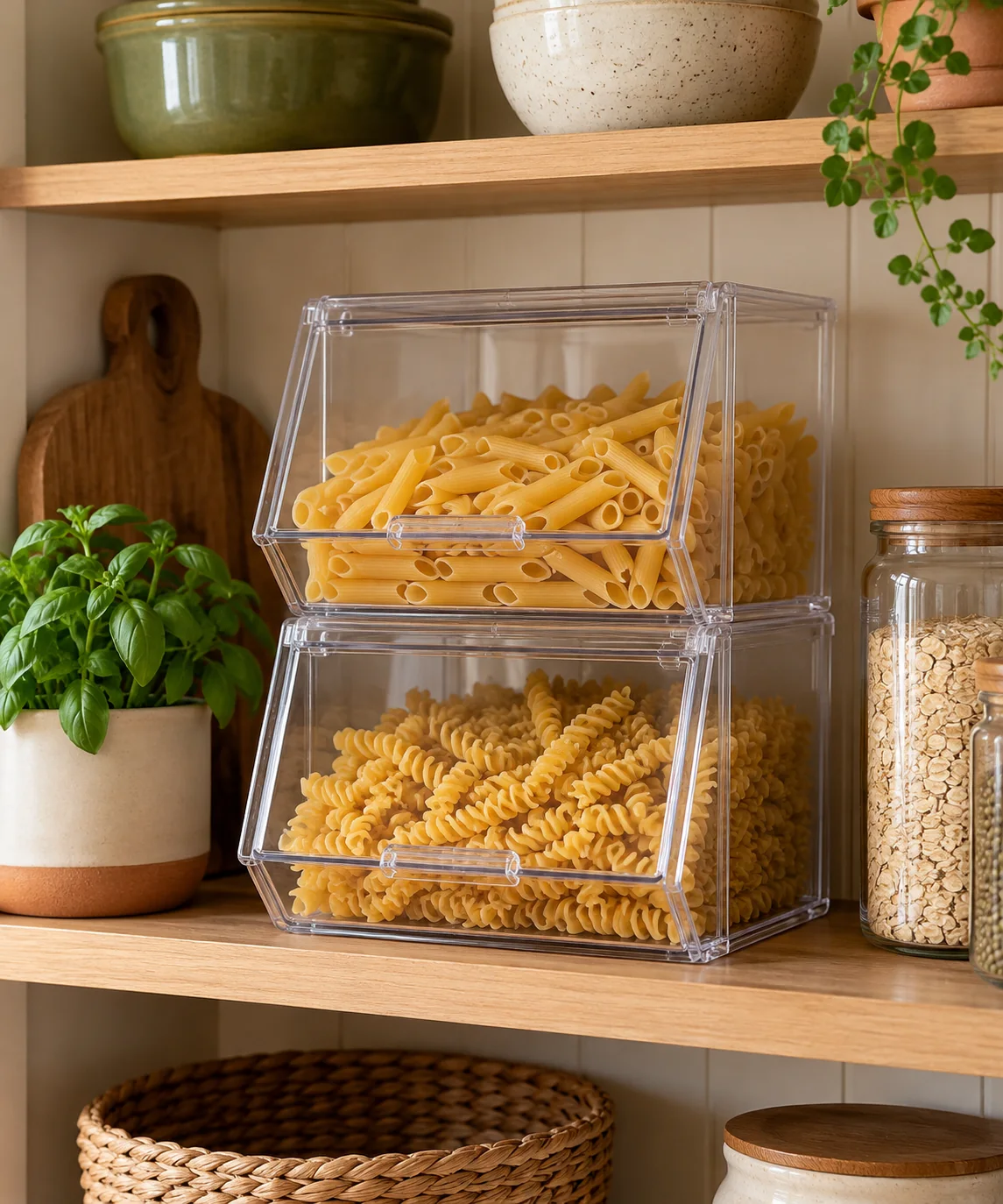
Selecting Proper Container Proportions
High shelves require containers with balanced dimensions so front doors can swing open smoothly without catching on the shelf above. Measure both the vertical clearance between upper shelves and the reachable depth. Choose modular clear acrylic bins designed with front-dropping magnetic or latching doors. Stacking two moderate-height bins is usually safer and more functional than one overly tall unit, as it prevents contents from toppling out when the door lowers. Confirm that upper stacking grooves lock tightly to prevent slipping during daily use.
Zoning Backups and Dry Pasta Varieties
Upper shelves work best for items that do not require daily handling but take up substantial pantry volume. Dedicate lower-tier drop-down bins to everyday dry pasta shapes like penne, spaghetti boxes, and fusilli bags. Reserve the tier above for baking staples and surplus supplies, including backup bags of flour, sugar, and baking powder tins. Because the acrylic walls are transparent, you can assess pasta counts from the kitchen floor, simplifying grocery list preparation without pulling down bulky containers.
Safe Weight Stacking Practices
Even though modular drop-front bins are engineered to stack, excessive weight on an elevated shelf creates safety hazards. Store lighter, bulkier goods in the upper stacked unit—such as bagged noodles or lightweight baking backups—while placing denser goods in the lower bin. Avoid loading containers to their structural limits, as heavy loads can warp acrylic walls and prevent drop doors from latching shut. Keep the total stack height within comfortable arm’s reach so you never pull items down blindly.
Labeling and Date Rotation Strategies
While clear plastic reveals container contents, identifying specific expiration dates and grain types from below requires clear labeling. Apply simple adhesive labels to the drop-down flap or lower bin rim, noting purchase dates and variety names. When stocking new pasta bags or baking reserves, place fresh goods behind the remaining supply within the bin. The front flap lets you scoop or reach the frontmost, oldest item first, supporting healthy stock rotation without taking the whole bin down from the shelf.
Cleaning and Acrylic Container Care
Clear acrylic requires gentle maintenance to retain its clarity and prevent surface scratching over time. Do not wash clear bins in hot dishwashers, as intense heat can warp acrylic frames and weaken magnetic door closures. Instead, wipe bins with a soft microfiber cloth dampened with warm water and mild dish soap. Dry thoroughly before restocking dry pasta or paper-wrapped baking goods. Inspect door hinges annually to ensure the drop-down mechanisms swing freely and close flush against the frame.
YOUR STARTING POINT
A little checklist.
Original editorial guidance. Images are AI-generated concepts, not photographs of completed projects. Our sources and approach.
Questions to consider
Can I store heavy liquids or canned goods in drop-down bins?
No, drop-down bins are designed for lightweight dry goods like pasta, dry grains, and baking backups. Heavy liquids or metal cans can crack the bottom acrylic seam or warp the front door frame, preventing the latch from closing securely.
How high can I safely stack clear drop-front containers in a pantry?
Limit stacks to two bins high on elevated shelves. Stacking three or more containers increases the risk of tipping when you pull the front door downward, and makes reaching into the top compartment awkward without a stable step stool.
How do I prevent static cling and dust on clear acrylic containers?
Wipe the exterior of the acrylic bins with a slightly damp microfiber cloth using a drop of mild dish detergent. Avoid paper towels or ammonia cleaners, which create micro-scratches and generate static charges that attract dust and flour particles.