Entryway Organization · THE GUIDE
Utilize Doorway Reveals With Ultra-Shallow Key Racks
In compact homes and historic apartments, narrow entry halls often lack space for wall consoles or deep entryway shelves. Deep architectural door casings, however, may offer a compact, underutilized vertical surface along the jamb reveal between the casing edge and the door stop. When permitted by property guidelines and door clearance, a low-profile strip with shallow pegs creates a functional landing zone for essential keys without protruding into room egress. Planning this micro-storage carefully preserves historic woodwork, maintains clear entry circulation, and prevents dangling rings from interfering with door operation.
Jump to the checklist ↓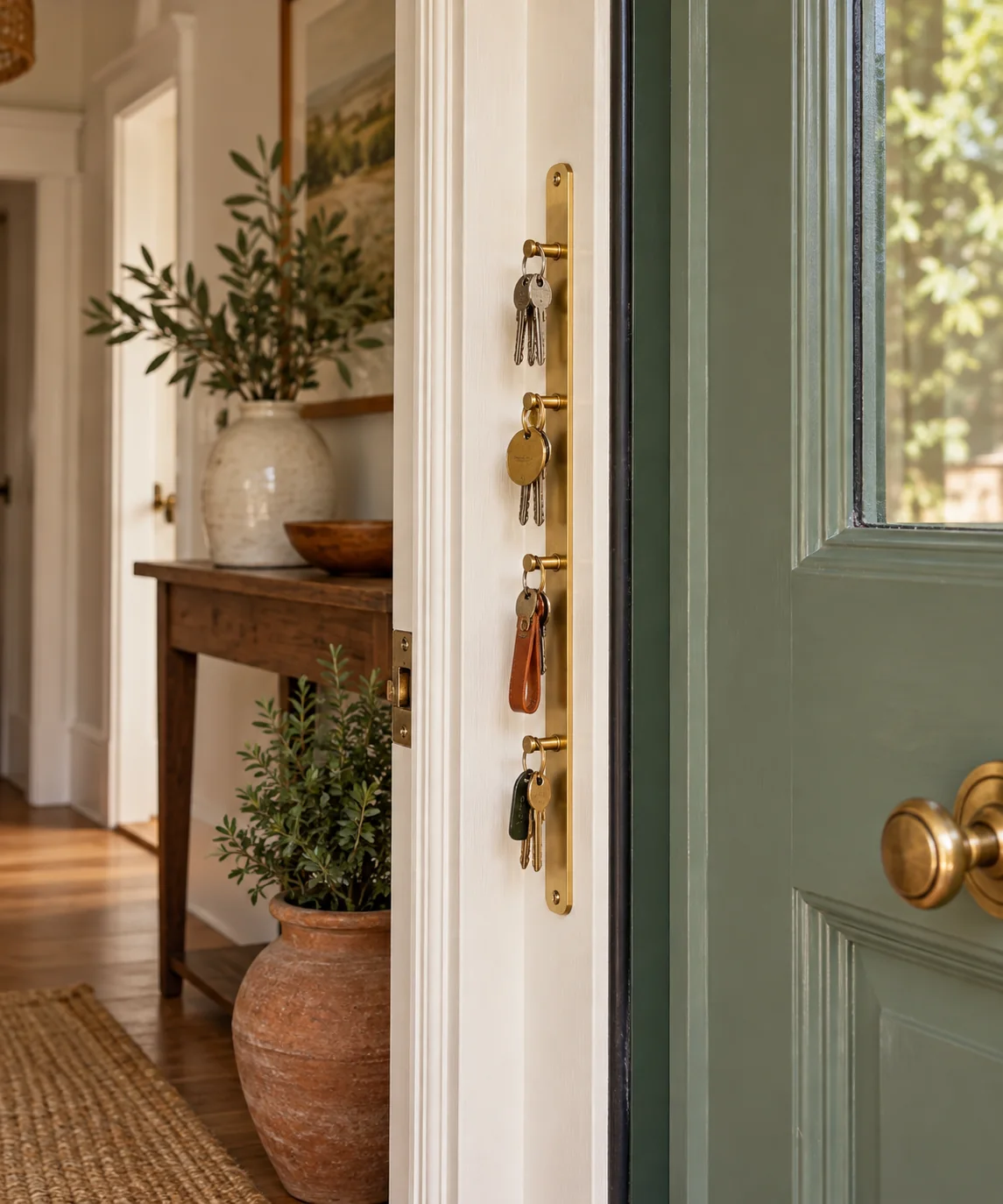
Assessing Door Swing and Frame Clearance
Before considering hardware for a door jamb reveal, observe the full swing path of the door and the exact profile of the frame. The recessed jamb area between the door stop and the outer casing face must offer sufficient flat width for the hardware base without overhanging trim contours. Slowly open and close the door through its complete arc while observing latch bolts, lever handles, deadbolts, and door edges. The entire intended hanging area must sit safely clear of moving hardware so that keys or hooks never make contact with the swinging door slab.
Selecting Low-Profile Hanging Hardware
Standard coat hooks and multi-pronged racks protrude too far into entryway thresholds, creating snag risks for clothing, bags, and passing occupants. Select low-profile hardware specifically designed for tight spaces, such as flush-backed rails with short pegs or compact single pins. The hardware projection should remain as shallow as possible so keys hang relatively flat against the woodwork. Choose smooth, rounded pin designs that hold a single key ring securely without projecting into the active doorway opening.
Preserving Finishes and Verifying Guidelines
Historic door casings often feature vintage finishes, detailed millwork, or fragile paint layers that require protection. Review lease terms or building preservation rules before attaching any hardware to architectural trim, as drilling or mounting adhesives may be restricted. When hardware attachment is permitted, use hardware and fasteners appropriate for solid timber, or select surface-safe, removable adhesive solutions tested on an inconspicuous trim section. Avoid aggressive adhesives that can peel brittle paint or pull historic wood fibers when removed.
Mitigating Latch Interference and Key Movement
Keys hung near an entryway door will sway slightly from room drafts, vibration, or the air movement caused by door operation. Positioning the rack along the hinge-side jamb is generally preferable, as it places keys farther from moving latches and strike plates. If hardware must be positioned along the latch side, mount it well above or below the latch mechanism and strike pocket. Ensure suspended key fobs hang completely flat against the jamb so they cannot swing into the gap between the closing door edge and the frame.
Streamlining Key Ring Bulk and Weight
Door jamb storage functions best when restricted to essential everyday carry items. Oversized key bundles, heavy carabiners, bulky ornamental fobs, and tools add unnecessary weight that can strain shallow hardware and scratch surrounding trim. Pare daily sets down to primary entrance keys, a mail key, and an essential vehicle remote. Store surplus tools, seasonal padlocks, and secondary house keys in a dedicated drawer or storage bin to keep doorway storage tidy, lightweight, and unobtrusive.
YOUR STARTING POINT
A little checklist.
Original editorial guidance. Images are AI-generated concepts, not photographs of completed projects. Our sources and approach.
Questions to consider
Can I mount key hooks directly onto the door stop molding?
Avoid mounting hardware directly onto the door stop strip. The door stop is narrow, absorbs direct impact each time the door closes, and aligns the door slab within the frame. Fasten hardware only to the wider, stationary jamb reveal beside the stop where permitted.
How can I protect historic door trim paint from swinging metal keys?
Place a subtle strip of surface-protection film or small self-adhesive felt dots behind the hanging zone. This creates a soft barrier that absorbs light contact when keys move, helping prevent scratches or rub marks on vintage paint and clear finishes.
Is an adhesive strip strong enough to hold daily keys on a wooden jamb?
Quality removable mounting strips designed for finished wood can support lightweight key rings when applied according to the adhesive manufacturer's surface preparation instructions. For heavier key sets or unsealed wood, adhesive may fail or damage fragile finishes.