Sage and Cream Interiors · THE GUIDE
Utilize Under-Cabinet Wire Baskets for Kitchen Foil and Wrap Storage
Standard kitchen cabinetry frequently suffers from awkward vertical gaps between shelves, leaving several inches of unused air space above shorter dishware. Long, awkward boxes of aluminum foil, parchment paper, and plastic wrap often consume valuable flat shelf space or jam shallow kitchen drawers. Sliding wire baskets beneath solid shelves creates an instant suspended cubby that captures this dead space without permanent modifications. Finished in clean white or pale cream, these slide-on organizers keep wraps accessible while freeing lower surfaces for everyday sage ceramic mugs, maximizing pantry efficiency through simple, reversible organization.
Jump to the checklist ↓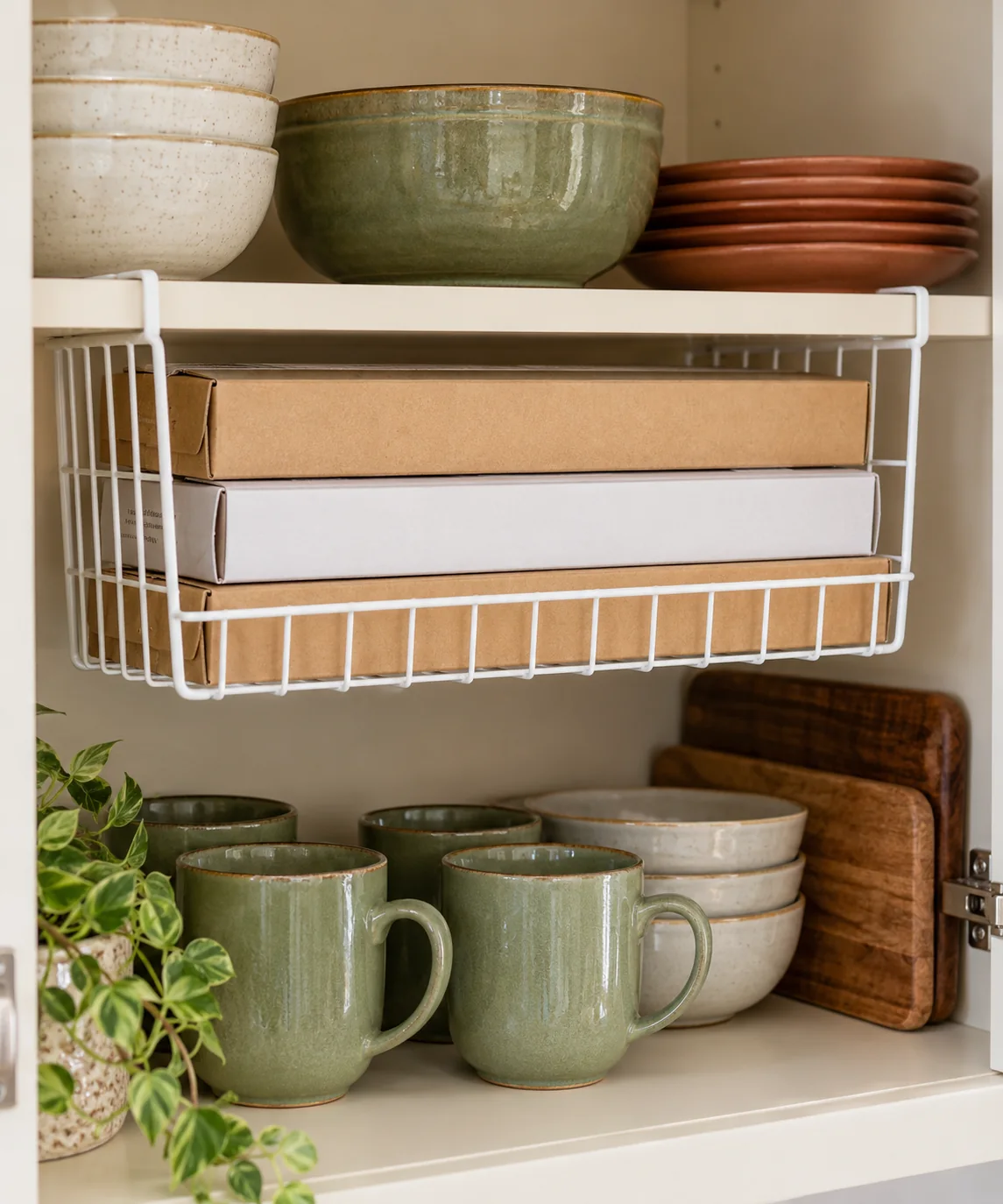
Measure Shelf Dimensions and Door Swing Clearance
Before selecting under-shelf wire baskets, measure your cabinet shelf thickness, interior depth, and door closure paths. Slide-on brackets are typically manufactured for standard residential shelf thicknesses, but dimensions vary significantly between solid wood, plywood, and composite cabinetry. Ensure that the bracket arms slide fully over the shelf without forcing the material, which can damage laminates or veneers. Check that the bracket's forward profile does not strike the cabinet door or impede soft-close mechanisms. Allow adequate horizontal distance between the basket frame and interior hinge hardware so the door opens and closes through its full arc without contact.
Size Baskets for Boxed Kitchen Wraps
Kitchen wraps, foil rolls, and baking papers come in diverse box dimensions, often ranging from twelve to fifteen inches or longer. Measure your primary wrap cartons before choosing a basket to verify they can rest flat on the wire base rather than sitting at an awkward diagonal angle. A low-profile basket height allows two or three standard boxes to rest horizontally while keeping the lower shelf accessible. Storing boxes flat preserves packaging corners, prevents rolls from unspooling internally, and enables smooth access to individual supplies as needed during food preparation.
Manage Shelf Support and Weight Distribution
Under-shelf baskets direct downward leverage onto the front edge of the supporting shelf via their mounting brackets. To prevent shelf sag, reserve these suspended organizers for light boxed goods rather than heavy kitchenware, glass jars, or stoneware. Position the basket near existing vertical supports or shelf pins where the shelf has greater rigidity, rather than along the unsupported midpoint of wide spans. Distribute cartons evenly across the basket base to maintain balance and prevent the front rim from dipping over prolonged everyday use.
Coordinate Lower-Shelf Placement and Clearance
Suspending a wire basket consumes vertical clearance on the shelf below, changing how you arrange items beneath it. Plan the space underneath for low-profile dishware, shallow prep bowls, or smaller drinkware that can be lifted in and out without striking the wire frame. Test removing and replacing lower-shelf items before finalizing basket placement to ensure hand clearance remains natural and comfortable. This tiered planning turns tall vertical voids into functional two-tier zones while reducing the chance of chipping ceramic rims during daily use.
Protect Cabinet Surfaces and Inspect Periodically
Sliding bare metal brackets over painted, laminated, or wood shelves can create friction scuffs over time. Applying thin protective felt tape or clear adhesive pads along the underside of bracket contact surfaces helps cushion the cabinet finish against abrasion. Periodically remove the basket during regular cleaning to wipe away pantry dust, loose cardboard fibers, and grease film using a damp microfiber cloth. Inspect the bracket alignment and shelf pins to verify that the shelf remains level, secure, and properly seated on its supports.
YOUR STARTING POINT
A little checklist.
Original editorial guidance. Images are AI-generated concepts, not photographs of completed projects. Our sources and approach.
Questions to consider
Can under-cabinet wire baskets cause shelves to sag?
Shelves made of thin composite board or wide unsupported spans can bow under sustained edge loads. Keeping the basket filled only with lightweight foil and wrap boxes—and positioning it nearer to shelf support pins rather than span centers—helps minimize downward deflection.
What should I do if a bracket prevents the cabinet door from closing?
Check if the shelf can be set back slightly within the cabinet casing, or verify that the bracket sits flush against the shelf edge. If the bracket thickness interferes with flush doors, thin adhesive bumper pads on door corners can sometimes equalize alignment, or alternative drawer storage may be preferable.
How can I stop narrow wrap boxes from slipping through wire gaps?
Place a trimmed piece of thin, wipeable shelf liner or sturdy cardstock across the bottom wire grid. This creates an even, flat floor that supports narrower boxes smoothly without adding noticeable weight.