Laundry Space Organization · THE GUIDE
Utilize Under-Sink Space with Tiered Acrylic Sliding Drawers
Utility sink cabinets present unique storage challenges because central drain traps, supply valves, and shutoffs bisect the usable volume. Stacking bottles loosely often results in tipped containers and forgotten specialty cleaners hidden behind plumbing. Clear acrylic sliding drawer units offer an effective, modular solution that fits cleanly to either side of the drain assembly. By containing tall spray bottles on open lower tracks and smaller cleaning accessories in shallow top tiers, you restore direct visual access without contacting pipes. Careful planning ensures clear drawer travel while keeping daily essentials within reach.
Jump to the checklist ↓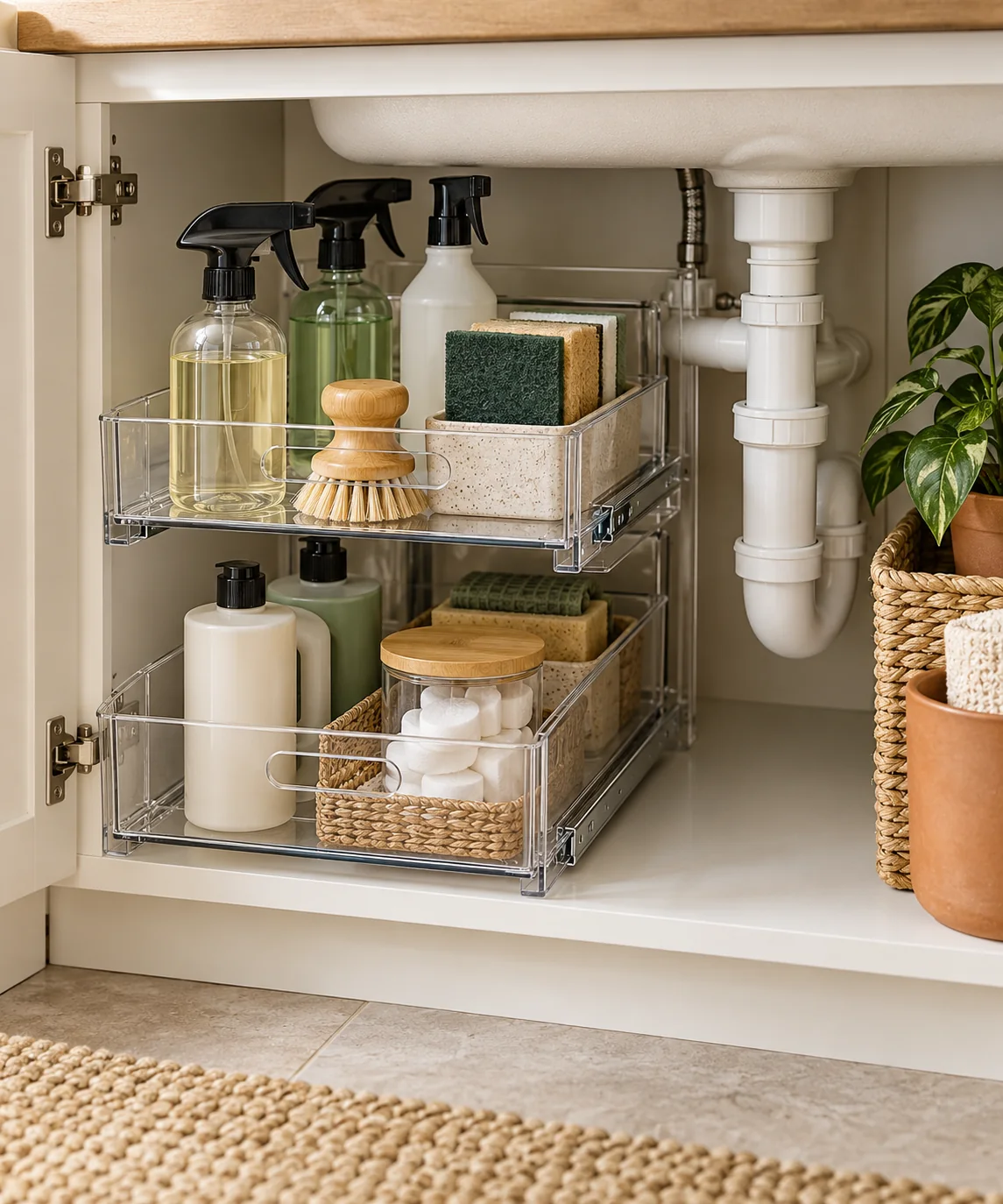
Pipe Clearance Mapping
Before choosing tiered storage units, map the physical clearances inside the utility sink cabinet around the central drain trap, shutoff valves, and flexible supply lines. Utility sink plumbing is rarely centered, which often leaves one side of the cabinet base wider than the other. Measure available floor width on each side of the P-trap, confirming there is adequate room for drawer tracks to slide forward freely without nudging pipe joints or valve handles. Note the vertical space between the cabinet floor and the bottom of the sink basin or shutoff valves, ensuring upper tiers will clear overhead contours and any attached disposal hardware without interference.
Acrylic Organizer Selection
Select freestanding modular drawer units made from transparent acrylic or durable PET plastic that rest securely on the cabinet floor without requiring permanent fasteners. Transparent bins provide immediate visibility into supply levels, making it simple to locate stain treatments and cleaning solutions without shifting containers around. Configurations combining a deep lower drawer with an offset or narrower upper tray navigate uneven under-sink plumbing more effectively. Removable bin dividers help separate narrow spray bottles to keep them upright during drawer travel, while non-marking rubber feet help prevent the organizer base from sliding across smooth cabinet surfaces.
Weight Distribution and Balance
Arranging liquid cleaners requires careful weight management to keep freestanding drawer assemblies stable and protect their glide tracks. Place heavier concentrated detergent jugs, refill bottles, and dense containers in the lowest drawer to maintain a low center of gravity. Reserve upper tiers for lightweight accessories such as spot brushes, lint sponges, microfiber cloths, and compact stain sticks. Overfilling the upper drawer creates leverage that can tip an unanchored unit forward when extended, so test stability by keeping the bulk of stored weight concentrated in the bottom tier.
Trial Fitting and Motion Checks
Test the proposed arrangement using empty organizers or cardboard mockups before loading full cleaning inventory into the cabinet. Slide each drawer through its complete range of movement to verify it clears cabinet face frames, hinge hardware, and the interior face of closed cabinet doors. Check that tall trigger-spray nozzles do not catch on upper shelf edges or plumbing connections during operation. Verifying clearances while bins are empty minimizes the risk of sudden impacts against drain slip joints or cracking rigid plastic edges during daily chores.
Routine Cleaning and Maintenance
Under-sink storage environments naturally collect dust, moisture, and occasional product drips from spray nozzles. Clean acrylic trays using warm water, mild liquid soap, and a soft microfiber cloth; avoid abrasive scouring pads or aggressive solvents that can etch or cloud transparent plastic. Remove the drawers periodically to inspect the cabinet base for plumbing drips or residue buildup. If sliding rails become stiff, wipe the channels clear of grit with a dry cloth rather than applying aerosol lubricants or oils, which attract loose household lint.
YOUR STARTING POINT
A little checklist.
Original editorial guidance. Images are AI-generated concepts, not photographs of completed projects. Our sources and approach.
Questions to consider
How do I prevent sliding drawers from tipping when fully extended?
Place your heaviest bottles exclusively in the lower drawer and avoid pulling the top tier beyond its built-in stop. Choosing an organizer with a weighted frame or wide base perimeter also helps anchor the unit without drilling into cabinetry.
Can acrylic drawers tolerate accidental bleach or solvent leaks?
Undiluted bleach, harsh solvents, and acetone can cloud or crack acrylic. If chemicals spill, immediately wipe the drawer clean using warm water and mild liquid soap. Storing aggressive solvents in dedicated secondary caddies prevents damaging the clear plastic.
What should I do if my cabinet floor is uneven?
Place adhesive silicone bumper pads under the lower corners of the organizer frame to level the unit. Leveling ensures sliding drawers pull forward straight without rubbing against cabinet sidewalls or binding along their built-in runner tracks.