Garden Tool Organization · THE GUIDE
Utilize Under-Stair Courtyard Nooks for Slender Tool Wardrobes
The triangular recess beneath an exterior staircase often collects dead leaves and stagnant moisture, yet it offers valuable sheltered footprint in tight courtyards. Placing a slender, freestanding storage locker in this angled void protects long-handled implements without encroaching on walkway clearances. Because outdoor stairs shield the area from direct overhead precipitation, a well-dimensioned cabinet can store spades, brooms, and hand tools neatly. Planning around the stair pitch, paving slope, and air circulation transforms this overlooked architectural corner into an organized utility zone while keeping critical walkways completely open and safe for everyday foot traffic.
Jump to the checklist ↓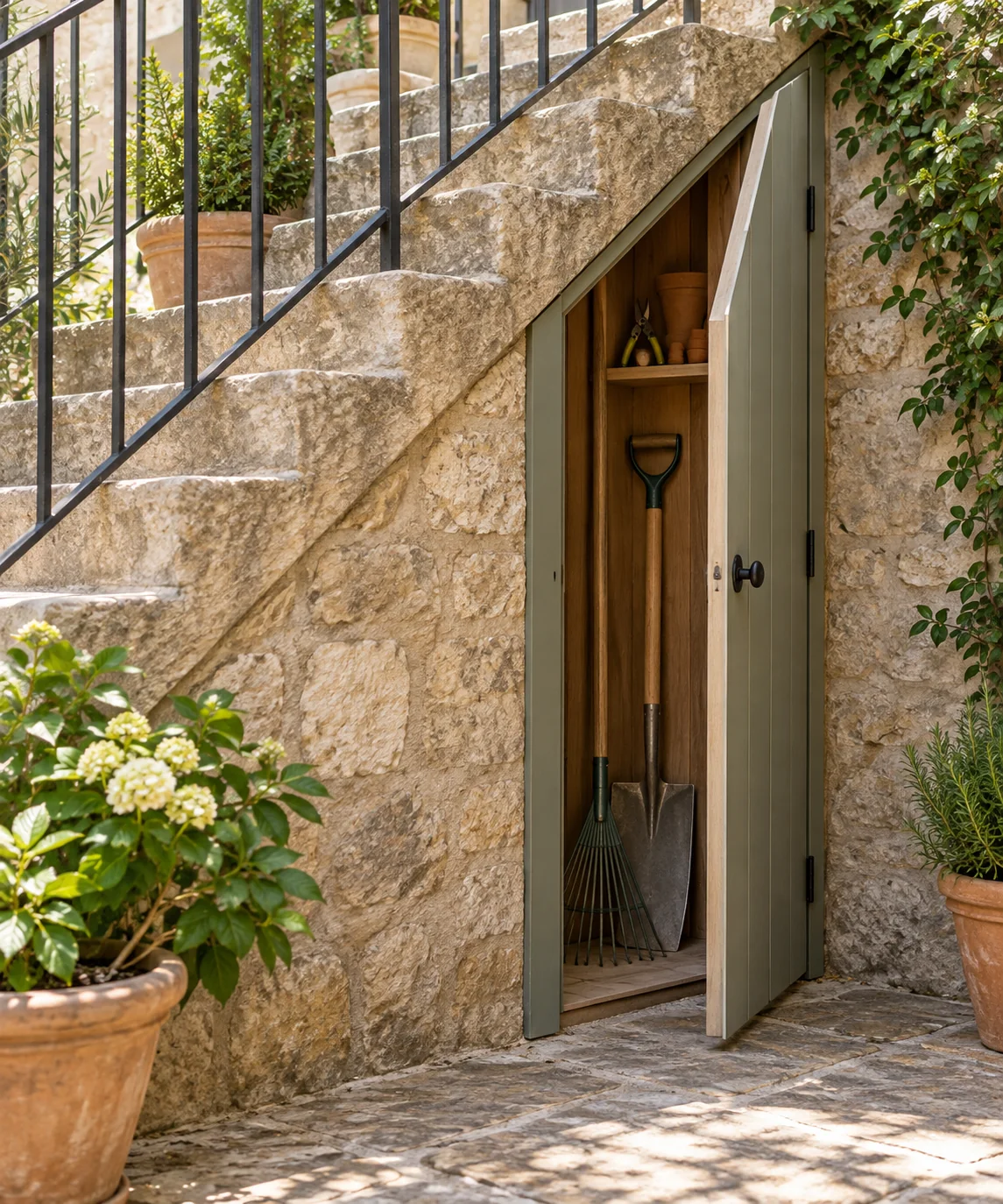
Assessing Slope and Staircase Pitch
Begin by measuring the clear height at multiple intervals along the stair profile. Outdoor steps slope continuously, so a rectangular cabinet must sit within the lowest usable vertical boundary or feature a stepped top profile. Allow at least 2 inches of clearance between the cabinet roof and the stair underside to prevent trapped moisture and pest nesting. If the ground paving incorporates a drainage slope, use adjustable leveling feet on the cabinet base to ensure doors swing freely without binding against uneven courtyard flagstones.
Cabinet Depth and Clearance Planning
Keep the overall wardrobe depth between 12 and 16 inches. This slim profile easily accommodates rakes, hoes, and standard garden spades placed upright or slightly angled across interior tool clips. Verify that the open door does not sweep into primary paths or obstruct courtyard gates. If space in front of the nook is exceptionally tight, consider twin bifold doors or sliding front panels rather than a single wide hinged door to minimize the required swing radius during routine garden tasks.
Weatherproofing and Airflow Essentials
Although sheltered beneath overhead stairs, courtyard nooks experience ambient humidity, windblown rain, and soil splashback. Select a cabinet constructed from exterior-rated timber treated with clear sealant, galvanized metal, or heavy-duty resin. Elevate the base 1 to 2 inches off the paving using synthetic risers so runoff flows beneath without soaking the floor panel. Integrate small, louvered side vents backed with wire mesh to encourage cross-ventilation, preventing mildew from forming on stored tool handles.
Interior Vertical Organization
Divide the internal volume into distinct vertical zones. Mount heavy-duty spring clips along the tallest wall section to secure long handles upright, positioning the metal heads downward or staggering them to maximize lateral width. Dedicate the lower, tapered interior corner to stacked stacking crates containing small bags of soil amendments or spare twine. Add two shallow upper shelves across the widest section for bypass pruners, sharpening stones, and protective gloves, keeping smaller gear readily visible.
Long-Term Maintenance and Site Care
Courtyard recesses naturally gather blown debris behind freestanding furniture. Leave a 3-inch gap between the cabinet back and the masonry wall to facilitate seasonal cleaning. Twice a year, pull light contents forward and sweep fallen leaves, cobwebs, and grit from the perimeter to prevent drainage blockages. Periodically wipe tool handles dry before storing them, and inspect the locker hinges for rust, applying a drop of mineral oil to maintain smooth operation through damp weather.
YOUR STARTING POINT
A little checklist.
Original editorial guidance. Images are AI-generated concepts, not photographs of completed projects. Our sources and approach.
Questions to consider
Can I store power tools in an under-stair courtyard cabinet?
Keep cordless or corded power equipment inside a climate-controlled indoor space. Courtyard lockers experience substantial ambient humidity changes that can corrode electrical contacts, ruin battery packs, and degrade sensitive mechanical housings over extended storage periods.
How do I prevent the wooden cabinet from rotting on wet stone?
Rest the cabinet legs on non-porous rubber or composite furniture pads rather than directly on wet pavers. This prevents capillary moisture rise, allows ground runoff to pass beneath freely, and lets you level the cabinet precisely.
What if the under-stair nook is too shallow for rakes?
Hang long-handled tools horizontally along the longest back wall using staggered utility hooks, or store only hand tools, coiled hoses, and potting accessories while dedicating long tools to a separate vertical stand elsewhere.