Small Balcony Layouts · THE GUIDE
Utilize Wall-Mounted Herb Troughs for High-Reach Harvesting
Tending potted herbs at floor level can require awkward bending that strains the back and clutters narrow balcony walkways. Raising herb containers to waist or chest height frees valuable floor area and brings edible plants within comfortable reach. Culinary herbs such as mint and flat-leaf parsley require reliable daylight and excellent root drainage to maintain vigorous leaf growth. Planning elevated herb planting requires evaluating building rules, sunlight exposure, container weight, and moisture containment, allowing gardeners to enjoy accessible harvesting without penetrating exterior building envelopes or obstructing egress paths.
Jump to the checklist ↓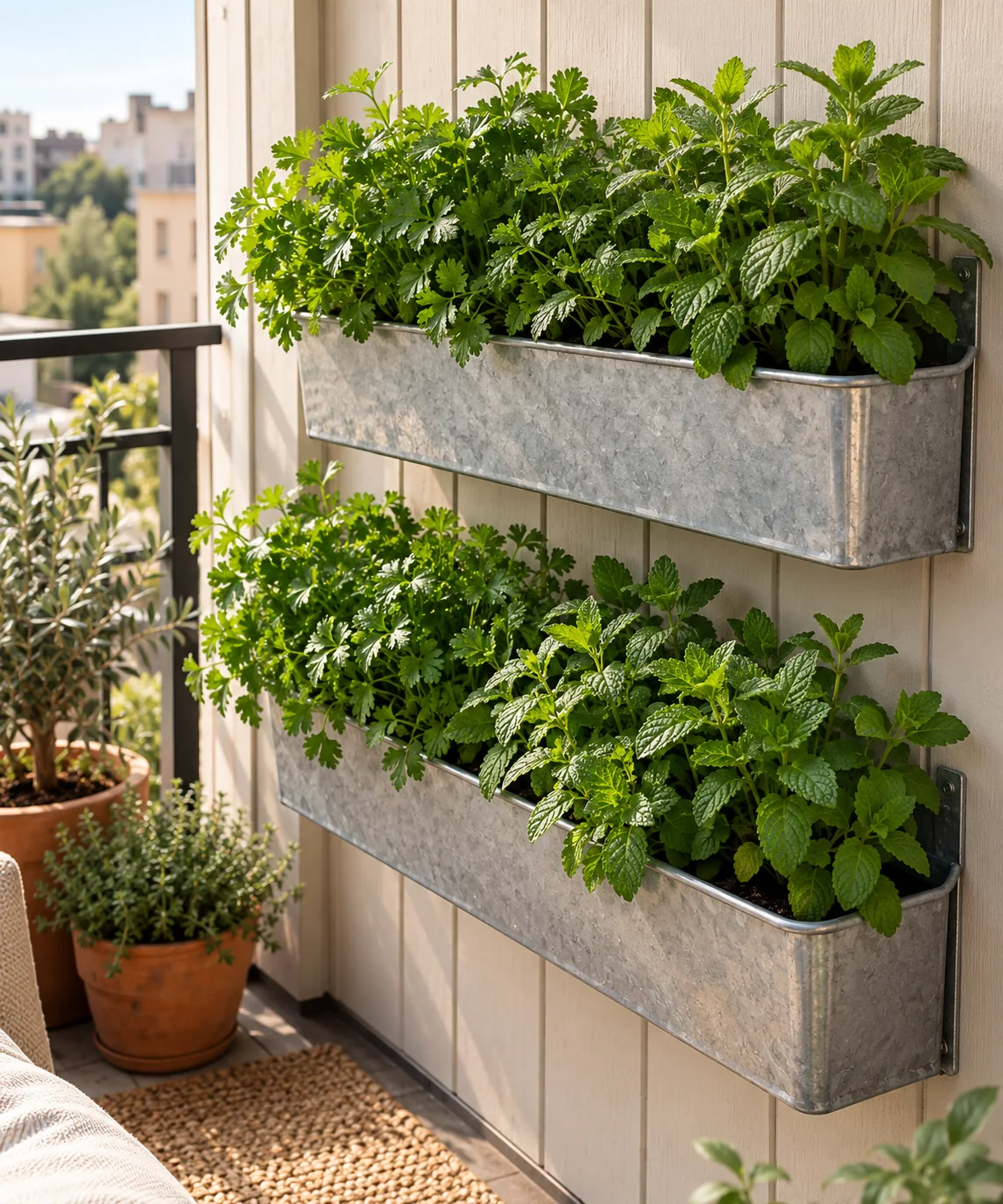
Confirming Building Guidelines and Placement Options
Before considering any wall-supported planters, review your lease agreement, condominium bylaws, and local property rules. Most multifamily buildings prohibit tenants from drilling into exterior siding, stucco, or brick, as penetrating these surfaces can void waterproofing warranties and cause internal water damage. If structural attachment is prohibited or unverified, select freestanding vertical plant ladders, tiered bakers' racks, or tension-pole systems designed for balconies. These freestanding alternatives provide elevated growing heights while remaining completely reversible and code-compliant.
Evaluating Sunlight and Walkway Clearances
Culinary herbs like parsley and mint perform best in locations receiving four to six hours of direct sun daily. Observe how light moves across your balcony walls throughout the season before committing to a setup, since deep roof overhangs can cast extensive shade. Position elevated planters so they do not protrude into primary walking paths or emergency exit clearances. Maintaining clear passage between furnishings, access doors, and planters ensures the balcony remains safe and easily navigable during daily use.
Container Volume and Root Space Needs
Elevated troughs and planters must offer adequate root space to keep herbs from desiccating in warm weather. Shallow containers dry out quickly under drying wind conditions. Mint tolerates compact root zones but spreads aggressively through horizontal runners, whereas flat-leaf parsley develops a longer taproot that benefits from deeper soil volume. Choose containers with sufficient depth for healthy root development and use a well-aerated potting mix rather than heavy garden soil to moderate container weight on shelves or stands.
Managing Drainage and Protecting Wall Surfaces
Proper drainage is vital for herb health, but unmanaged runoff can stain building facades or drip onto neighbors' balconies below. Use planters fitted with secure drainage trays or secondary saucers that capture excess water before it spills. If placing planters against or near an exterior wall, maintain an air space between the back of the container and the wall surface. This gap prevents water droplets and ambient humidity from lingering against building siding, protecting exterior finishes from algae and mineral deposits.
Daily Moisture Checks and Seasonal Upkeep
Elevated containers lose moisture more rapidly than ground-level garden beds due to increased air movement and ambient heat around metal or plastic planters. Check soil moisture regularly by pressing a finger an inch beneath the surface, watering thoroughly when the top layer feels dry. Using lightweight plastic nursery pots nestled inside decorative outer troughs makes maintenance simpler. This nested arrangement allows you to rotate individual pots for even light exposure and easily bring sensitive herbs indoors ahead of freezing weather.
YOUR STARTING POINT
A little checklist.
Original editorial guidance. Images are AI-generated concepts, not photographs of completed projects. Our sources and approach.
Questions to consider
Can I mount herb planters directly to my apartment balcony siding?
In most residential buildings, drilling into exterior siding, brick, or stucco is prohibited because it can breach weatherproofing barriers and void building warranties. Always consult property management first; freestanding tiered shelving or vertical plant towers offer elevated planting without structural alterations.
How can I prevent elevated metal herb troughs from overheating?
Metal containers absorb heat quickly under direct sunlight, which can stress tender roots. Nesting plastic nursery pots inside the metal trough creates an insulating air pocket that buffers root temperatures, or you can choose light-colored wood or composite planters instead.
How often should balcony herbs like parsley and mint be harvested?
Harvest outer stems periodically once plants have established healthy growth. Regular trimming prevents mint from becoming overly woody, keeps parsley producing tender foliage, and delays flowering, ensuring a steady supply of fresh leaves through the growing season.