Dining Nooks · THE GUIDE
Utilize Wipe-Clean Waxed Canvas for Everyday Nook Seating
Dining nook seating experiences constant exposure to crumbs, liquid spills, and greasy fingers, leading many households toward synthetic vinyl or polyurethane coverings. However, tightly woven cotton canvas treated with natural wax offers a durable, plant-based alternative that repels moisture while developing a pleasant, aged patina over time. Unlike slick plastics, waxed textiles maintain a breathable, organic texture that integrates naturally alongside solid wood furniture. By understanding the functional properties, tailoring demands, and basic maintenance cycles of waxed cotton, you can construct practical bench cushions that resist mealtime accidents without sacrificing tactile comfort or indoor air quality.
Jump to the checklist ↓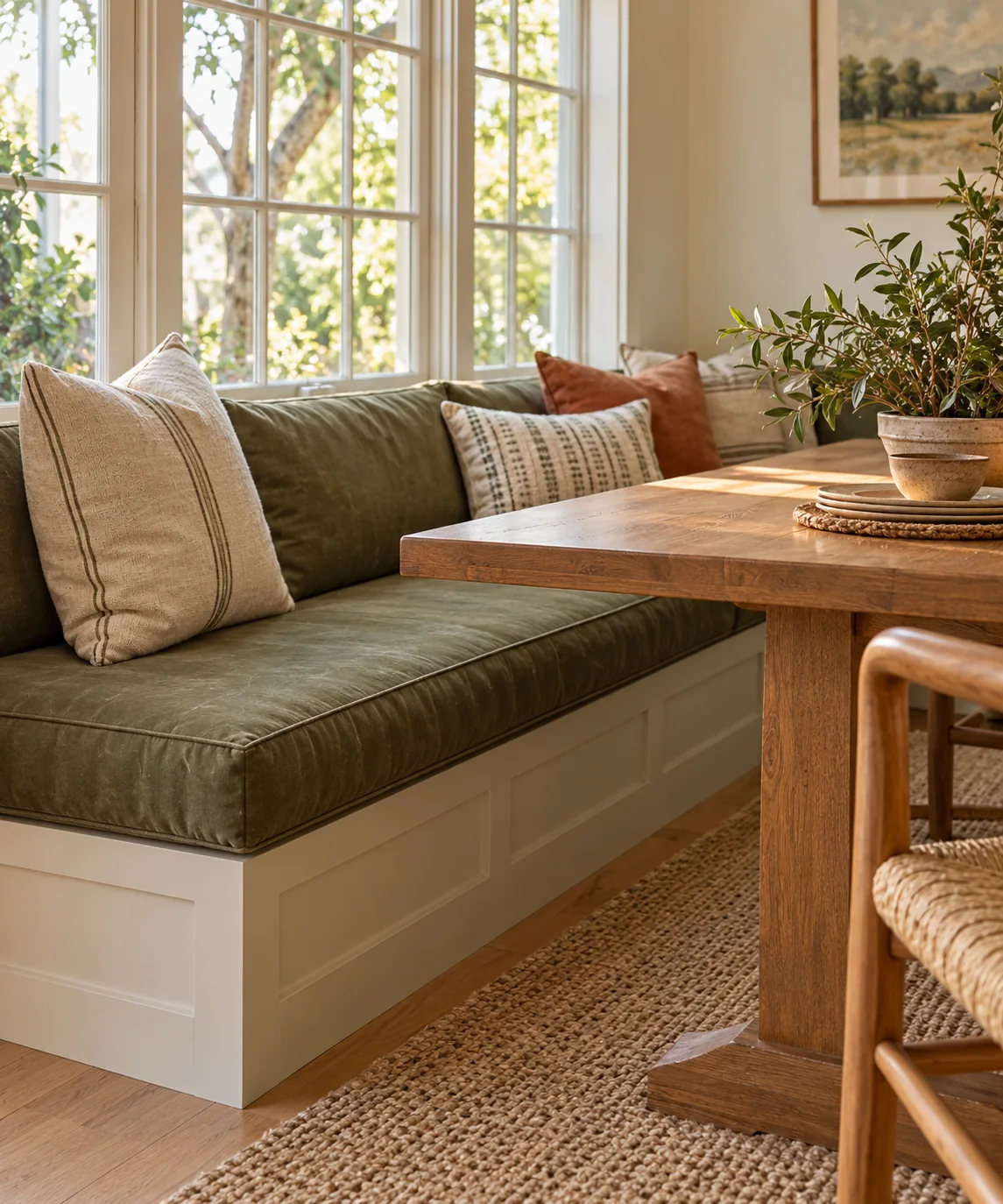
Selecting Fabric Weight and Weave
Target a mid-to-heavy cotton duck canvas ranging between 10 and 12 ounces per square yard before waxing. Lighter fabrics lack the structural integrity required for daily abrasion along dining bench edges, while heavier grades can feel uncomfortably stiff against clothing. A dense, tight weave prevents spilled liquids from migrating through the fibers toward interior foam cores. Inspect the initial treatment to ensure an even wax saturation across the surface, which provides the hydrophobic barrier necessary to force water, tea, and juice into easily wiped droplets upon contact.
Tailoring Seams and Edge Orientation
Liquid spills naturally follow gravity toward stitching lines, making seam placement crucial in dining environments. Avoid decorative tufting or deep button creases, which create recessed valleys that trap liquids and bread crumbs. Instead, specify flat-felled or reinforced topstitched seams along the outer cushion perimeters. When building custom bench covers, position main seam lines along the lower edge or vertical sides rather than the top seating plane. This simple orientation choice dramatically reduces the risk of fluids seeping through needle holes into cushion inserts.
Everyday Cleaning and Surface Care
Day-to-day upkeep requires only a stiff natural-bristle brush, cold water, and clean lint-free cloths. Brush away dry crumbs after meals, then wipe sticky spots using a damp rag moistened with cool tap water. Never use warm water, chemical solvents, or harsh dish detergents, as surfactants strip the embedded wax finish from cotton strands. For oily condiments, gently blot the spot without scrub pressure. The wax will absorb minor grease marks, gradually blending them into the textile's characteristic weathered visual profile over several weeks.
Managing Temperature and Tactile Response
Waxed canvas responds directly to environmental temperatures, shifting subtly between seasons. In cooler kitchen corners, the fabric firmens, giving cushions a tailored, taut appearance that softens quickly under body heat. During warm summer months, the finish becomes more pliable without turning sticky or tacky like degraded vinyl. To maintain comfort, pair waxed canvas base cushions with loose, breathable linen back pillows. This layered approach delivers resilient, spill-resistant support for plates and seating while resting soft, washable natural fibers against dining occupants.
Planning Periodic Re-Proofing Cycles
Over two to three years of steady dining use, the protective coating gradually thins along front seating borders where legs brush repeatedly. Rejuvenate these high-wear zones by applying a dedicated fabric wax cake containing beeswax or mineral wax blends. Warm the canvas gently using an ambient heat source or warm room, rub the bar evenly across thin areas, and buff the surface with a lint-free cloth. This simple maintenance preserves water resistance indefinitely, eliminating the need to discard or replace cushion covers.
YOUR STARTING POINT
A little checklist.
Original editorial guidance. Images are AI-generated concepts, not photographs of completed projects. Our sources and approach.
Questions to consider
Can waxed canvas cushion covers be cleaned in a washing machine?
No. Machine washing, hot water, and laundry detergents strip the protective wax completely and ruin the fabric structure. Clean covers exclusively by hand using cold water, a soft cloth, and a mild brush for stuck-on food.
Does the wax treatment rub off onto clothing during meals?
Properly cured, high-grade waxed canvas does not transfer wax onto fabrics under normal sitting pressure. However, avoid placing delicate, dry-clean-only silks on brand-new treatments until the initial wax application has completely settled into the cotton fibers.
What insert material works best inside a waxed canvas cover?
High-density polyurethane foam wrapped in a thin polyester batting layer provides firm support that fills the canvas envelope neatly. The firm backing helps the heavy textile hold its tailored shape and prevents excess surface creasing.