Small Bedroom Layouts · THE GUIDE
Utilizing the Space Behind an Inward-Swinging Bedroom Door
In compact bedrooms, the wall cavity behind an inward-swinging door frequently languishes as forgotten, underutilized square footage. Standard bookcases and deep wall shelves intrude into the door swing path, risking damage or preventing the door from opening completely. Installing ultra-shallow, multi-tier picture ledges unlocks this hidden alcove without encroaching on floor space or obstructing room entry. By utilizing vertical wall space with ledges protruding only a few inches, you gain dedicated front-facing storage for thin books, art, and compact trays. This clever adjustment turns a potential dead zone into functional, orderly display space.
Jump to the checklist ↓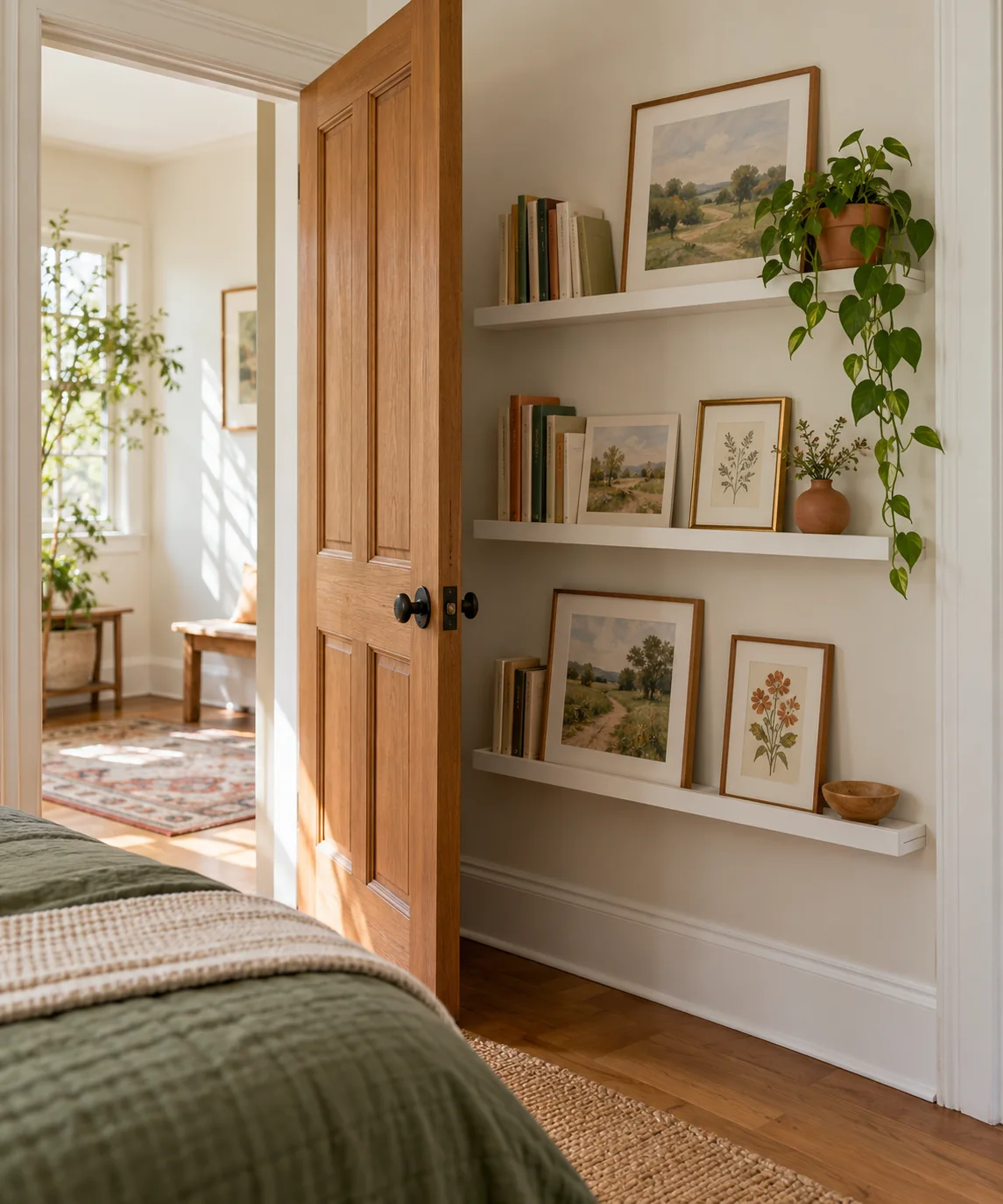
Assessing Door Clearance and Usable Depth
Maximizing storage in the wall cavity behind an inward-swinging door requires evaluating the gap remaining when the door opens against its stop. The available depth varies widely based on existing hinges, trim profiles, and doorstop settings. Any wall-hung picture ledges or shallow organizers must remain shallower than this measured pocket to avoid impeding door travel. Selecting ledges with integrated front lips helps keep items in place, preventing stored objects from shifting outward into the door's path of motion.
Planning Vertical Spacing and Reach
Arranging shallow display ledges vertically takes advantage of wall height without encroaching on walking paths. Tier spacing should match the height of items you plan to store, such as notebooks, paperbacks, or slim frames, while allowing comfortable clearance for hands when lifting items. Position the lowest tier high enough to clear baseboards and floor cleaning equipment, and keep the highest tier within natural reach. Planning tier layout visually with painter tape ensures balanced spacing before finalizing wall placement.
Selecting Low-Profile Items and Retaining Features
Picture ledges perform best when dedicated to flat, lightweight items displayed cover-forward rather than thick objects that protrude past the shelf perimeter. Thin paperbacks, journals, postcards, and low-profile trays rest securely against the wall surface. Retaining front lips are essential to prevent displayed goods from sliding forward due to vibrations or drafts created by normal door movement. Avoid storing heavy, fragile, or round items that could roll off or cause damage if nudged.
Simulating Door Swing and Clearance
Before finalizing the placement of any wall-mounted storage, simulate door travel to verify that clearance is maintained across the full arc. Measure the projection of the door handle, lock mechanism, and top and bottom door corners as the door swings open and shut. Using temporary paper templates or masking tape on the wall helps confirm that no part of the door hardware makes contact with the planned storage zone, preserving both the wall and the door finish.
Hardware Inspection and Daily Limitations
Maintaining safe clearance behind an active door depends entirely on the stability of the doorstop. Regularly inspect existing baseboard or floor stops to confirm fasteners remain tight and rubber bumpers have not deteriorated or shifted. Storage behind a door also has functional limitations; items are concealed when the door is held open and inaccessible if the door is pushed back quickly. Reserve this space for secondary display and quiet reading material rather than urgent daily essentials.
YOUR STARTING POINT
A little checklist.
Original editorial guidance. Images are AI-generated concepts, not photographs of completed projects. Our sources and approach.
Questions to consider
What depth is suitable for picture ledges behind a door?
Ledge depth must be determined by measuring the specific clearance between your fully opened door and the wall. The ledge and any stored items should remain shallower than this gap to ensure the door operates freely.
How do I prevent the door handle from striking wall-mounted ledges?
Assess the trajectory of the door handle during its entire swing. Position ledges above or below the handle's strike path, and verify that a sturdy doorstop halts door travel well before the handle reaches the wall.
Can standard books be stored on shallow door-pocket ledges?
Slim books and paperbacks displayed cover-forward work well if they fit behind the retaining lip without leaning outward. Avoid placing thick or heavy volumes spine-out, as they can protrude into the door swing path.