Entryway Organization · THE GUIDE
Ventilate Athletic Bags With Wire Basket Wall Brackets
Enclosed lockers and solid storage bins trap moisture, leaving post-workout gym bags and athletic gear susceptible to lingering dampness and stale odors. When synthetic apparel remains compressed inside zipped duffels, air cannot circulate to aid drying. Using open-wire storage baskets on low shelving, freestanding racks, or entryway benches provides a breathable staging area that keeps bulky sports gear orderly and accessible. By encouraging passive ambient airflow around fabrics and equipment, this reversible storage approach supports natural evaporation, prevents moisture buildup, and maintains a structured entryway between workouts.
Jump to the checklist ↓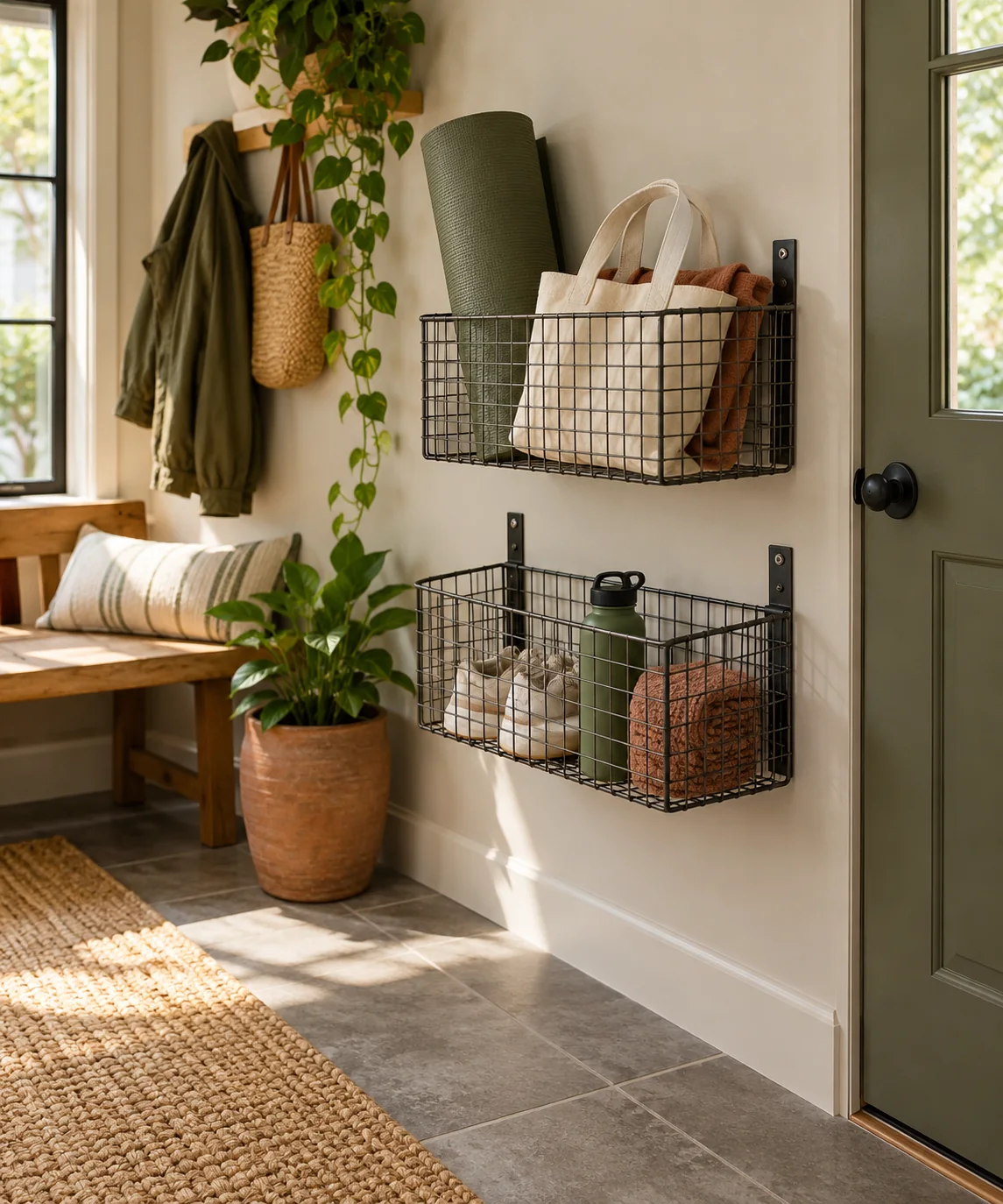
Plan Layout and Accessibility
Plan your sports gear staging area in a low-traffic section of the entryway, ensuring bags remain accessible without obstructing main walking paths. Position heavier gear containers at comfortable reach heights, such as on bench tops or low shelving, so lifting full duffels does not strain posture. If stacking open-wire containers or arranging multi-tier wire shelving, provide ample vertical clearance so bags can be lifted in and out without snagging against upper wire edges. Keep floor space underneath clear for easy sweeping and regular cleaning.
Choose Sturdy Open-Grid Wire Baskets
Select heavy-gauge wire baskets or metal mesh crates rather than solid plastic boxes or fabric-lined bins. Open grid spacing allows passive ambient airflow to reach all sides of stored items, assisting the evaporation of everyday sweat and dampness from synthetic fabrics. Powder-coated steel or rust-resistant coated wire withstands exposure to damp clothing better than unsealed metal or absorbent natural wicker. Ensure the depth and width of the baskets fully support your gear without letting straps or equipment tumble forward.
Unpack and Open Gear for Air Circulation
A breathable basket can only assist drying if gear is unpacked or vented upon returning home. Make a habit of partially unzipping main duffel compartments and side shoe pockets before setting them into the wire framework. Remove heavily soaked items, such as damp workout shirts or swim towels, and hang them separately on a drying rack rather than leaving them balled up inside bags. This simple routine prevents trapped dampness from producing persistent mildew odors in synthetic materials.
Manage Footwear and Debris Containment
Athletic footwear carries outdoor dirt, grit, and street moisture that should be kept separate from clean training apparel. Designate the bottom tier of your storage rack or a dedicated ground-level tray for running shoes and cleats. If placing shoes in a wire basket, insert a removable, washable rubber or silicone liner at the base to catch falling dirt while maintaining side ventilation. Keep muddy or wet shoes on a waterproof mat until dry before placing them into shared organizational zones.
Review Space and Storage Capacity
Before reconfiguring entryway furniture, gather all active gear—including gym bags, hydration bottles, resistance bands, and footwear—to assess total storage volume. Verify that the chosen wire bins or free-standing shelving comfortably hold current athletic equipment without overflowing into adjacent coat or shoe areas. Ensure the setup remains flexible enough to adapt to seasonal sport changes, providing sufficient ventilation without cluttering daily entrance pathways.
YOUR STARTING POINT
A little checklist.
Original editorial guidance. Images are AI-generated concepts, not photographs of completed projects. Our sources and approach.
Questions to consider
Can open-wire baskets eliminate workout gear odors entirely?
Open-wire baskets facilitate air circulation to help damp fabrics dry faster, which helps reduce stale moisture odors. However, ventilation alone cannot remove body oils and dirt, so soiled workout apparel must still be laundered regularly.
Why is wire preferred over wicker or fabric bins for athletic gear?
Wire structures provide open airflow from all sides and do not absorb moisture. Natural wicker and woven fabric can trap dampness, retain odors, and develop mildew over time when exposed to sweaty sports equipment.
How can I prevent dirt from athletic shoes dropping onto lower shelves?
Place footwear on the lowest shelf or in a dedicated floor tray beneath clothing storage. Adding a removable, wipeable tray or silicone liner inside the shoe basket collects grit while keeping upper airflow open.