Kitchen Herb Gardens · THE GUIDE
Ventilated Mini Green Wall Panel for Culinary Essentials
Vertical planters can bring fresh culinary herbs into kitchen spaces without occupying flat countertops. However, mounting hardware to structural columns, pillars, or shared architectural partitions requires careful evaluation. Structural elements may conceal electrical conduits, plumbing lines, or specialized fire-rated enclosures, and drilling into them may violate building regulations or lease terms. Choosing modular, non-invasive, or verified wall-hung fixtures with integrated drainage reservoirs helps protect wall substrates from moisture while keeping culinary herbs accessible. Evaluating natural daylight patterns and verifying attachment permissions ensures a functional installation that respects building integrity.
Jump to the checklist ↓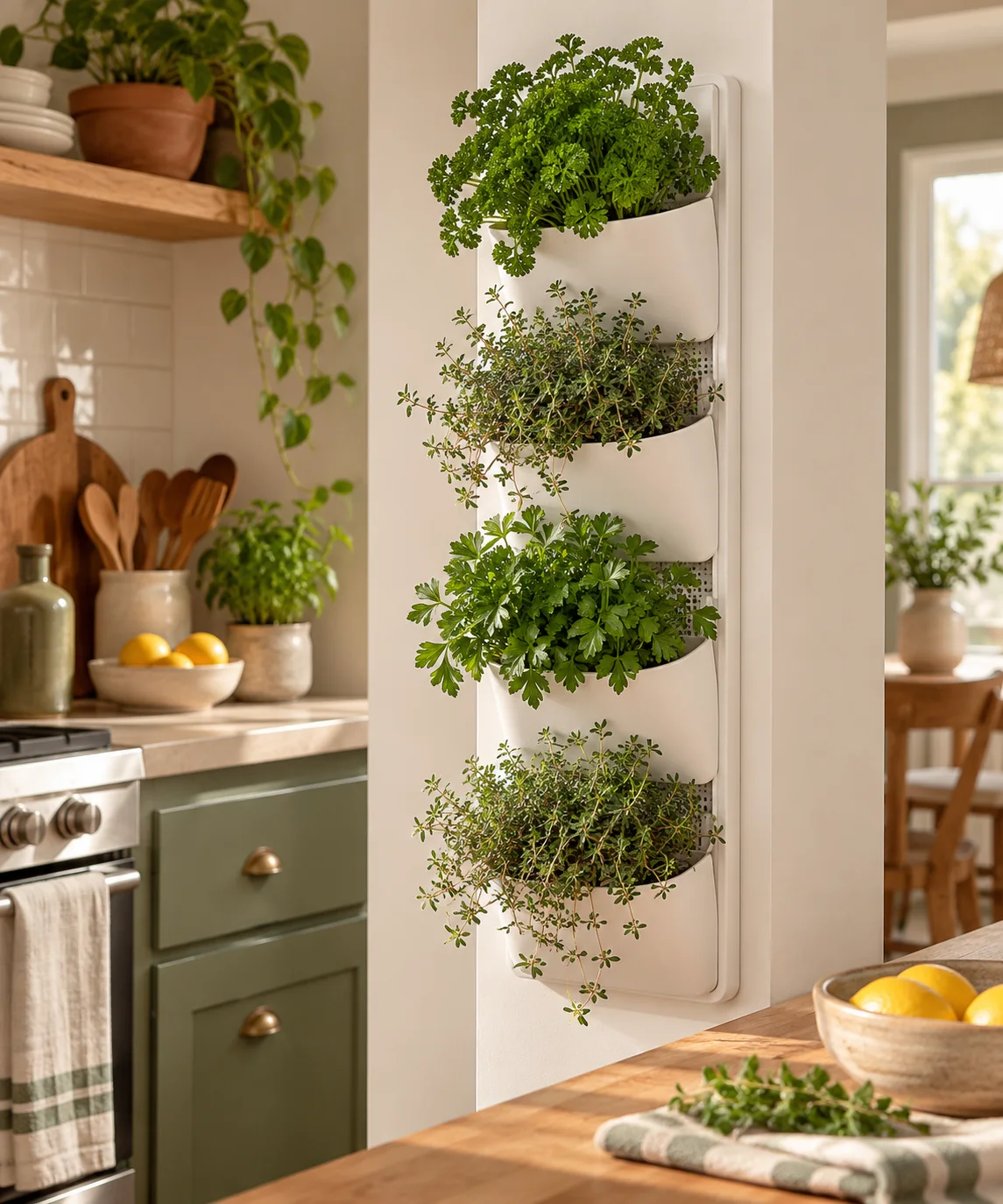
Structural Evaluation and Mounting Precautions
Before attempting to attach any vertical fixture to an interior pillar or wall, confirm the substrate material and review building or landlord policies. Structural pillars in modern construction often house vertical utility risers, electrical conduits, or post-tensioning elements that must never be punctured. Do not drill into concrete, masonry, or clad columns without consulting property management or a qualified tradesperson. Where permanent fastening is restricted, consider freestanding vertical stands, mobile kitchen carts, or tension-pole systems that provide vertical plant tiers without compromising structural surfaces.
Module Architecture and Moisture Isolation
Any vertical planting system installed indoors must isolate moisture from interior wall surfaces. Select engineered planter modules featuring fully sealed back panels and integrated catchment trays. Inexpensive pockets made of permeable felt or unlined fabric allow moisture and mineral salts to migrate directly onto drywall or pillar cladding, leading to hidden water damage and mold growth. Opt for rigid, food-safe plastic modules with removable planting cups that allow individual herbs to be watered, inspected, and maintained away from the wall.
Lightweight Growing Media and Herb Selection
Minimize dead load on wall brackets or modular frames by using an airy, soil-less potting mix based on peat or coconut coir amended with perlite. Avoid garden soil or dense compost mixes, which become excessively heavy when saturated and tend to compact in small containers. Choose compact, fibrous-rooted herbs such as chives, thyme, or flat-leaf parsley. Avoid fast-spreading rhizomatous herbs like mint or large shrubby plants like standard rosemary, which quickly outgrow small vertical cells and become root-bound.
Controlled Hydration and Catchment Management
Watering wall-mounted modules requires precision to prevent overflows onto kitchen floors or backing surfaces. Use a narrow-spout watering can to apply water slowly to the root zone of each pocket. Check built-in drainage trays twenty minutes after watering and empty accumulated runoff to prevent roots from sitting in stagnant water. Consistently saturated soil in compact vertical cups excludes oxygen, encouraging root decay and attracting fungus gnats. Always verify soil dryness at root depth before adding fresh water.
Air Circulation and Canopy Maintenance
Vertical arrangements pack multiple plants into tight spatial arrangements where natural airflow can become restricted. Prune upright stems and harvest mature outer leaves regularly to maintain open spaces between tiers. Stagnant air and crowded foliage in warm kitchen environments increase susceptibility to powdery mildew and botrytis. If the chosen mounting surface receives uneven natural daylight across its height, periodically swap the positions of removable cups within the frame to equalize light exposure.
YOUR STARTING POINT
A little checklist.
Original editorial guidance. Images are AI-generated concepts, not photographs of completed projects. Our sources and approach.
Questions to consider
Can I attach a vertical herb planter to any kitchen column?
No. Structural pillars may contain electrical wiring, plumbing, or specialized structural reinforcement that should never be penetrated. Always check building plans, lease agreements, and manufacturer mounting guidelines before drilling into any architectural column.
How do I ensure herbs get enough light on a wall-mounted panel?
Assess the chosen wall or pillar location over several days to confirm it receives adequate direct natural daylight. If natural light is obstructed by adjacent cabinets or walls, install a dedicated horticultural grow light positioned to cover all tiers evenly.
What is the best way to prevent water damage behind a green wall panel?
Use modules constructed from non-porous, waterproof materials featuring an integrated rear air gap and sealed drip catchments. Take removable planting cups to the sink for watering whenever practical to keep moisture entirely away from the wall.