Container Vegetable Gardens · THE GUIDE
Vertical Pocket Planter for Trailing Edible Flowers and Greens
Vertical pocket organizers made of breathable non-woven fabric offer a flexible method for growing compact greens and edible blooms in small outdoor spaces. When mounted on appropriate freestanding stands or manufacturer-approved supports, these modular panels convert vertical space into productive micro-harvest zones. Shallow pouches dry more quickly than deep containers, making them well-suited for fast-growing culinary garnishes such as violas, red-veined sorrel, and mizuna. Because loaded wet soil adds noticeable weight, successful cultivation depends on verifying support limits with building rules or manufacturer guidelines, establishing steady hydration routines, and harvesting regularly to maintain plant balance.
Jump to the checklist ↓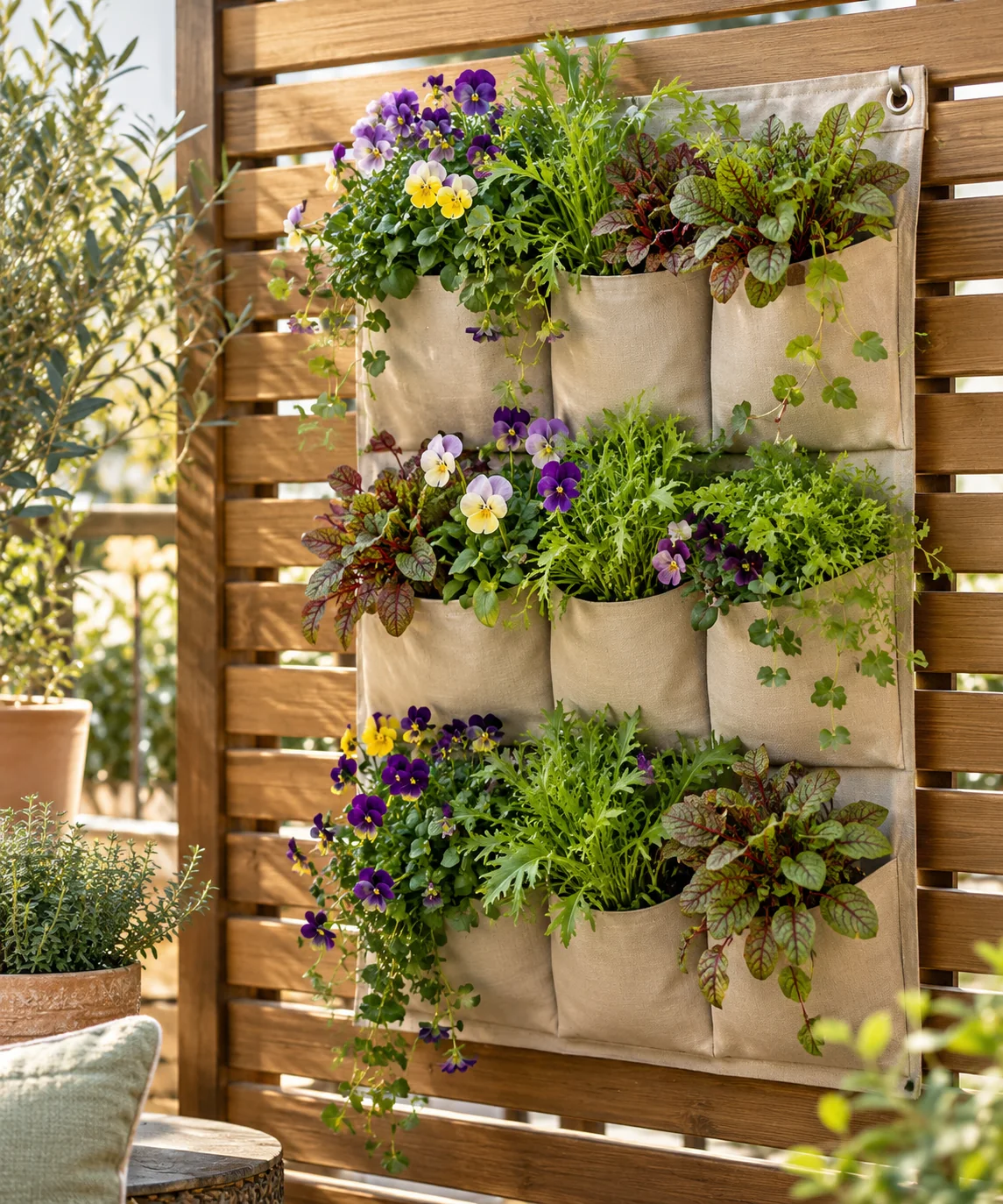
Support Capacity and Placement Guidelines
Before setting up a fabric pocket organizer, check property regulations and manufacturer load ratings for any freestanding trellis, post, or partition you intend to use. Saturated potting soil, mature roots, and retained water add meaningful weight across multiple pockets. Avoid hanging organizers from decorative or unanchored structures that could tip or deform under wind exposure and continuous downward pull. Select purpose-built plant stands or ground-supported frames rated for wet container loads, and inspect grommets and fasteners regularly for signs of wear, tearing, or corrosion.
Selecting Shallow-Rooted Edible Varieties
Standard fabric pockets contain limited substrate capacity, often only a few cups of volume per compartment. Focus on plants with shallow, fibrous root systems that mature quickly without demanding extensive root space. Edible violas provide compact blooms and trail gently over pocket rims, while cut-and-come-again greens such as baby mizuna, small-leaf sorrel, and dwarf cress fit neatly within pocket limits. Avoid taproot crops or vigorous vining plants, which quickly become root-bound, restrict moisture distribution, and outgrow restricted pouch volumes.
Vertical Microclimates and Light Exposure
Different levels of a vertical organizer experience varying moisture and light conditions. Upper pockets receive the most direct exposure and dry out faster, making them suitable for sun-tolerant edible blooms. Lower tiers often receive moisture runoff and intermittent shade from upper foliage, creating a slightly cooler environment suited to tender leafy greens. Position the organizer where plants receive adequate daylight for balanced growth, taking care to observe how local structures or overhead overhangs cast seasonal shadows throughout the day.
Hydration Technique and Runoff Management
Breathable fabric allows moisture to evaporate through pocket walls, leading to faster drying than glazed or plastic pots. Apply water slowly using a fine-spout watering can, beginning with the top tier so gravity assists in dampening lower pockets without washing out fine substrate. Place a dedicated tray or saucers on the floor beneath the frame to catch runoff, preventing slippery surfaces or staining on outdoor flooring. Check the moisture level in individual compartments by touch before watering, as top pockets frequently dry out while lower tiers retain moisture.
Succession Planting and End-of-Season Care
Compact garnishes and baby greens yield repeated small harvests for several weeks before vigor wanes. Trimming outer leaves encourages continued leaf production and keeps foliage from overwhelming neighboring compartments. When a pocket finishes its production cycle, gently remove the spent root mass, inspect the fabric for damage, and replenish the pocket with fresh container mix before replanting. At the end of the growing season, empty the substrate completely, rinse the organizer with mild soapy water, dry thoroughly, and store it flat indoors.
YOUR STARTING POINT
A little checklist.
Original editorial guidance. Images are AI-generated concepts, not photographs of completed projects. Our sources and approach.
Questions to consider
Can standard culinary herbs thrive in fabric vertical pockets?
Woody herbs like rosemary and sage typically require larger soil volumes and dry root zones, making them difficult to sustain long-term in shallow pockets. Compact herbs such as chives or small varieties of parsley tolerate pocket culture better if watered attentively.
How can I protect backing surfaces from persistent moisture?
Choose organizers designed with built-in moisture barriers, or mount the organizer on a freestanding, self-supporting frame set slightly away from walls or dividers. This arrangement promotes airflow and minimizes continuous moisture contact against surrounding materials.
Why do bottom pockets remain damper than upper rows?
Downward percolation naturally pulls excess water into lower tiers, while top rows experience higher air exposure and quicker evaporation. Check lower compartments before watering and supply only the amount needed based on actual moisture levels.