Patio Seating Ideas · THE GUIDE
Vertical Trellis-Backed Loveseat for Perimeter Privacy
Exposed boundary lines and overlooked patio corners can leave outdoor seating feeling vulnerable and neglected. A freestanding slatted wooden loveseat engineered with an integrated vertical climbing trellis addresses both comfort and seclusion simultaneously. Rather than erecting tall standalone boundary screens that dominate a small yard, this hybrid structure functions as furniture while supporting climbing flora. Positioned along an outer brick wall or perimeter path, it creates an intimate, green pocket that screens neighbors' views, introduces vertical foliage without eating up ground space, and offers dependable, year-round garden seating.
Jump to the checklist ↓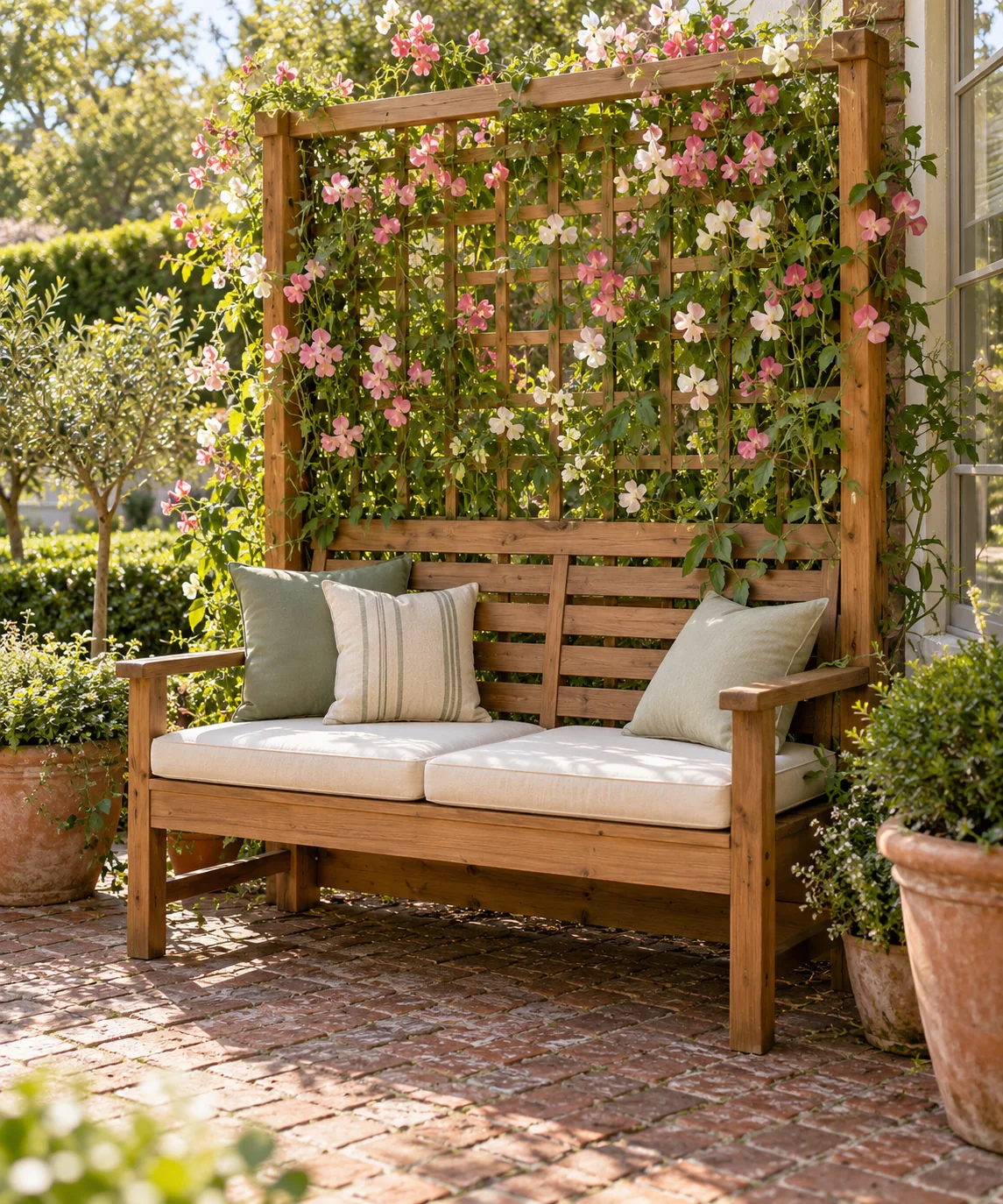
Perimeter Placement and Circulation Considerations
Positioning a trellis loveseat along a perimeter wall or patio margin helps define a distinct seating zone without obstructing main traffic routes. When arranging the bench, ensure adequate breathing space between the rear trellis frame and adjacent masonry or boundary fencing. This separation allows natural air circulation around climbing vines, reduces trapped moisture against wall surfaces, and leaves room for pruning. In front of the seat, maintain sufficient open floor space for natural knee extension, standing, and garden maintenance access. Verify that the unit sits level on paving stones, using thin exterior-rated composite shims beneath base contact points if irregular pavers cause rocking.
Supporting Screen Foliage Safely
Selecting appropriate plant species is essential for preserving the structural integrity of a trellis seat over time. Lightweight, non-invasive climbing annuals or tender herbaceous perennials twine naturally around slatted uprights without forming thick, rigid trunks. Varieties such as sweet peas, black-eyed Susan vine, or annual runner beans provide seasonal foliage and blooms without straining wood joinery or hardware. Avoid aggressive, woody perennial climbers like mature wisteria, trumpet vine, or heavy English ivy, as their expanding stems can pry slats apart, distort joints, and significantly increase wind resistance during seasonal storms.
Wind Exposure and Anchoring Limitations
A tall trellis back catches lateral breezes much like a sail, making wind exposure a primary consideration for freestanding furniture. While designs incorporating integrated base planters provide useful resting ballast in typical conditions, downward planter weight alone cannot guarantee stability during severe weather or unexpected gusts. Evaluate your patio's exposure to prevailing winds, and avoid placing tall, foliage-covered structures in open, unsheltered corridors. For safety during storm conditions, consult manufacturer guidance regarding anchoring options, trim back dense vine canopies that catch high winds, and be prepared to move or secure the furniture before extreme weather arrives.
Evaluating Sightlines and Daylight
Before finalizing the placement of a trellis bench, assess how its vertical frame affects sightlines and natural light across the patio. You can evaluate privacy angles by holding a temporary lightweight marker or cardboard panel at the intended trellis height while observing views from neighboring windows and nearby pathways. Sitting in the planned location helps confirm that the structure provides visual shielding where desired without casting deep, unwanted shadows over sun-loving container plantings or dampening interior window light during darker seasons.
Wood Care and Seasonal Plant Cutbacks
At the end of the growing season, cut back annual climbers at their base and gently untangle dried tendrils from the trellis lattice. Clearing dead plant debris prevents moisture accumulation and discourages fungal spores from overwintering on the wood grain. Clean the slats and seating boards using warm water, mild outdoor soap, and a soft brush to remove dirt and environmental residue. Check structural bolts and screws periodically, tightening any fasteners loosened by seasonal wood movement, and apply a compatible exterior wood finish or protective oil according to manufacturer guidelines to guard against weathering.
YOUR STARTING POINT
A little checklist.
Original editorial guidance. Images are AI-generated concepts, not photographs of completed projects. Our sources and approach.
Questions to consider
Can a trellis bench tip over during strong windstorms?
Yes. Trellises covered in dense foliage create significant wind resistance. While weighted planters at the base add resting stability in light breezes, they cannot guarantee the unit will not tip during severe gusts. In exposed areas, follow manufacturer anchoring guidelines or move the bench to a sheltered spot ahead of high-wind events.
Do sweet pea vines attract stinging insects near seating?
Sweet peas attract foraging pollinators like bees and butterflies rather than wasps or hornets. If you prefer to minimize flying insects around seating, opt for foliage-focused climbers or position the seat where plant growth remains easy to monitor and trim.
How tall should a rear trellis be for comfortable privacy?
Most patio trellis backs range between 5 and 6 feet tall, which generally obscures direct horizontal sightlines for seated occupants without completely blocking ambient daylight. Check local fence and accessory structure height regulations if positioning the unit immediately adjacent to property boundaries.