Patio Seating Ideas · THE GUIDE
Wall-Mounted Folding Bistro Perch for Micro Terraces
On a compact ground-level terrace, rigid outdoor furniture can quickly crowd functional space needed for day-to-day household chores. A standard four-legged bistro set permanently claims significant floor area, interfering with laundry airers or garden maintenance. While a fold-down wall perch offers an appealing way to free up floor space, drilling into exterior building cladding introduces serious risks of puncturing weatherproofing membranes and voiding siding warranties. Evaluating reversible freestanding drop-leaf alternatives alongside proper structural guidance ensures you achieve adaptable outdoor dining without risking moisture damage to exterior walls or violating property management agreements.
Jump to the checklist ↓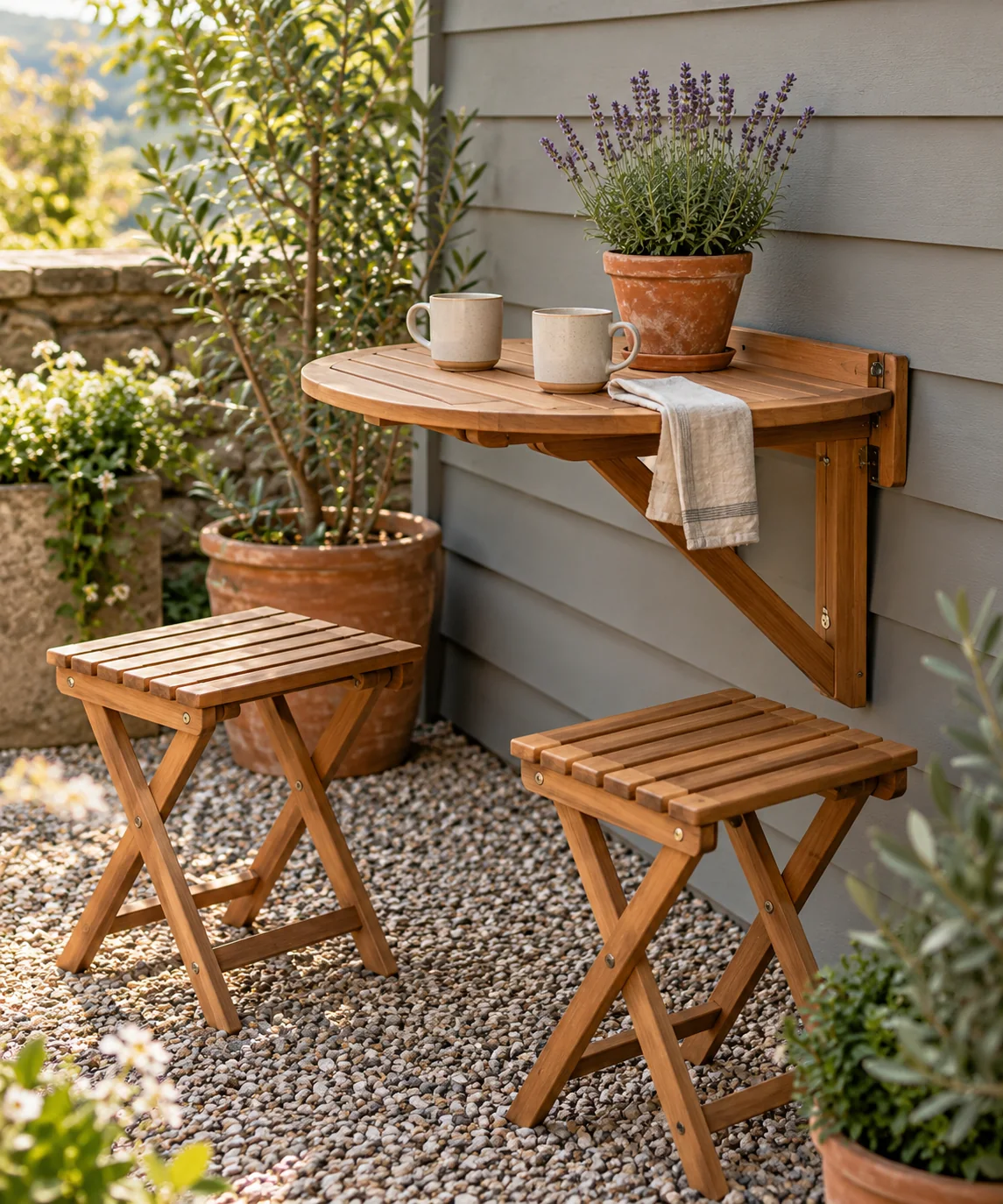
Zoning Floor Clearance for Flexible Terrace Utility
Planning a micro terrace requires balancing outdoor relaxation with utility tasks such as drying clothes or tending plants. Before settling on any furniture configuration, measure the open footprint of collapsible laundry racks, recycling bins, and primary walkways. A compact tabletop measuring approximately 50 by 75 centimeters offers functional surface area for two mugs and small plates while maintaining accessible perimeters. Choosing furnishings that collapse vertically or fold flat against an edge when not in use preserves the ground footprint for multi-functional terrace chores.
Wall Envelope Integrity and Mounting Limitations
Fastening heavy folding brackets directly to exterior residential walls presents significant building envelope risks. Exterior claddings such as lap siding, composite panels, brick veneer, and exterior insulation finishing systems (EIFS) are not designed to carry cantilevered structural loads unless secured directly into underlying structural framing. Drilling through cladding also punctures the weather-resistive barrier, which can lead to concealed moisture intrusion, rot, and wall framing degradation. Always consult property management and review siding manufacturer warranties before considering wall penetrations. In rental properties, altering exterior facades is almost universally prohibited.
Freestanding Drop-Leaf and Reversible Alternatives
You can achieve the space-saving benefits of a folding table without penetrating building siding by using freestanding drop-leaf furniture. Slim console tables with folding leaves can sit flush against a wall or terrace boundary, providing a stable surface during morning coffee and collapsing to a depth under 15 centimeters afterward. Freestanding units eliminate moisture penetration risks, require no specialized wall anchors, and can be repositioned easily to follow shade or shelter. Look for weather-resistant designs with broad, weighted base feet to maintain stability across uneven stone or gravel terraces.
Seating Logistics and Non-Invasive Stool Storage
A compact drop-leaf table pairs best with seating that stores easily without requiring wall-mounted hooks. Avoid heavy armchairs in favor of lightweight, weather-resistant stools that stack neatly or fold completely flat. Backless stools can slide beneath a freestanding console frame when not in use, keeping walkways clear. If storing folding stools along the perimeter, place them in a narrow, freestanding deck box or lean them safely within an alcove, avoiding fasteners that pierce exterior siding or compromise painted finishes.
Material Durability and Surface Maintenance
Terrace furnishings placed near ground surfaces encounter dust, rain splatter, and fluctuating humidity. Select naturally durable timbers like teak, acacia, or thermowood, or opt for powder-coated aluminum frames that resist rust. Finish natural wood with a breathable exterior penetrating oil to prevent warping and surface checking across flat tabletop panels. If a freestanding table rests close to painted siding, adhere soft silicone or rubber bumper pads to the rear edges of the furniture frame to prevent friction marks on the wall surface during daily use.
YOUR STARTING POINT
A little checklist.
Original editorial guidance. Images are AI-generated concepts, not photographs of completed projects. Our sources and approach.
Questions to consider
Can I install a fold-down table directly onto exterior siding?
Fastening tables to exterior siding requires professional assessment of structural framing and weatherproofing membranes. Cladding materials like vinyl, fiber cement, and stucco can crack under point loads, and puncturing moisture barriers risks water intrusion. For most residential properties, freestanding drop-leaf tables are the safer, non-invasive choice.
What size drop-leaf table works best on a small terrace?
A tabletop measuring roughly 50 centimeters deep by 70 to 75 centimeters wide comfortably supports two place settings while remaining easy to fold down. In compact settings, selecting a model with a collapsed depth of 15 centimeters or less ensures circulation remains unhindered when the table is not in use.
How do I prevent freestanding furniture from scratching exterior walls?
Attach soft rubber or silicone bumper pads to the rear contact points of the furniture frame. These cushions absorb movement vibrations, prevent scuffing on painted siding or masonry, and maintain a slight air gap that promotes ventilation between the furniture and the wall.