Small Kitchen Organization · THE GUIDE
Wall-Mounted Metal Wire Mail and Grocery List Sorter
Kitchen islands and breakfast bars frequently become dumping grounds for incoming mail, coupons, school notices, and receipts. This visual clutter encroaches on meal prep zones and seating areas, making a compact kitchen feel disorganized. Installing a slim metal wire sorter on an underutilized vertical surface, such as the side of a pantry cabinet or an entryway transition wall, captures paper before it reaches horizontal surfaces. The open wire structure maintains visibility so critical documents are not forgotten, while distinct sorting pockets keep ongoing grocery lists separate from incoming correspondence.
Jump to the checklist ↓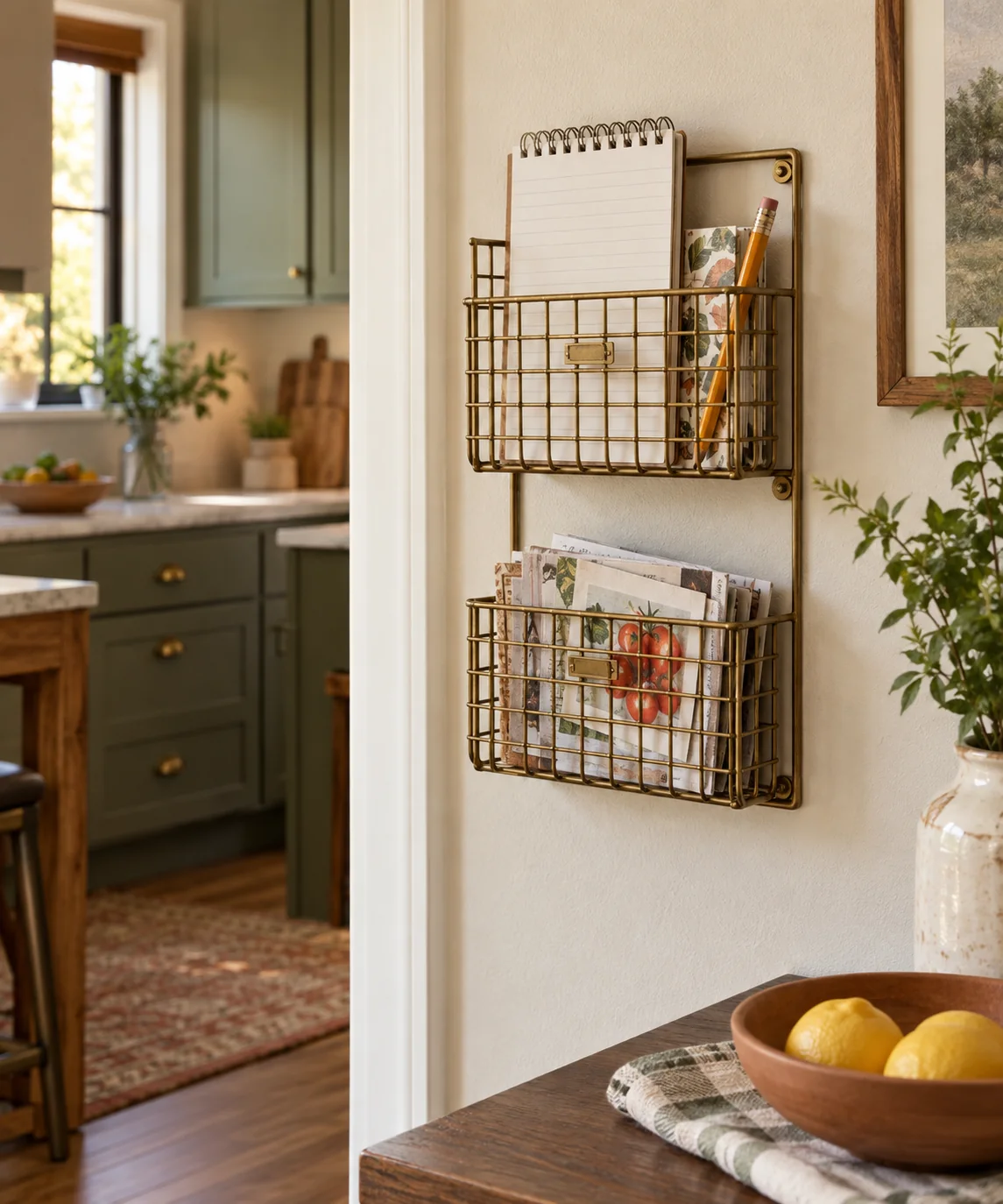
Selecting an Accessible Drop-Zone Location
Identify an unobstructed vertical surface along your daily walking path into the kitchen, such as a hallway wall, command center board, or utility closet exterior. The location should allow comfortable passage without catching on clothing or bags as people move through the room. Avoid placing paper sorters directly adjacent to stovetops, meal prep areas, or sink zones where cooking grease, steam, and water splashes could damage paper documents.
Assessing Dimensions for Household Paperwork
Examine the size and weight of documents your household routinely handles before choosing an organizer. Standard correspondence, school notices, envelopes, and shopping notepads require pockets tall enough to keep papers upright without folding over. Check product specifications for pocket height and depth to ensure documents remain visible and accessible. Shallow compartments help keep paper visible, reducing the tendency for small receipts and coupons to get lost at the bottom.
Assigning Clear Compartment Roles
A multi-tier wire sorter functions best when each pocket serves a specific, defined purpose. Designate one compartment for incoming actionable items such as pending utility bills, appointment reminders, and time-sensitive forms. Use another compartment for practical kitchen references, such as a running grocery list, clipped store coupons, or local takeout menus. Clear role separation helps household members quickly locate active notes without sorting through unrelated paper.
Establishing a Regular Sorting Routine
Open wire sorters are designed for active transit, not long-term paper filing. Setting aside a few minutes each week to review both compartments prevents paper buildup and keeps the drop zone functional. Archive or recycle completed paperwork, transfer shopping items to your primary list, and discard expired notices. Because the wire grid provides clear visibility, overflowing pockets serve as a helpful prompt that the sorter is due for a brief reset.
Planning for Weight and Mounting Considerations
Wire sorters are lightweight on their own, but accumulated paper, notebooks, and pens add noticeable weight. Review the manufacturer's mounting hardware and instructions for suitable wall materials, such as drywall or solid wood framing. Avoid screwing fasteners directly into thin cabinet side panels without verifying structural suitability and hardware length, as standard screws can pierce interior cabinet spaces. For rental properties, explore non-invasive mounting alternatives rated specifically for the total expected weight.
YOUR STARTING POINT
A little checklist.
Original editorial guidance. Images are AI-generated concepts, not photographs of completed projects. Our sources and approach.
Questions to consider
Can wire mail sorters be mounted using damage-free adhesive strips?
Adhesive mounting depends on the sorter design and combined weight of the organizer and its contents. Choose units with flat mounting plates rather than thin wire edges, and ensure the adhesive product rating comfortably accommodates the loaded weight.
How can I keep pens and small notes from falling through the wire frame?
Clip pens directly to the upper wire rim or place a compact cup or rigid divider inside the pocket. For small coupons or receipts, use a small binder clip or designated envelope to prevent them from slipping between wire gaps.
What is the best method to clean dust from wire organizers?
Empty the pockets and wipe the metal framework with a dry or lightly dampened microfiber cloth. For corners and fine wire joins, a soft dusting brush or vacuum crevice attachment removes dust without scratching or bending the wire.