Small Kitchen Organization · THE GUIDE
Wall-Mounted Rail System with S-Hooks for Heavy Skillets
Heavy cookware such as cast iron skillets and carbon steel pans can occupy substantial base cabinet shelving, making lower cabinets difficult to organize. Planning a wall-mounted hanging rail system can relocate frequently used pans to open vertical wall space. When properly planned with suitable hardware and structural support, suspended pans remain organized and easily reached near cooking prep zones. Factoring in cookware weights, wall construction, and ergonomic reach helps establish an accessible kitchen setup that avoids overcrowded cabinetry.
Jump to the checklist ↓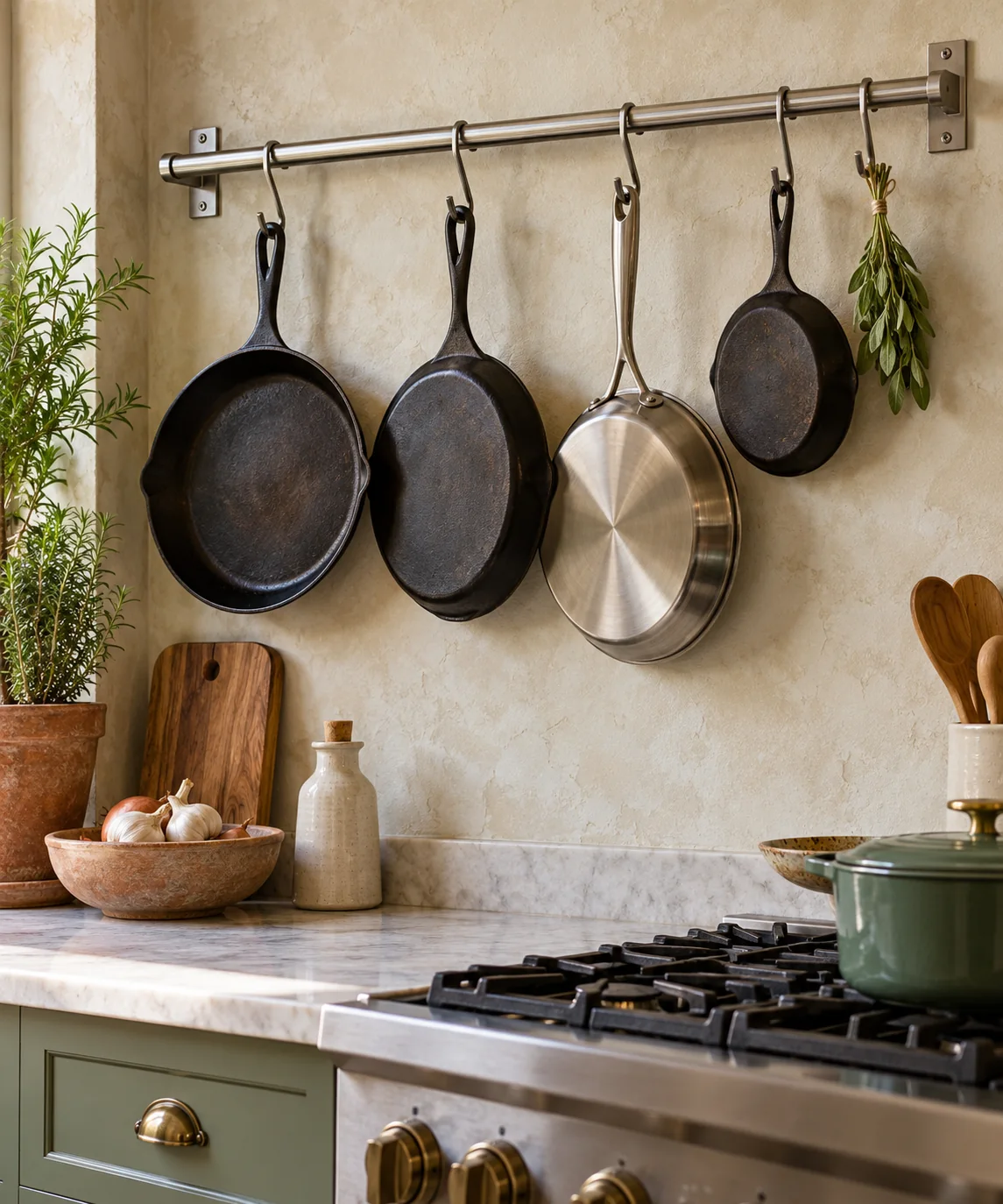
Assessing Wall Structure and Weight Limitations
Before planning a hanging rail, evaluate the wall construction and structural capacity of the target area. Heavy cast iron pans exert substantial downward and pulling forces on fasteners. Rails intended for heavy cookware should be anchored directly into solid wall studs or mounted using heavy-duty structural anchors rated specifically for the total combined weight of the rail and loaded pans. Consult manufacturer load ratings and property guidelines before mounting hardware, avoiding unsupported drywall or hollow plaster installations that cannot bear heavy dynamic loads.
Clearance Planning and Walkway Ergonomics
Select a wall area near your preparation zone that remains outside main foot traffic paths. Pans hanging from hooks project outward several inches, which can create hazards if placed in narrow corridors or near swinging room doors. Hold your deepest skillet against the wall to verify that it hangs flat without interfering with nearby counters, opened cabinet doors, or cooktop surfaces. Position the rail at a height that allows lifting pans without overextending your shoulders or stooping uncomfortably.
Cookware Spacing and Hook Selection
Select heavy-gauge steel hooks with weight ratings that match or exceed the heaviest piece of cookware. Ensure the hook opening fits through the skillet handle hole easily without binding, allowing the pan to hang naturally perpendicular to the wall. Arrange cookware with several inches of lateral buffer between rims so pans do not strike one another during removal or placement. Placing the heaviest pans near the rail's primary mounting supports helps distribute load evenly along the bar.
Wall Surface Protection and Pan Maintenance
Bare cast iron and carbon steel surfaces can scuff or leave oil marks against painted drywall and plaster over time. Ensure all cookware is thoroughly dried and wiped clean of surface oil before hanging. To protect the wall finish from repeated contact during daily cooking, consider placing a washable splash panel, wood beadboard, or durable tile surface behind the hanging zone. This protective barrier makes routine cleaning simpler and prevents abrasive contact against bare drywall.
Routine Inspection and Safe Handling
Hanging storage requires attentive handling to maintain hardware stability over time. When removing or returning a heavy pan, support the base with one hand while guiding the handle onto the hook to prevent sudden jerking forces on the rail. Periodically inspect the rail brackets, screws, and hooks for signs of loosening, sagging, or wear. If any movement or fastener loosening is detected, remove the cookware immediately and secure the mounting hardware.
YOUR STARTING POINT
A little checklist.
Original editorial guidance. Images are AI-generated concepts, not photographs of completed projects. Our sources and approach.
Questions to consider
Can Dutch ovens or deep stockpots be hung on a skillet rail?
No. Dutch ovens and deep pots have high weights and bulky profiles that project far outward, creating severe rotational leverage on mounting brackets. Deep cookware should be stored on sturdy base cabinet shelves, reserving wall rails for flatter skillets and sauté pans.
How can wall scuffing be minimized behind hanging pans?
Install a protective backer material such as a stainless steel sheet, beadboard strip, or tile backer behind the rail. Ensuring pans are completely dry and wiping off surface oil before hanging also helps keep wall surfaces free of dark marks.
What is the recommended height for mounting a cookware rail?
Position the rail so skillet handles sit between chest and shoulder level for the primary user. This height allows a balanced two-handed lift without awkward overhead reaching, reducing the risk of dropping heavy iron pieces during meal preparation.