Household Reset Routines · THE GUIDE
Watering Can Refill and Plant Misting Station Clean-Down
Indoor hydration tools simplify plant care, but watering cans and hand misters frequently leave pooled moisture, mineral rings, and algae film if stored unchecked. A weekly reset of your hydration staging area safeguards shelving, preserves equipment seals, and keeps tools ready for prompt morning care. By setting aside ten minutes to wipe down drip surfaces, empty stagnant reservoirs, and dry fine spray nozzles, you protect wooden furniture and prevent water stagnation. Establishing an organized, moisture-controlled refill station keeps daily routines efficient while preventing mineral stains across your indoor plant utility zones.
Jump to the checklist ↓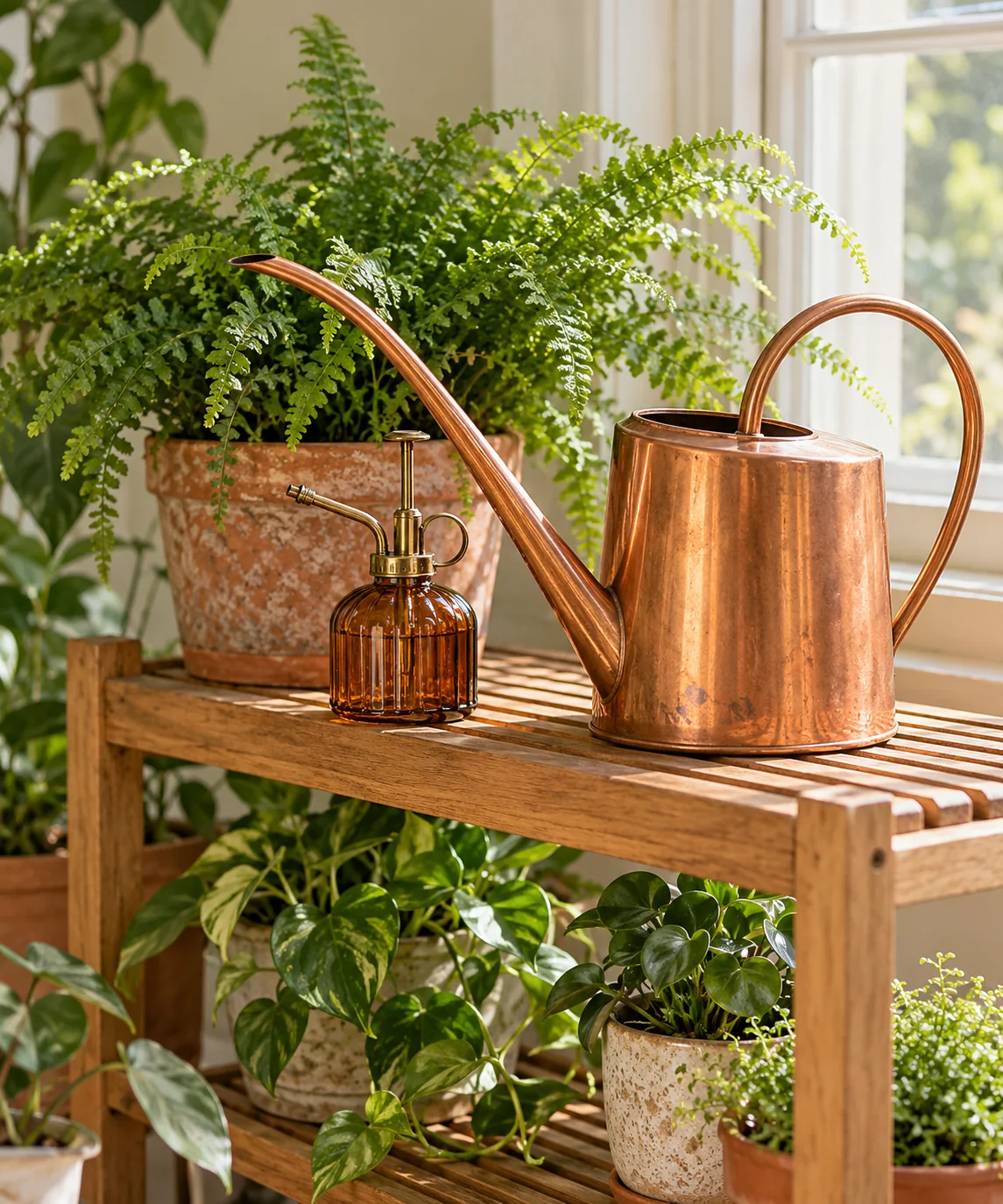
Emptying Stagnant Water Safely
Water left resting in cans or glass spray bottles for extended periods can develop slippery biofilm or foster musty odors in living spaces. Begin your weekly clean-down by dispensing any leftover hydration fluids directly into thirsty potted specimens. Invert the cans over a sink or basin to drain them completely. Emptying containers between uses prevents accidental spills if items are bumped on utility shelves and eliminates stagnant standing pools that could attract household gnats or harbor unwanted algae.
Clearing Nozzles and Spray Mechanisms
Mister pumps and watering can spouts accumulate hard water scale that restricts fine droplet output over time. Unscrew spray triggers and pump plain warm water through the intake straw to clear sediment buildup. Wipe the metal or plastic nozzle orifice with a soft microfiber cloth to prevent crusty mineral deposits from sealing spray holes. Ensuring sprayer mechanisms operate cleanly prevents uneven sputtering and preserves internal pump gaskets without resorting to harsh chemical descalers.
Drying Utility Shelves and Trays
Water droplets repeatedly settling on wooden plant stands, painted surfaces, or metal shelving cause warped veneers and corrosion. Clear all hydration vessels off the shelf to access the surface fully. Wipe the shelf dry using an absorbent cloth, paying close attention to seams, joints, and perimeter trim where liquid pools unnoticed. Placing a washable silicone mat or cork-backed utility tray beneath your cans provides an impermeable, reversible barrier against future drips.
Wiping Exterior Cans and Glass Ware
Fine dust settles quickly on damp watering spouts and amber glass bottles, creating a cloudy film on tools left on display. Wipe exterior vessel bodies with a slightly damp cloth, followed immediately by a lint-free drying towel. Polishing brass spouts, copper cans, and glass carafes preserves their appearance and removes oily thumbprints. Keeping tool exteriors thoroughly dry before returning them to utility surfaces prevents moisture rings from developing beneath base rims.
Reorganizing Hydration Tools for the Week
Arrange cleaned watering gear intentionally on your utility tray with larger cans tucked toward the back and precision sprayers positioned within easy reach. Store long spouts pointed inward rather than projecting into walkways to prevent catching clothing or causing accidental shelf tipping. Keep a dedicated absorbent wiping cloth neatly rolled alongside the station. This orderly setup establishes a visible, clutter-free station that encourages mindful watering habits throughout the upcoming busy week.
YOUR STARTING POINT
A little checklist.
Original editorial guidance. Images are AI-generated concepts, not photographs of completed projects. Our sources and approach.
Questions to consider
Why should watering cans be emptied between weekly routines?
Leaving standing water encourages algae accumulation and leaves scale deposits inside the reservoir walls. Emptying cans completely between uses keeps vessels clean, prevents musty odors, and protects shelves from spills if bumped.
How can I prevent water rings under metal cans on wood?
Position an impermeable tray, glazed saucer, or washable silicone coaster under vessels. Always dry the exterior base of the watering can thoroughly with a towel before returning it to wooden furniture surfaces.
What prevents fine mister nozzles from clogging?
Rinsing pump mechanisms periodically with warm water dislodges sediment before minerals solidify. Wiping the exterior nozzle tip with a dry cloth prevents hard water evaporation rings from sealing the tiny spray apertures.