Container Vegetable Gardens · THE GUIDE
Weatherproof Utility Cart for Potting and Harvesting Tools
Small balcony gardens require efficient organization to prevent tools, soil bags, and containers from cluttering limited floor space. A weatherproof rolling utility cart creates a dedicated storage hub that consolidates hand tools, harvest containers, and routine supplies into a compact vertical profile. Organizing materials across designated tiers preserves floor space for comfortable movement while keeping essential gear accessible. However, using mobile storage on exposed balconies demands careful attention to weather conditions, wheel stability, and wind hazards. Establishing sensible storage protocols ensures that tools remain in good working condition and mobile equipment remains securely situated.
Jump to the checklist ↓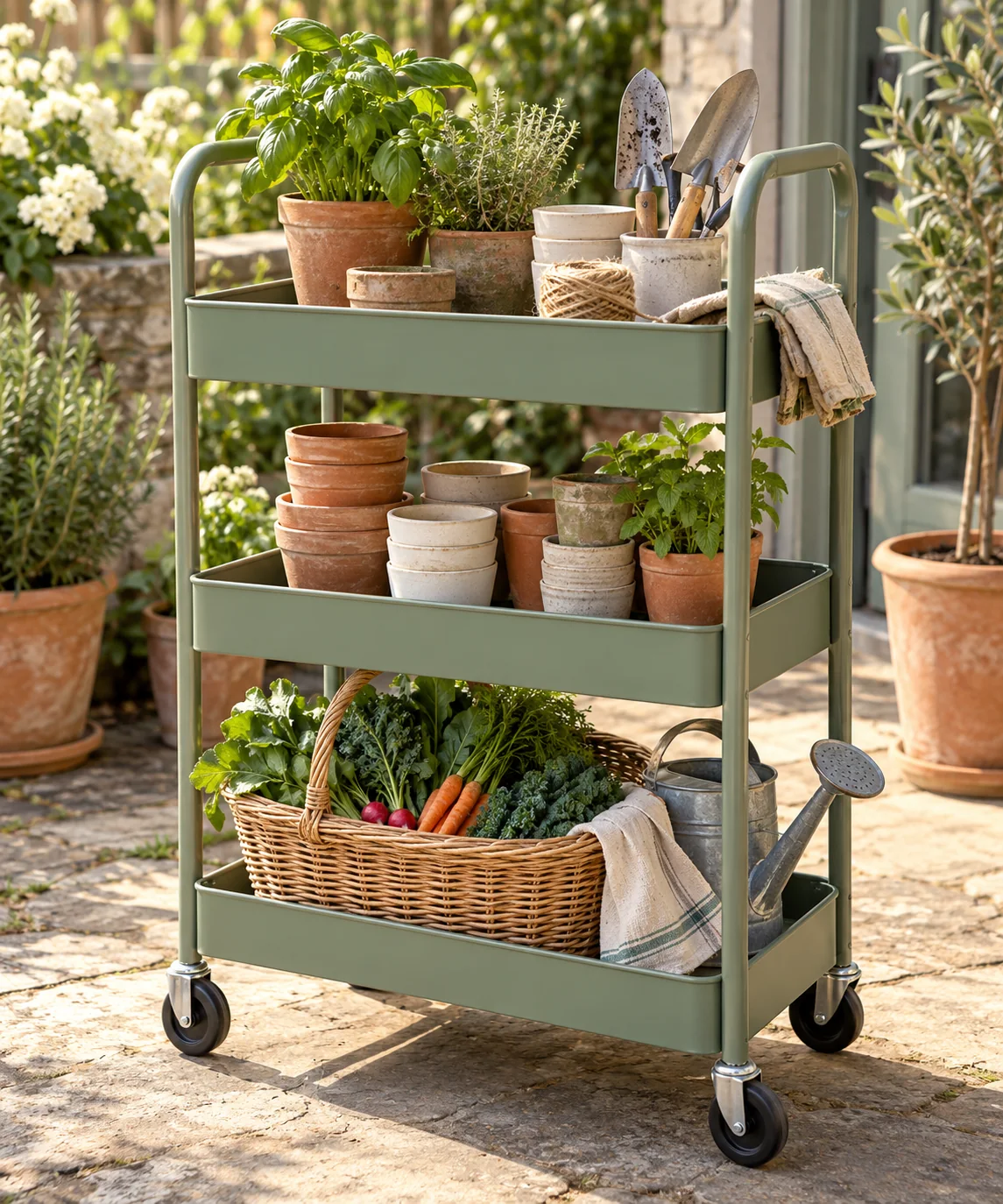
Evaluating Balcony Space and Cart Mobility
Before purchasing a mobile utility cart, measure balcony dimensions to confirm there is adequate clearance for movement without obstructing pathways, doors, or emergency access. Select a heavy-duty cart constructed from powder-coated steel or weather-resistant composite resin capable of withstanding outdoor conditions. Ensure all wheels include durable rubber or polyurethane treads, with positive locking mechanisms on at least two casters. Sloped balcony drainage floors require reliable wheel locks to prevent unwanted drift, and carts must never be placed where they could tip toward low railings.
Lower Tier Organization and Weight Considerations
Use the lowest shelf of the cart for denser, heavier items to maintain a low center of gravity. Storing sealed containers of potting mix or spare empty pots on this level helps keep the cart balanced during daily repositioning. However, bottom-tier weight does not provide a guaranteed safeguard against violent windstorms; carts still have significant surface area that catches wind. Always store loose potting media in tightly lidded plastic containers to prevent rain intrusion and pest contamination.
Middle Tier Storage for Fasteners and Accessories
The middle tier is ideal for medium-weight gardening sundries that benefit from sheltered organization. Place small, compartmentalized bins or open wire organizers here to hold plant ties, pruning snips, marking tags, and clean spare saucers. Keeping smaller items organized in removable caddies prevents loose accessories from scattering across the deck during movement or breezy afternoons. Position natural materials, such as jute twine or wooden plant stakes, in covered bins to protect them from direct sun and rainfall.
Top Shelf Arrangement for Daily Maintenance
Dedicate the upper tray to immediate gardening tasks, light harvesting, and temporary tool staging. A shallow wooden trug or plastic harvest basket fits comfortably on top alongside clean gloves and hand trowels. Line the top shelf with a non-slip silicone mat to reduce noise and prevent metal hand tools from scratching painted finishes. Because this upper surface is exposed to moisture and wind, do not store handheld cutting tools or sharp pruners here permanently; return precision tools to indoor storage after finishing daily plant care.
Wind Precautions and Storm Management
Balconies are uniquely vulnerable to sudden updrafts and strong gusts that can dislodge items or overturn lightweight furniture. Make engaging the caster wheel locks standard practice whenever the cart is parked. During high-wind advisories, severe storms, or extended cold spells, roll the utility cart indoors or tuck it into an enclosed storage closet. Never rely on wheel locks or shelf weights alone during extreme weather events, as falling tools or shifting carts represent serious safety hazards on elevated decks.
YOUR STARTING POINT
A little checklist.
Original editorial guidance. Images are AI-generated concepts, not photographs of completed projects. Our sources and approach.
Questions to consider
Is it safe to leave a rolling utility cart on an open balcony year-round?
While weather-resistant materials can tolerate outdoor humidity, rolling carts should not remain exposed during severe winter weather or high winds. Bringing the cart indoors during adverse weather protects both the cart mechanics and prevents windblown hazards on elevated decks.
Can weighting the bottom shelf keep the cart upright in high winds?
Adding weight to the bottom tier improves general rolling balance and lowers the center of gravity, but it does not guarantee the cart will resist tipping in severe gusts. In stormy or windy conditions, the safest approach is rolling the cart indoors or securing it in a protected storage area.
How should outdoor utility cart caster wheels be maintained?
Inspect caster wheels monthly to remove trapped grit, garden soil, and hair that can seize bearings. Wipe the wheels clean with a dry cloth and periodically lubricate swivel joints with a light drop of silicone lubricant to ensure smooth movement.