Container Vegetable Gardens · THE GUIDE
Wheeled Wooden Crate Herb and Garlic Station
A mobile container planting station offers a practical way to grow fresh culinary aromatics near outdoor living spaces. By utilizing a sturdy slatted wooden crate mounted on a purpose-built rolling dolly or commercial plant caddy, you create an adaptable growing container that can be shifted across a deck or patio. Positioning herbs and green garlic tops on wheels allows you to adapt to seasonal sunlight patterns while maintaining clean surfaces beneath the planter. Selecting appropriate liners, well-draining soil, and suitable companion plants keeps your harvest accessible throughout the growing season.
Jump to the checklist ↓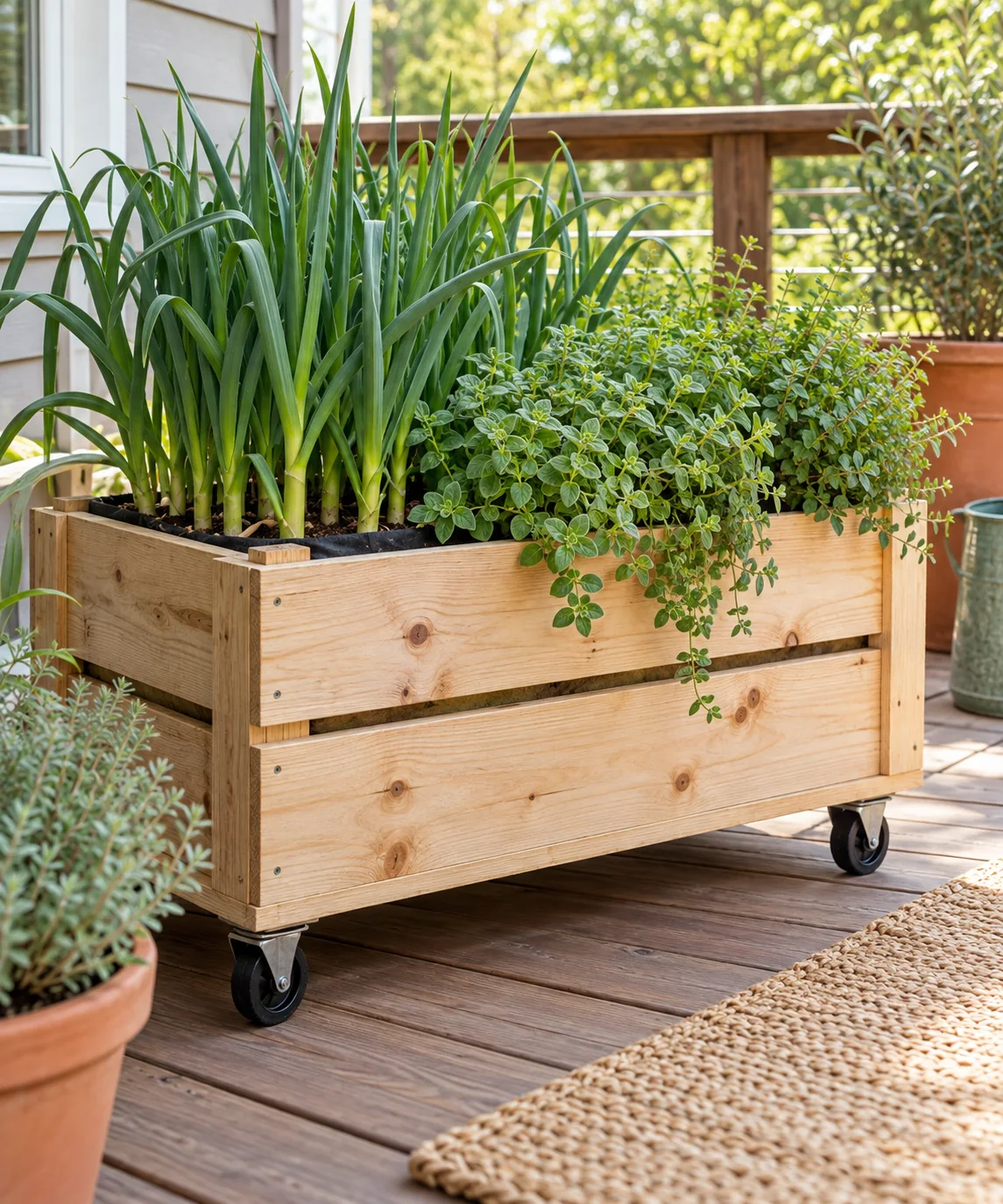
Container Selection and Mobile Base Considerations
Select a sturdy wooden crate constructed with sound fasteners and slats capable of supporting damp growing medium. Rather than screwing casters directly into soft, thin wood that may split under heavy loads, set the crate onto a commercially manufactured rolling plant platform rated to support wet container weight. Look for platforms equipped with locking wheels to prevent unwanted movement on sloped patio pavers. Ensure the crate offers a depth of at least seven to nine inches to accommodate root development for herbs and seasonal allium greens.
Permeable Lining and Drainage Management
Untreated lumber degrades when in continuous contact with wet soil. Line the crate interior with a permeable landscape fabric that holds the potting soil in place while permitting excess water to escape through the bottom slats. Secure the fabric inside the rim with staples, trimming away any excess material. Do not use solid plastic sheeting or impermeable pond liners, as trapped water creates anaerobic conditions that rot plant roots and accelerate the decay of the wooden frame.
Sunlight Requirements and Heat Source Precautions
Herbs such as oregano, marjoram, and garlic greens develop best under consistent, direct sunlight. Wheeled platforms allow you to adjust the container's position as building shadows shift through the season. When locating planters near outdoor kitchens or cooking equipment, consult the specific appliance manufacturer's manual for required non-combustible clearances. Keep foliage and wooden components away from cooking heat, hot exhaust vents, and grease discharge.
Aromatic Plant Layout and Root Spacing
Fill the lined container with a lightweight, porous potting mix formulated for container vegetables. Plant garlic cloves several inches deep around the outer edges to harvest tender green tops throughout the spring and early summer. In the center, arrange compact herbs like marjoram or oregano, leaving adequate space for horizontal growth. The upright garlic foliage complements the lower, spreading habit of the culinary herbs without casting excessive shade over their leaves.
Surface Protection and Seasonal Maintenance
Wood decking can stain or deteriorate if drainage runoff remains trapped beneath a planter. Place a collection saucer or wheeled drainage tray under the crate to collect excess water, emptying standing runoff after thorough irrigation. Periodically inspect the wood slats and rolling platform for signs of moisture wear or mechanical stress. At the close of the growing season, remove spent vegetation, brush clean the interior, and allow the wooden crate to dry thoroughly in a sheltered space.
YOUR STARTING POINT
A little checklist.
Original editorial guidance. Images are AI-generated concepts, not photographs of completed projects. Our sources and approach.
Questions to consider
Can full garlic bulbs be harvested from a shallow wooden crate?
Shallow crates under ten inches deep are best suited for harvesting green garlic tops. Producing large, fully divided mature bulbs typically requires deeper soil volume and a longer undisturbed growing cycle.
How can I prevent outdoor wood planters from deteriorating quickly?
Using permeable fabric liners reduces direct soil-to-wood contact, while elevating the crate on a wheeled platform promotes airflow beneath the base. Storing the container out of severe winter weather also extends its usable life.
What should I do if the rolling planter becomes too heavy to move easily?
Watered soil adds considerable mass. Use lightweight container potting mix containing perlite or vermiculite, choose a caster platform rated well above the anticipated wet weight, and sweep debris from the patio surface regularly.