Container Vegetable Gardens · THE GUIDE
Window Sill Hydro-Box for High-Rotation Salad Leaves
Compact urban kitchens frequently lack floor space for vegetable planters, yet narrow window sills can support surprisingly productive crops of fast-growing greens. A low-profile, passive hydroponic reservoir operates without loud pumps or messy soil, relying instead on capillary action or static nutrient solutions. Placing these streamlined units directly in sunny window frames allows quick cycles of baby greens, tatsoi, and watercress to flourish. Success depends on exact sill measurements, diligent light assessment, and disciplined sanitation schedules to prevent algae, transforming an underutilized architectural ledge into a steady harvesting station.
Jump to the checklist ↓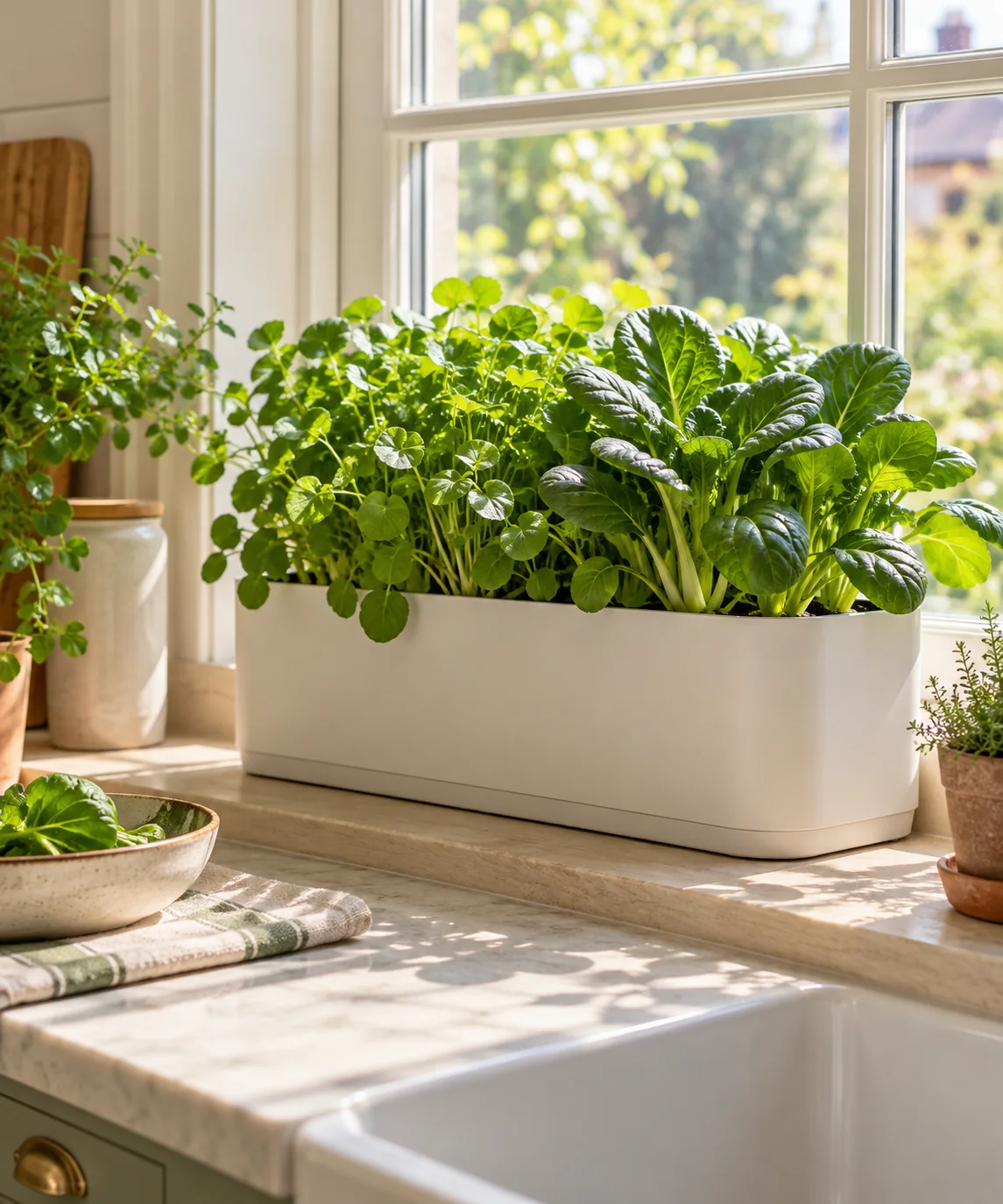
Measuring Sill Geometry and Weight Tolerance
Before selecting a reservoir box, measure your window sill depth, total width, and vertical clearance with the sash fully closed. Most standard apartment window sills measure between four and six inches wide, requiring a slim, rectangular reservoir that rests entirely on the flat woodwork without overhang. Water weighs roughly 8.3 pounds per gallon, so verify the trim board is structurally sound and level. Avoid placing reservoirs where window blinds, cords, or swinging casement handles can knock against growing foliage.
Assessing Solar Exposure and Thermal Swings
Salad greens require bright, direct natural light to produce dense, tender leaves rather than thin, stretching stems. An unobstructed south-facing or east-facing window sill delivers the intensity needed for passive hydroponics without auxiliary lighting. However, uninsulated window glass can create extreme microclimates, scorching tender foliage on hot afternoons or chilling reservoir water during cold snaps. Maintain at least one inch of clearance between the plant canopy and the window glass to moderate temperature fluctuations.
Setting Up the Passive Reservoir System
A passive hydroponic setup functions using a light-blocking, food-grade reservoir base topped with a fitted lid holding net cups. Fill each net cup with an inert, clean medium such as clay pebbles or stone wool plugs that support the seedlings above the liquid. Mix a diluted, complete hydroponic mineral solution suited for leafy greens, filling the box until the liquid contacts the bottom of the media. As roots emerge into the solution, maintain a lower water level to preserve oxygen exchange.
Implementing a Continuous Rotation Schedule
To maintain a continuous harvest of baby tatsoi and watercress, stagger your propagation across multiple small plugs. Sow a fresh cluster of seeds in a separate germination tray every ten to fourteen days. When an active net cup reaches harvest maturity, snip the outer leaves as cut-and-come-again greens for two to three weeks, then remove the spent root plug entirely. Replace it immediately with an established seedling plug, keeping every net opening continuously productive year-round.
Sanitation Protocols and Algae Prevention
Algae blooms occur when ambient sunlight reaches nutrient-rich water through translucent plastic or gaps around net cups. Select an opaque, matte exterior planter box, and ensure all unused lid openings remain sealed with light-blocking plugs. Flush and thoroughly rinse the entire reservoir every three to four weeks using warm water and a clean sponge. Regular water flushes clear away residual mineral salts, eliminate anaerobic sediment, and ensure fresh oxygen availability for sensitive root systems.
YOUR STARTING POINT
A little checklist.
Original editorial guidance. Images are AI-generated concepts, not photographs of completed projects. Our sources and approach.
Questions to consider
Can I leave this passive water reservoir on the window sill during winter?
Only if your window is well-insulated. Single-pane glass transfers outside cold directly to the nutrient water, dropping liquid temperatures below root tolerance. Move the unit slightly back onto an adjacent table if drafts become severe.
Why are my window sill greens growing tall, pale, and spindly?
Spindly growth indicates insufficient light intensity. Salad greens require several hours of strong, direct sunlight daily. If an overhang blocks your window, move the setup to your brightest unobstructed window frame for tighter, crisper foliage.
How do I safely clean accumulated mineral scale inside the plastic basin?
Soak the empty reservoir in a mild mixture of warm water and household white vinegar for thirty minutes. Scrub with a non-abrasive dish sponge to dissolve crusty mineral salts, then rinse thoroughly before mixing new nutrients.