Small Kitchen Organization · THE GUIDE
Wooden Caddy for Morning Breakfast Condiments and Spreads
Morning routines run smoother when frequently paired items travel together. Gathering honey jars, nut butters, cloth napkins, and butter knives into a single wooden caddy transforms breakfast setup into an easy one-handed motion. Instead of repeatedly reaching into deep cupboards or making multiple trips between pantry shelves and the dining table, a dedicated carrier concentrates morning staples in an accessible footprint. This approach reduces jar clutter across food preparation surfaces while keeping sticky bases off delicate tabletops. Selecting durable wood and planning jar layouts properly ensures the caddy remains balanced, functional, and tidy across years of daily household use.
Jump to the checklist ↓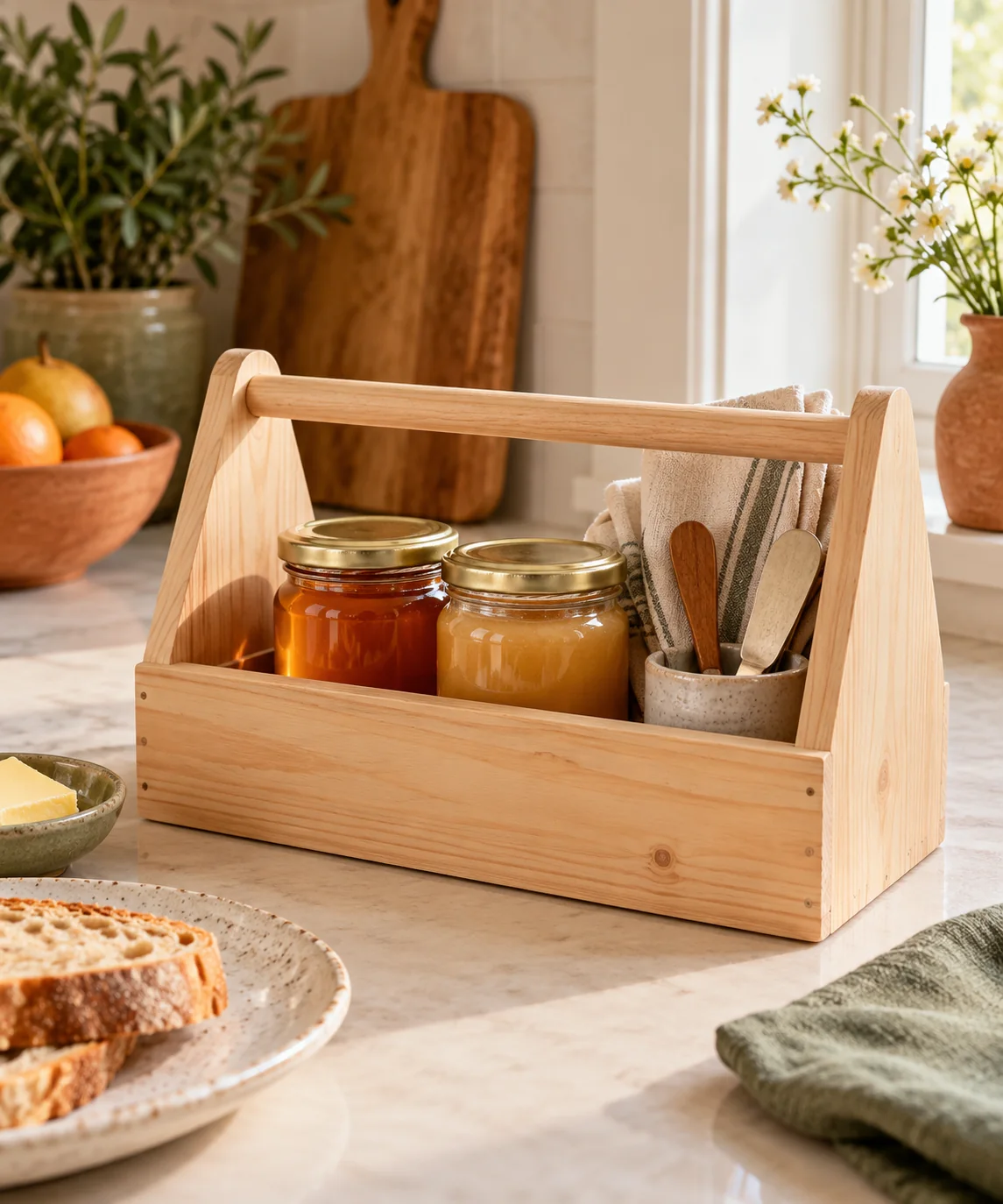
Measuring Shelf Heights and Handle Clearances
Before purchasing or repurposing a wooden carrier, measure the vertical clearance of your pantry or storage shelf. Include the fixed handle height in your calculations. Standard pantry shelves often have 25 to 30 centimeters of vertical space, whereas a tall toolbox-style caddy with an upright dowel handle can reach 20 to 24 centimeters. Verify that you have at least 5 centimeters of clearance above the handle so you can lift the caddy cleanly out of the cabinet without scraping upper surfaces or pinching fingers.
Compartment Sizing for Common Jars
Map the diameters of your everyday spread jars against the internal dimensions of the caddy dividers. Wide-mouth peanut butter jars often require an opening of at least 9 centimeters square, while slender honey squeeze dispensers or syrup bottles occupy narrower profiles around 6 centimeters. If your caddy has fixed wooden dividers, assign taller, heavier glass jars toward the center or spine. This placement maintains stability when the unit is in motion, preventing tipsy jars from knocking together during transport.
Protective Liners for Sticky Spills
Raw wood absorbs oils, honey drips, and fruit preserves quickly, which can leave permanent dark marks. Line the bottom compartments with removable, washable inserts cut from silicone baking mats or thin cork squares. Silicone provides traction that keeps glass jars from rattling or sliding during transit, and it rinses clean under warm running water in seconds. Cork offers a natural look that cushions heavy glass, though it must be swapped periodically if honey penetrates the porous grain.
Weight Distribution and Carry Balance
An unevenly weighted caddy creates wrist strain and risks dropping contents when lifted in a hurry. Place heavy stoneware jam crocks and dense 500-gram nut butter containers near the center line beneath the dowel handle. Use outer compartments or end slots for lightweight items such as rolled linen napkins, wooden spreaders, or tea bags. Test the balance by lifting the fully loaded caddy with one hand; the base should stay perfectly level without listing to one side.
Limitations and Cleaning Routines
A wooden caddy is not a sealed food container, so it cannot protect opened preserves from humidity or pantry pests. Keep high-moisture perishable spreads refrigerated, using the caddy strictly for ambient pantry items like unopened honey, peanut butter, and dry utensils. Clean the exterior wood weekly with a barely damp microfiber cloth and dry it immediately. Avoid immersing the caddy in dishwater or placing it directly adjacent to a boiling kettle, as steam can warp glued wooden joints over time.
YOUR STARTING POINT
A little checklist.
Original editorial guidance. Images are AI-generated concepts, not photographs of completed projects. Our sources and approach.
Questions to consider
Can I leave honey and nut butter in the caddy overnight?
Yes, provided the jars have tight-fitting lids and do not require refrigeration. Check labels carefully, as certain natural nut butters or low-sugar fruit spreads must be refrigerated after opening to prevent spoilage.
How do I prevent honey drips from ruining the wooden base?
Place a thin, washable silicone coaster or cut sheet under the honey container. Remove and rinse the liner immediately if drips occur, rather than letting sugar harden onto the unfinished wood grain.
What is the ideal timber choice for a kitchen condiment caddy?
Hardwoods like beech, maple, or sealed oak resist dents and moisture better than soft pine. However, light pine works well if treated with a food-safe mineral oil to repel occasional liquid droplets.