Small Kitchen Organization · THE GUIDE
Wooden Plate Cradle Racks to Prevent Vertical Plate Stacking
Vertical stacking of dinner plates creates friction and risks chipping when pulling a bottom plate out. Wooden plate cradle racks stand plates upright like books, eliminating heavy lifting. By storing ceramics vertically on a sturdy wooden base with slotted dividers, everyday access becomes a simple slide-out motion. Wood provides a naturally forgiving surface that prevents the harsh scraping associated with wire racks, preserving delicate glazes over years of use. Evaluating internal cabinet dimensions and plate profiles ensures this system integrates smoothly into existing shelving without demanding permanent alterations or structural kitchen remodeling.
Jump to the checklist ↓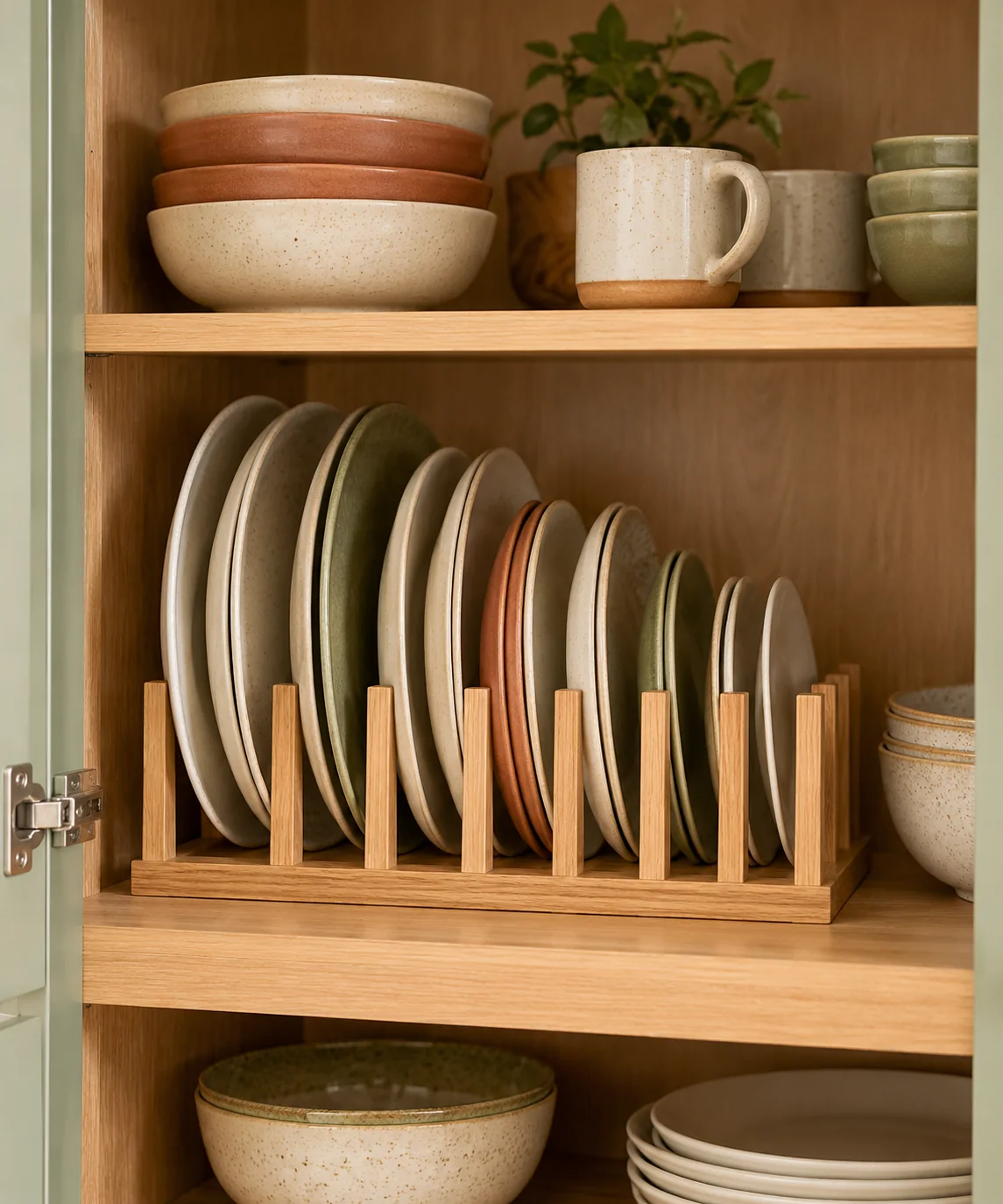
Assessing Vertical Clearance and Depth
Measure interior cabinet shelf height before purchasing or placing a wooden cradle rack. Standard dinner plates range from 10 to 11 inches in diameter, requiring at least 12 to 13 inches of vertical clearance to allow hand room when sliding a piece upwards and out. Verify that the shelf depth accommodates the full rack footprint without preventing the cabinet door from latching completely. Test plate stability by setting a single dish between two wooden dowels or rungs to ensure it leans comfortably upright without rolling forward.
Slot Spacing and Rim Thickness
Wooden plate cradles feature either fixed wooden dowels or grooved channels cut into horizontal rails. Before committing to a rack, measure the rim thickness and depth of your specific dishware sets. Deep, curved coupe plates or artisanal stoneware with uneven rims require wider spacing—often 1.25 to 1.5 inches per slot—compared to slim, flat rimmed porcelain. If slots are too tight, ceramic rims will pinch together, causing friction and defeating the purpose of single-touch removal during busy dinner preparations.
Weight Distribution Across Cabinet Shelving
Storing ten to twelve solid ceramic dinner plates in a single cradle concentrates significant weight onto a narrow section of shelf. Position the cradle rack directly above or close to shelf support pins rather than in the unsupported center span, which can sag over time under dense stoneware. If your cabinet features adjustable shelves resting on lightweight plastic pegs, replace them with solid metal bracket pins. Distribute serving bowls or lighter salad plates on opposite sides to balance the overall shelf load evenly.
Routine Maintenance and Wood Protection
Natural wood racks in kitchen cupboards are exposed to ambient cooking vapor and occasional residual moisture from recently washed dishes. Choose racks sealed with a food-safe mineral oil or water-resistant clear varnish to prevent warping, splintering, or mildew buildup over time. Never return damp plates directly into unsealed wooden slots; ensure ceramics are fully air-dried or towel-dried after dishwashing. Wipe the wooden rails periodically with a barely damp microfiber cloth and immediately dry them thoroughly to preserve the finish.
Functional Limitations and Alternative Uses
Cradle racks work exceptionally well for flat dinner and luncheon plates, but they are not universally suited for all tableware. Wide-lipped pasta bowls, footed platters, and steep-sided cereal bowls will tilt awkwardly or sit unevenly across standard linear rungs. For these irregular vessels, standard horizontal nesting remains more space-efficient. Reserve vertical cradle slots exclusively for uniform sets, flat serving boards, and flat round platters, keeping odd-sized ceramics organized in adjacent nested stacks with protective felt separators between them.
YOUR STARTING POINT
A little checklist.
Original editorial guidance. Images are AI-generated concepts, not photographs of completed projects. Our sources and approach.
Questions to consider
Can wooden cradle racks hold heavy stoneware platters safely?
Yes, provided the cradle has wide base rails and sturdy dowels. Check that the platter rim rests completely within the slot channel without teetering, and keep the heaviest pieces close to the cabinet sidewall supports.
How do I stop a wooden plate rack from sliding on slick shelf liners?
Place four small adhesive silicone rubber bumper pads beneath the bottom corners of the wooden cradle frame. These feet provide grip against smooth laminate or painted shelves without leaving residue or requiring permanent fasteners.
Will storing plates upright cause them to roll out when opening cabinet doors?
Properly designed cradle racks incorporate a recessed lower groove or angled dowel tilt that traps the base of each plate securely. As long as plates fit the slot profile, normal door operation will not dislodge them.