Container Vegetable Gardens · THE GUIDE
Wooden Tool Storage Bench Integrated Beside Veggie Pots
Combining vegetable pots with dedicated patio furniture creates an efficient, organized growing space on decks and terraces. A wooden tool storage bench placed alongside large vegetable containers provides functional outdoor seating while concealing bulk potting supplies, hand tools, and watering accessories. Keeping maintenance tools directly next to fruiting crops like tomatoes and peppers streamlines daily plant inspections and pruning. By establishing a unified footprint, this integrated setup prevents scattered clobber, protects wooden decking from trapped moisture, and optimizes limited leisure square footage without demanding invasive structural modifications or complex installation projects.
Jump to the checklist ↓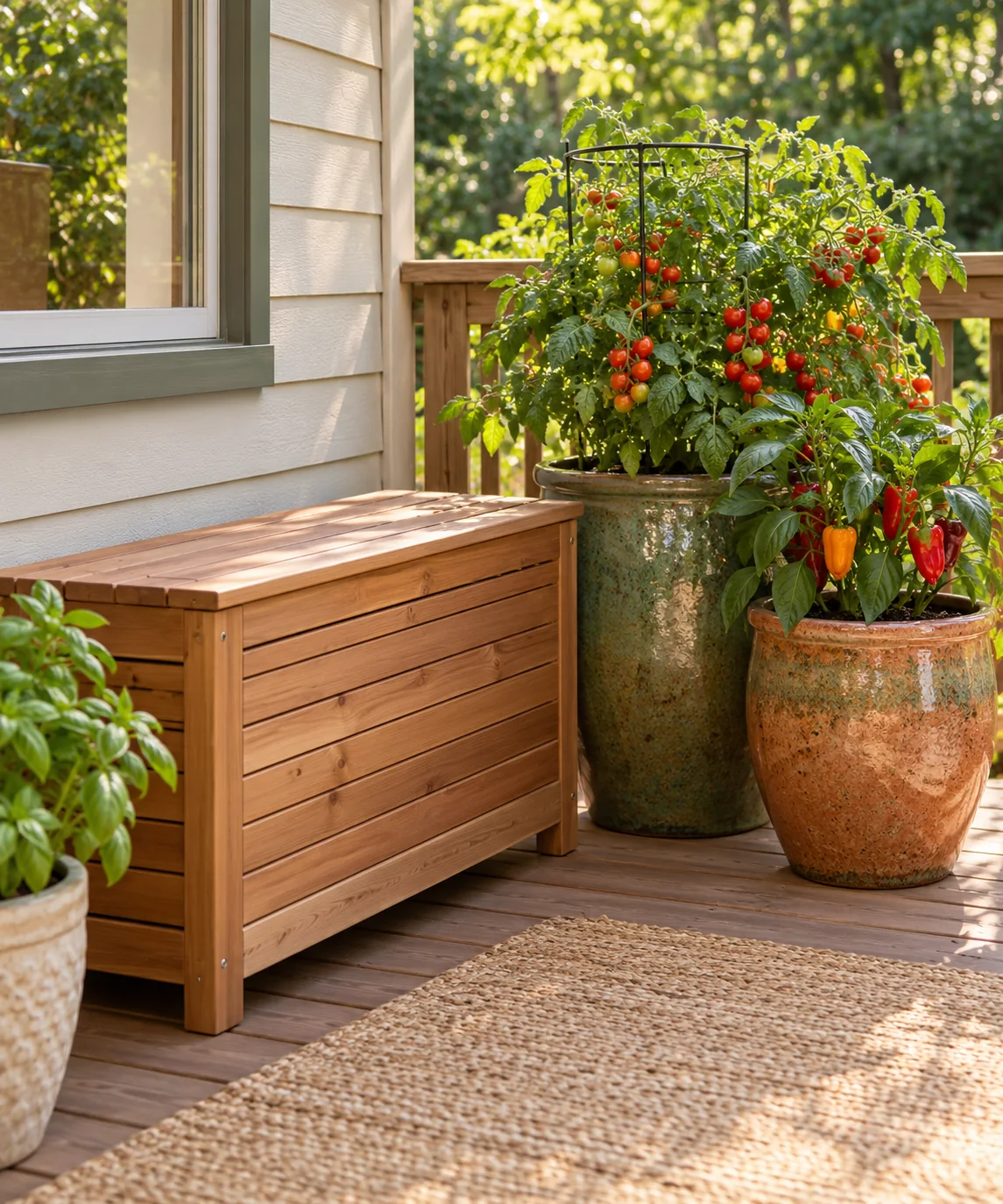
Spatial Layout and Access Planning
When integrating a storage bench alongside vegetable containers on an outdoor deck, verify that pathways remain wide enough for comfortable movement and emergency egress. Local building codes, residential guidelines, and safety standards often govern required clearances along deck exits. Avoid placing benches against low perimeter railings where furniture could create an unintentional step or climbing hazard for children. Position containers to the sides of the bench rather than directly in front of the seating area to keep legroom open while maintaining easy reach for plant maintenance.
Bench Materials and Interior Storage
Outdoor storage benches should be constructed from decay-resistant timber such as cedar, cypress, or exterior-rated lumber joined with corrosion-resistant fasteners. Inside the bench, store hand tools, plant ties, and dry supplies inside modular lidded plastic boxes to shield them from ambient dampness. Elevating stored goods off the bench floor with a slatted interior floor panel helps prevent condensation from soaking through paper packaging. Avoid storing damp organic matter or open fertilizer bags directly against bare interior boards.
Weight Assessment and Deck Capacity
Glazed ceramic containers, wet potting soil, and heavy storage items can quickly accumulate substantial weight. Before positioning large planters and loaded furniture on elevated decks or balconies, consult the deck builder, landlord, or a qualified structural professional to confirm allowable load limits. Avoid guessing structural joist locations or assuming framing capacity based on visual inspection. Distribute weight across broad-surfaced furniture feet to minimize point loading and protect surface deck boards from compression marks.
Moisture Management for Adjoining Surfaces
Water drainage from nearby vegetable pots can cause localized moisture accumulation on adjoining wooden furniture and deck surfaces. Use heavy-duty drip trays or saucers beneath containers to capture runoff, emptying standing water promptly to avoid wood staining and algal growth. Maintain a distinct gap between planter sides and the bench exterior to permit unobstructed airflow. Treating exterior timber with a breathable water-repellent sealer annually protects wood grain from splash marks and organic stains from plant foliage.
Daily Care and Harvesting Workflow
Placing utility storage adjacent to vegetable pots creates a streamlined workflow for routine pinching, pruning, and harvesting. Seated gardeners can inspect tomato vines, clip side shoots, or check container moisture without retrieving supplies from a distant shed. Keeping pruners, twine, and gardening gloves organized in weatherproof bins under the bench lid protects steel cutting blades from rust. Routine inspection of both the plants and furniture ensures that moisture is managed and plants remain neatly trained.
YOUR STARTING POINT
A little checklist.
Original editorial guidance. Images are AI-generated concepts, not photographs of completed projects. Our sources and approach.
Questions to consider
Can I store open bags of potting soil inside the bench?
Store soil inside sealed plastic containers before placing them in the bench. Open bags absorb ambient humidity, attracting moisture pests and fostering mold growth that can prematurely degrade the interior wood panels over time.
Will plants beside the bench attract unwanted insects to the seating area?
Vegetable containers can attract beneficial pollinators and occasional pests. Keep foliage pruned cleanly away from the seating surface and avoid using sweet liquid fertilizers or leaving overripe fallen fruit in the pots to minimize flying insect disruptions.
How do I prevent rainwater from leaking into the storage compartment?
Select a bench designed with a sloped, overlapping lid and internal weather stripping. Storing tools inside secondary lidded bins provides an extra protective layer against water intrusion during severe wind-driven storms.