Kitchen Herb Gardens · THE GUIDE
Woven Seagrass Pot Sleeves on a Sage Green Island
Plastic nursery pots provide reliable drainage for culinary herbs, but their thin utilitarian plastic can clash with kitchen decor. Pairing nursery pots with woven seagrass sleeves introduces natural texture that visually complements sage green island cabinetry. Warm tan fibers soften the crisp lines of stone or solid countertops while hiding plain plastic. Because natural fibers can degrade or develop mildew when exposed to standing moisture, this styling approach requires protective barriers beneath each pot to balance everyday cooking utility with countertop protection and tidy prep clearances.
Jump to the checklist ↓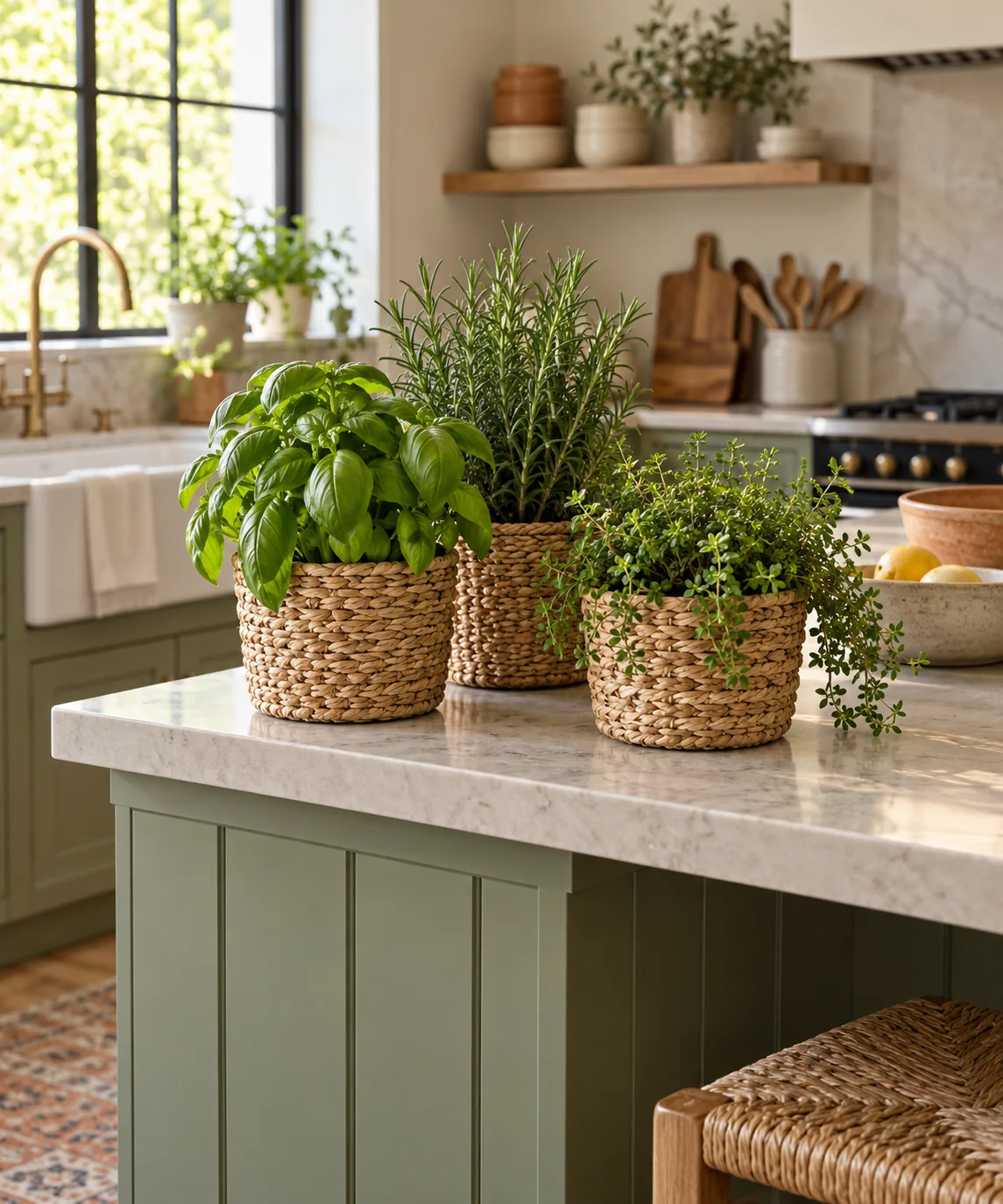
Sizing Sleeves for Standard Nursery Pots
Measure both the top rim and base width of your nursery pots before purchasing seagrass sleeves. Most store-bought herbs come in standard four-inch or six-inch nursery containers. Choose sleeves that provide enough ease around the container to allow smooth lifting during routine watering without catching on the weave. A tight fit risks trapping damp soil against the fibers and complicates plant inspection, while an excessively loose sleeve allows pots to wobble. Taking container measurements along when selecting sleeves ensures an easy, functional pairing.
Protecting Island Surfaces and Fibers
Woven seagrass is naturally porous and can transfer moisture directly onto painted or sealed kitchen island surfaces if water escapes. Place a shallow, rigid plastic saucer or liner inside the base of each sleeve before inserting your potted herb to catch minor runoff. To prevent condensation and surface marking on painted or stained island cabinetry, consider attaching small silicone bumper pads or a cork coaster underneath the exterior base of each woven container to allow air exchange between surfaces.
Island Placement and Sun Exposure
Kitchen islands often sit several feet away from exterior window openings, whereas culinary herbs like rosemary, thyme, and basil require substantial daylight. Assess your kitchen's natural light patterns realistically across the day before designating an island herb station. Choose a section of the island that receives the strongest natural illumination, keeping plants safely back from active chopping zones and cooking heat. If island light is insufficient for long-term growth, use the sleeves for short-term display and rotate pots back to a bright windowsill regularly.
Watering Routines and Fiber Preservation
Watering herbs directly while they sit inside seagrass sleeves can quickly saturate the woven fibers, leading to mildew, odors, and premature material breakdown. Always lift the plastic nursery pot out of the sleeve and water it at the sink. Let excess water drain freely through the bottom holes until dripping stops completely, and wipe the exterior base of the nursery pot before returning it to the sleeve. This simple habit keeps the natural fibers dry and prolongs their useful life.
Practical Grouping and Workspace Clearance
Grouping herb pots neatly in a designated corner of the island maintains a tidy aesthetic while preserving generous prep space for food preparation. Rather than spreading pots across the counter, arrange two or three sleeves together away from cutting boards, splash zones, and hot cookware to minimize cross-contamination and accidental spills. The textured seagrass contrasts gently against painted island cabinetry, creating an appealing culinary display that remains easy to relocate during busy meal prep.
YOUR STARTING POINT
A little checklist.
Original editorial guidance. Images are AI-generated concepts, not photographs of completed projects. Our sources and approach.
Questions to consider
How do I clean a seagrass sleeve if soil spills inside?
Lift out the inner pot, gently shake loose soil into a waste bin, and use a soft, dry brush to clear debris from the weave. Avoid washing the sleeve with water, as prolonged dampness can weaken seagrass fibers.
Can culinary herbs stay on a kitchen island permanently?
Herbs require bright, consistent light to thrive. If your island does not receive several hours of direct or strong indirect sunlight, rotate the pots to a sunny windowsill every couple of days to keep them healthy.
How do I prevent moisture damage on painted island countertops?
Use waterproof saucers inside the sleeves and elevate the woven base with silicone bumpers or coasters to prevent moisture trapping and condensation against the painted surface.